Sweet Wafers (Plain)
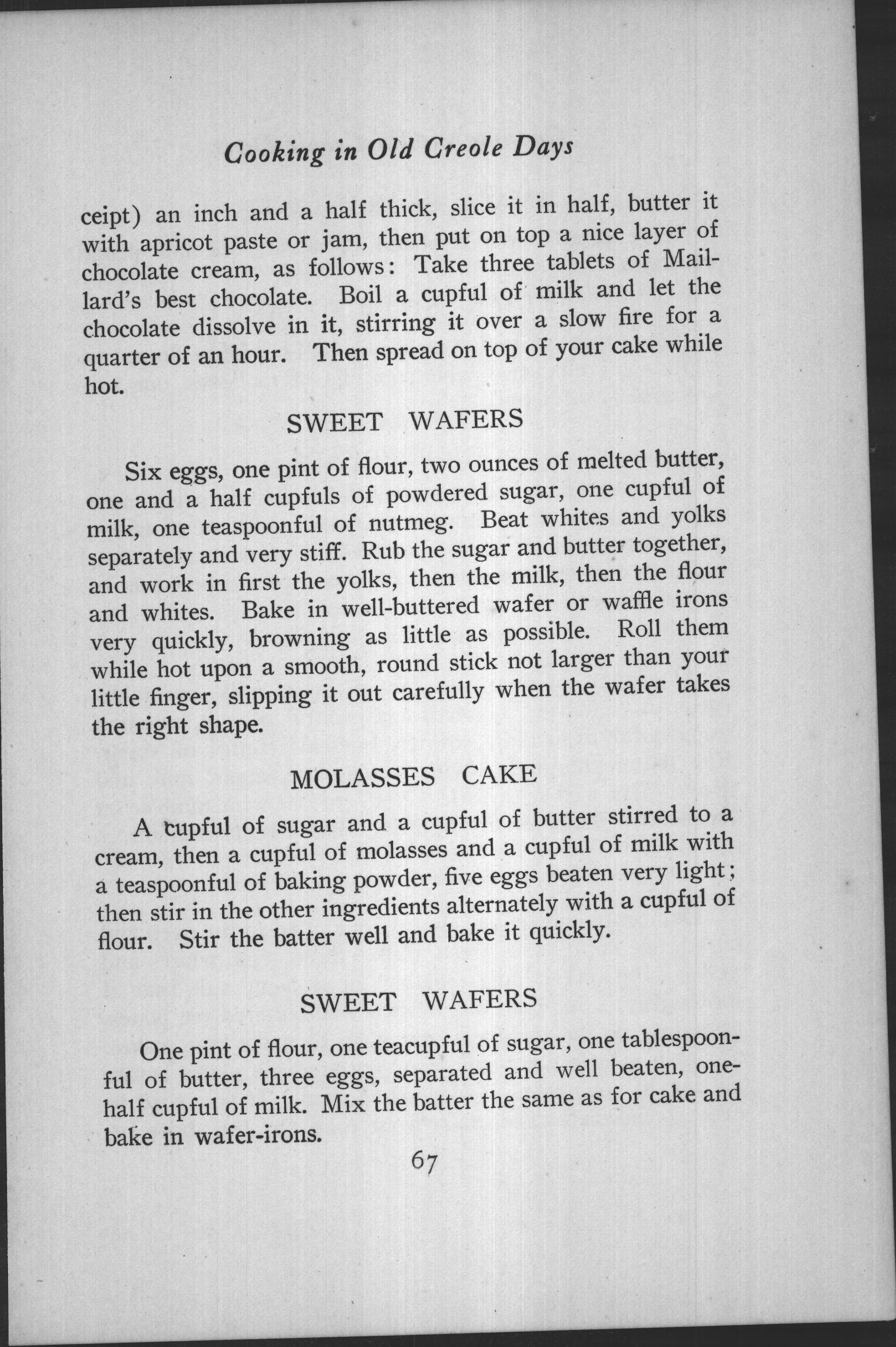
One pint of flour, one teacupful of sugar, one tablespoonful of butter, three eggs, separated and well beaten, one-half cupful of milk. Mix the batter the same as for cake and bake in wafer-irons.
A simpler wafer than its rich cousin — fewer eggs, less sugar and butter — but baked the same way in a patterned iron.
- MeasuresA pint of flour is 2 cups; a teacupful of sugar is about ¾ cup; with 1 tablespoon butter and just ½ cup milk.
- Separate the eggsBeat the 3 whites stiff and fold them in for lift, exactly as in the richer version.
- Wafer ironBake in a pizzelle or krumkake iron; the batter is thicker and plainer, so it makes a sturdier wafer.
- Keep them paleBake just until set and barely colored for a crisp, tender snap.
- Roll or leave flatCurl them warm around a dowel for cornets, or leave them flat as crisp discs.
The tool defines the wafer. Long-handled iron molds for baking thin batter over a fire go back to the Middle Ages, when “waferers” formed a recognized trade and irons were engraved with religious scenes, coats of arms, or family emblems that printed onto each cake. The design pressed into the batter was the whole point — a bit of edible heraldry. Later stovetop and hinged versions carried the craft into ordinary homes across Europe and America, where the patterned wafer became a festive treat. Every pizzelle and gaufre still bears the imprint of that ancient iron.
From page 67 of the 1904 edition.
Original page from the book