Nice Cold Dish for Lunch, to Be Eaten with Salad
Mme. Eustis, Mère
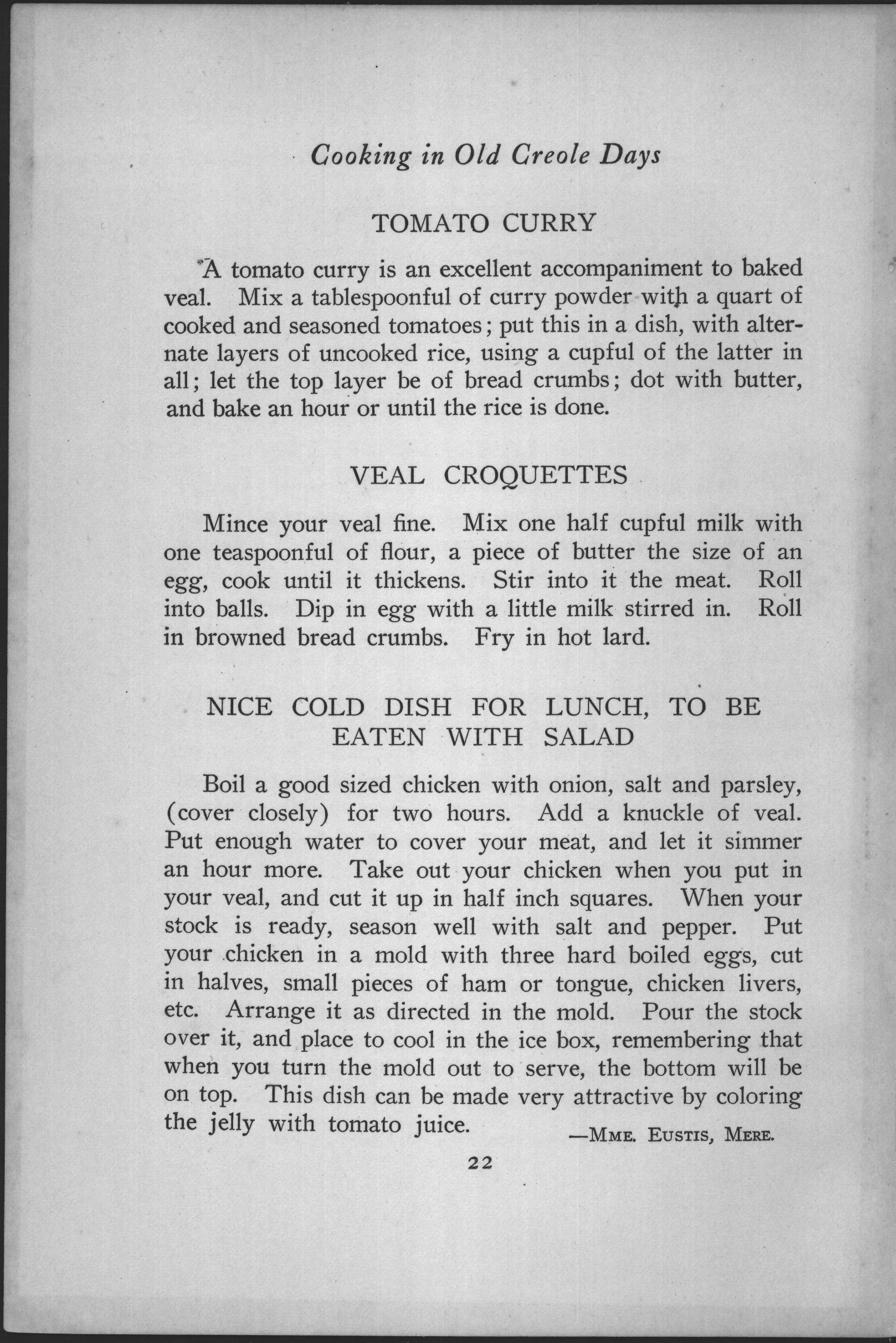
Boil a good sized chicken with onion, salt and parsley, (cover closely) for two hours. Add a knuckle of veal. Put enough water to cover your meat, and let it simmer an hour more. Take out your chicken when you put in your veal, and cut it up in half inch squares. When your stock is ready, season well with salt and pepper. Put your chicken in a mold with three hard boiled eggs, cut in halves, small pieces of ham or tongue, chicken livers, etc. Arrange it as directed in the mold. Pour the stock over it, and place to cool in the ice box, remembering that when you turn the mold out to serve, the bottom will be on top. This dish can be made very attractive by coloring the jelly with tomato juice.
A jellied chicken mold set with the natural gelatin of a veal knuckle — the grand, cooling centerpiece of a summer luncheon.
- The veal knuckle is the gelatinSimmered long, the collagen in a veal knuckle (or a trotter) melts into the stock and sets it to a clear jelly as it chills — no packet required.
- Insurance for the setFor a guaranteed firm unmolding, soften 1 envelope of powdered gelatin in cold water and stir it into the hot, strained stock before molding.
- Build it upside downWhatever you lay in first sits on top when turned out. Arrange the egg halves and ham prettily on the bottom, because that becomes the crown.
- “Ice box” = refrigeratorChill several hours until fully firm. To unmold, dip the form briefly in warm water and invert onto a plate.
- Cook the livers throughChicken livers must be fully cooked, and a jellied dish lives or dies on cold storage — keep it refrigerated right up to serving.
- Tint with tomatoThe tomato juice both colors the jelly a warm rose and adds a welcome note of acidity.
Elaborate jellied and molded dishes were the pride of the Victorian and Edwardian table, prized for a shimmer and architecture only patient cooks could achieve. Before powdered gelatin was cheap and reliable, the set came from long-simmered bones — a knuckle of veal or a calf’s foot — whose collagen dissolved into stock and firmed as it cooled. Served cold with a salad, a savory mold like this was summer entertaining at its most ambitious, equal parts food and centerpiece. The style faded only when commercial gelatin and refrigeration made the effect easy and, in time, unfashionable.
From page 22 of the 1904 edition.
Original page from the book