Veal Croquettes
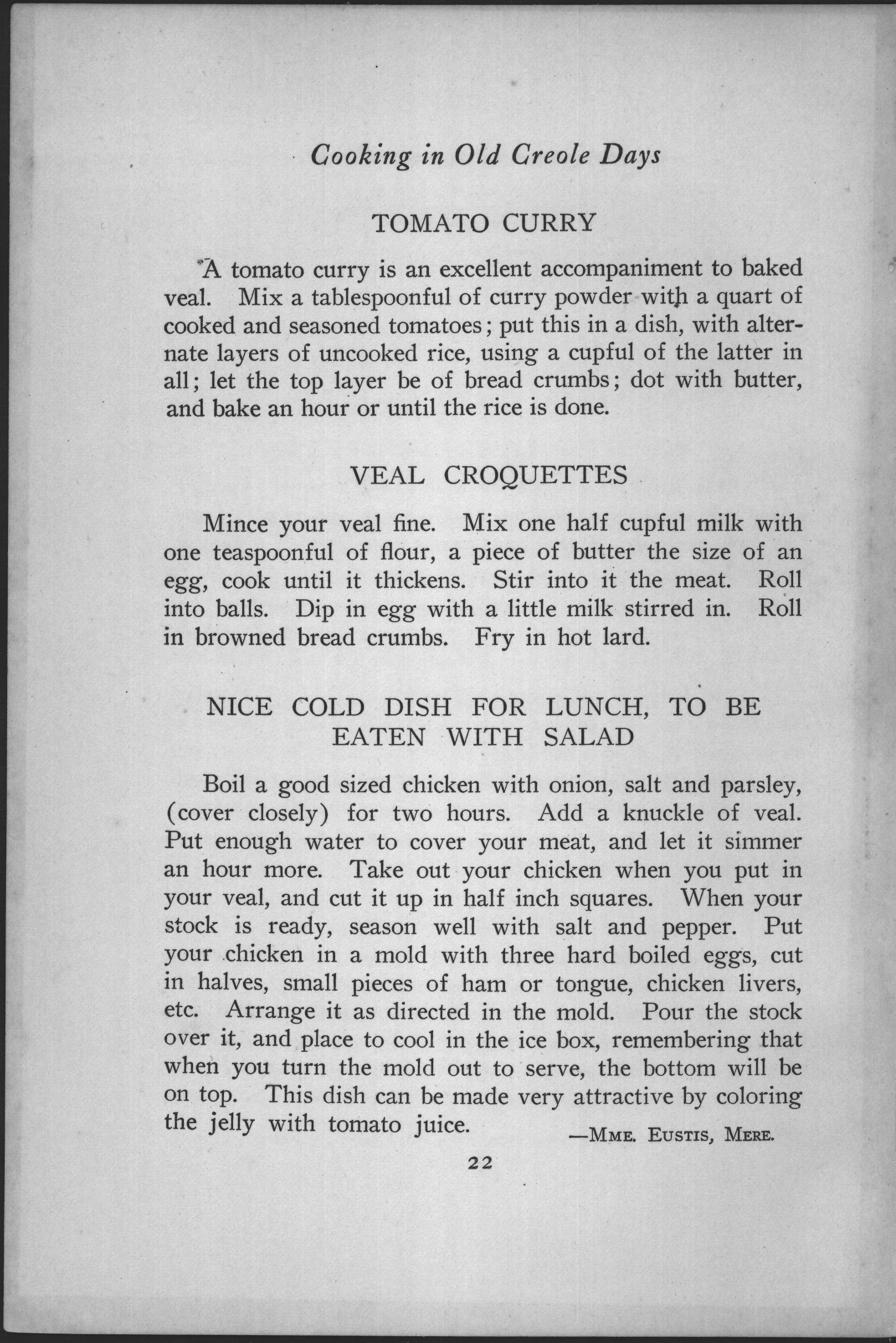
Mince your veal fine. Mix one half cupful milk with one teaspoonful of flour, a piece of butter the size of an egg, cook until it thickens. Stir into it the meat. Roll into balls. Dip in egg with a little milk stirred in. Roll in browned bread crumbs. Fry in hot lard.
A classic croquette built on a thick white-sauce binder — the trick that makes minced meat hold a shape and fry up crisp.
- Butter “the size of an egg”That’s about 4 Tbsp (2 oz), cooked with the milk and flour into the paste that binds the veal. As written, a single teaspoon of flour makes only a loose, buttery mixture, so for croquettes that shape and fry without bursting, thicken it into a proper stiff white sauce — a panada — with a good 3 Tbsp flour to the half-cup of milk.
- Chill before shapingThe mixture is soft while warm. Refrigerate it an hour until firm, then roll into balls; they’ll keep their form and won’t burst in the fat.
- Egg wash and crumbsThe beaten egg loosened with milk glues the crumbs on. “Browned bread crumbs” are simply dried crumbs; panko also works for extra crunch.
- “Fry in hot lard”Deep-fry at about 350–375°F. Lard gives lovely flavor, but any neutral oil does; the meat is already cooked, so you’re only crisping and heating through.
- Season itA plain veal-and-milk base wants help — salt, pepper, and a little nutmeg or parsley lift it out of blandness.
The croquette takes its name from the French croquer, “to crunch,” and it earned its place in nineteenth-century kitchens as an elegant solution to leftovers. A cupful of yesterday’s roast, bound in a rich sauce and fried gold, could return to the table looking entirely new. Veal, mild and tender, was a particular favorite for the treatment, its delicate flavor happy to be dressed up with crumb and crust. Croquettes traveled through the era’s cookbooks — French, English, American, and Creole alike — a small, crisp emblem of the thrifty ideal that a good cook wastes nothing.
From page 22 of the 1904 edition.
Original page from the book