Plain Rice Pudding
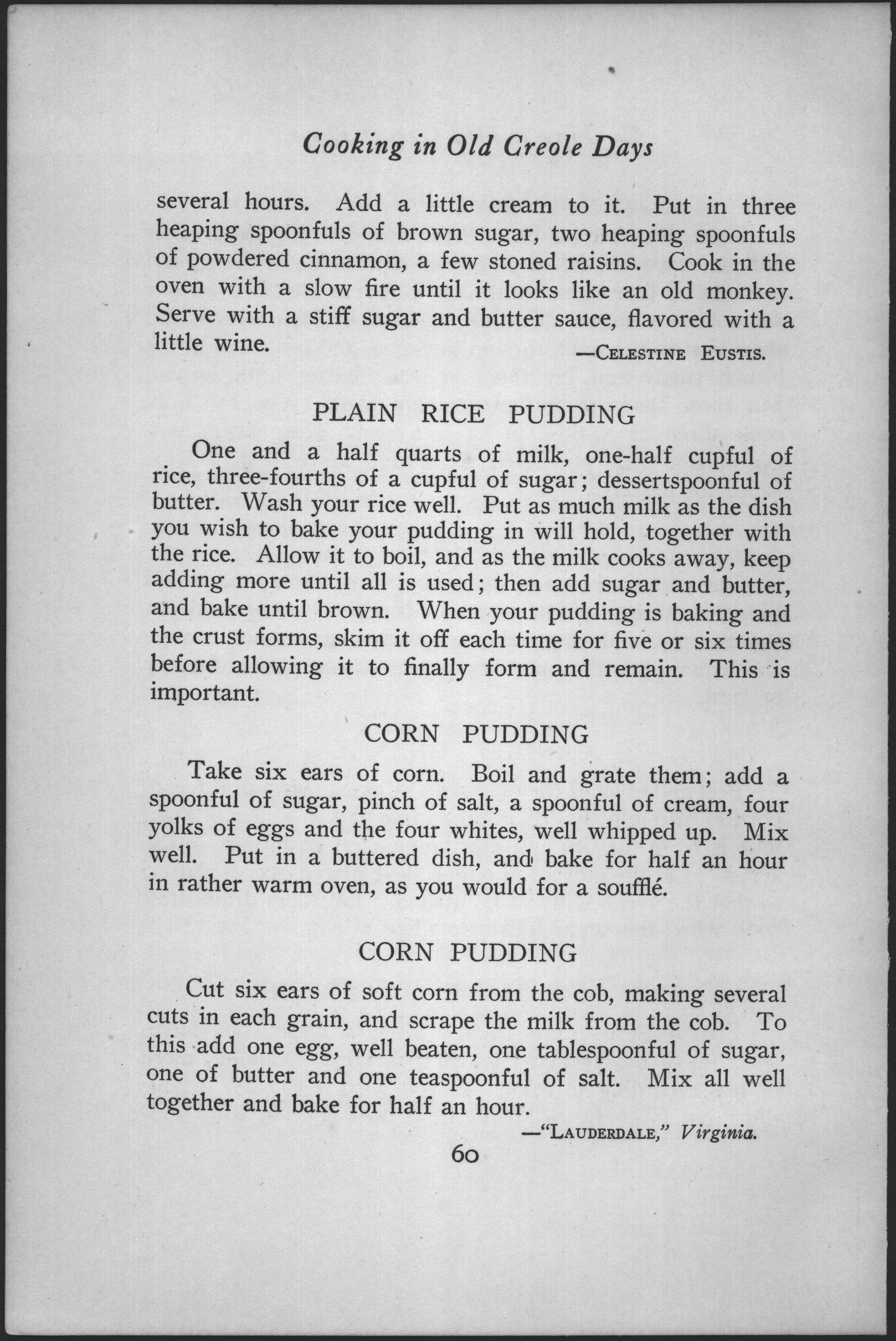
One and a half quarts of milk, one-half cupful of rice, three-fourths of a cupful of sugar; dessertspoonful of butter. Wash your rice well. Put as much milk as the dish you wish to bake your pudding in will hold, together with the rice. Allow it to boil, and as the milk cooks away, keep adding more until all is used; then add sugar and butter, and bake until brown. When your pudding is baking and the crust forms, skim it off each time for five or six times before allowing it to finally form and remain. This is important.
A slow-baked rice pudding built entirely on milk — no eggs — with a clever trick of skimming the skin to make it creamy.
- Lots of milk, little rice1½ quarts (6 cups) milk to just ½ cup rice — the grains swell slowly and the milk cooks down to richness.
- “Dessertspoonful” of butterA dessertspoon is about 2 teaspoons — a small knob to enrich the pudding.
- Bake low and slowA slow 300°F (150°C) oven over a couple of hours lets the rice absorb the milk without scorching; stir now and then early on.
- The skimming trickFolding the forming skin back in five or six times before letting the last one set is what makes it creamy — “this is important,” the cook insists.
- Add sugar lateSugar and butter go in once the rice has softened, then the final crust is left to brown.
Rice and milk have been simmered into pudding across the world for centuries — from Middle Eastern roz bil laban to English nursery rice pudding — wherever the grain and dairy meet. In the American South the dish carried a local pride: the tidewater of South Carolina and Georgia grew the famed Carolina Gold rice, a long-grain variety that helped make Charleston one of the wealthiest ports of early America. That plantation economy rested, painfully, on the knowledge and forced labor of enslaved West Africans, many from rice-growing regions — a history carried quietly in a bowl of Southern rice pudding.
From page 60 of the 1904 edition.
Original page from the book