Monkey Pudding
Celestine Eustis
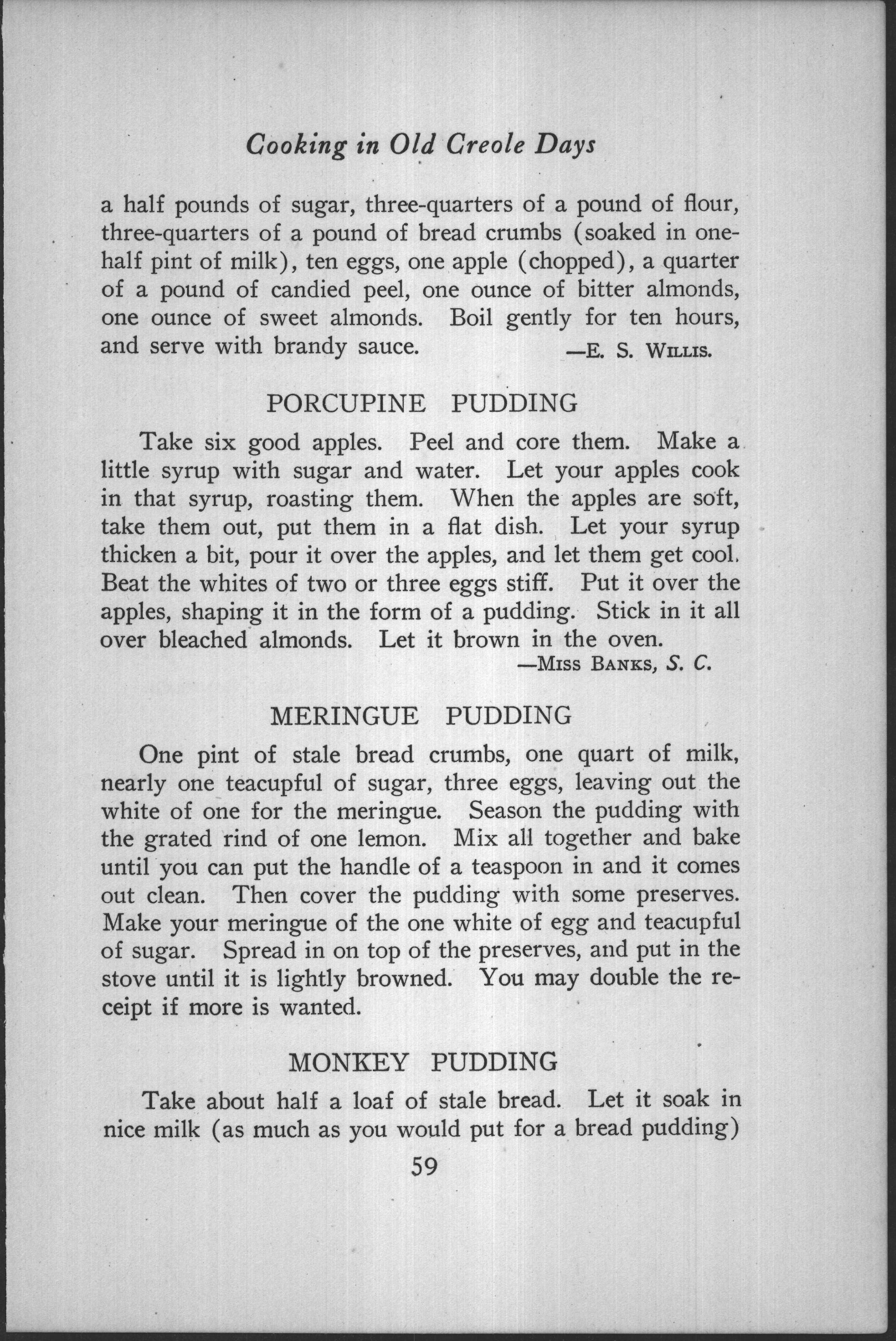
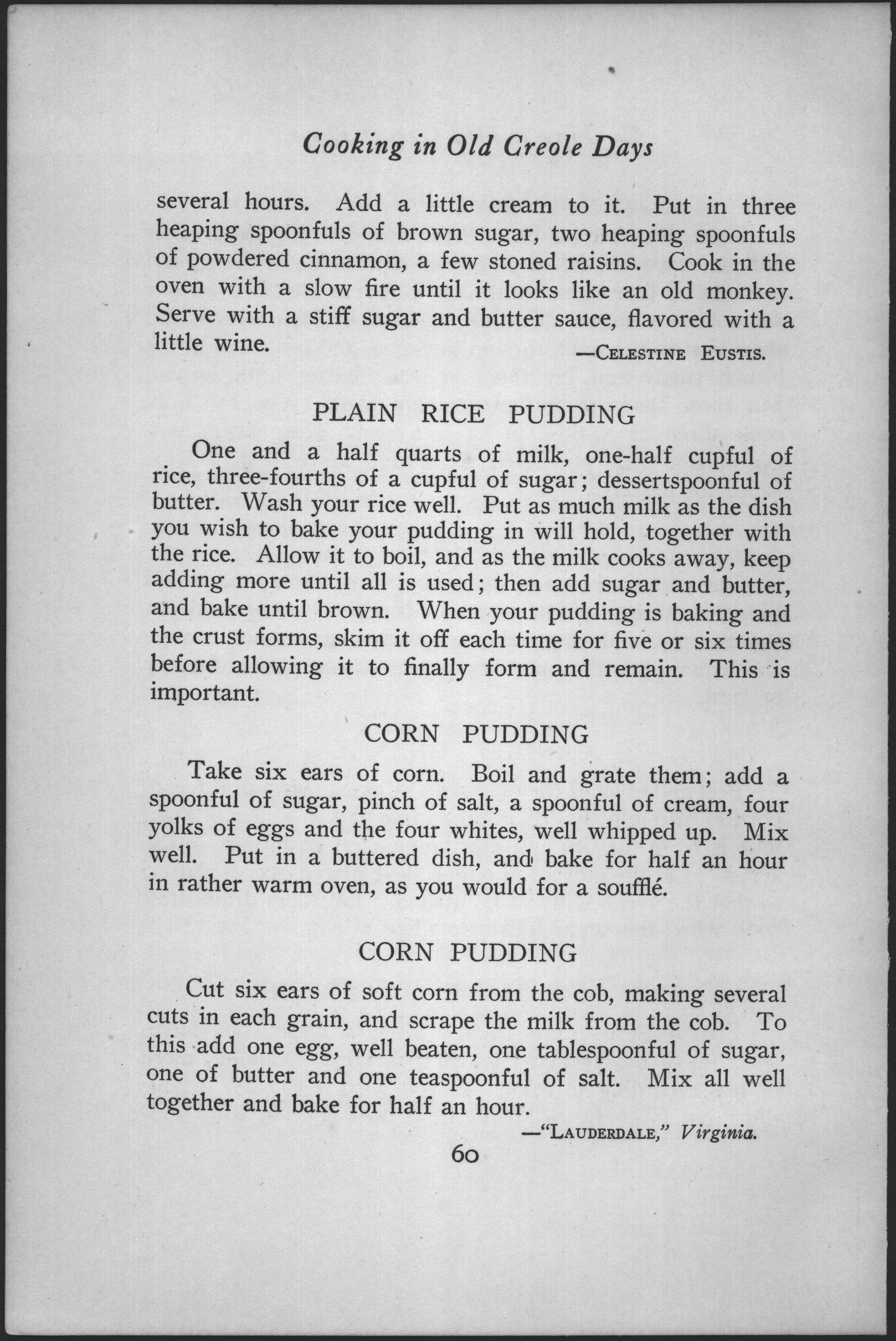
Take about half a loaf of stale bread. Let it soak in nice milk (as much as you would put for a bread pudding) several hours. Add a little cream to it. Put in three heaping spoonfuls of brown sugar, two heaping spoonfuls of powdered cinnamon, a few stoned raisins. Cook in the oven with a slow fire until it looks like an old monkey. Serve with a stiff sugar and butter sauce, flavored with a little wine.
A thrifty bread pudding baked slow and dark — sweet, spiced with cinnamon, and finished with a boozy sugar sauce.
- Half a loaf, well soakedUse stale bread soaked in milk (with a little cream) for hours until soft — the base of any good bread pudding.
- “Slow fire” ovenBake at a slow 300–325°F (150–165°C) so it sets and browns without drying — the source of that dark, wrinkled look.
- Spoonfuls, sizedRead the “heaping spoonfuls” as heaping tablespoons: three of brown sugar, two of cinnamon (that much cinnamon is bold — scale to taste).
- The hard sauce“Stiff sugar and butter sauce” is a hard sauce — butter creamed with sugar and a spoon of wine, softening over the warm pudding.
- RaisinsA scatter of stoned (pitted) raisins studs it — today’s seedless raisins save the trouble.
Bread pudding is the kitchen’s great act of thrift — a way to rescue the stale end of a loaf that appears wherever bread is daily food, from English “poor man’s pudding” to French pain perdu to the beloved bread puddings of Creole New Orleans. Cooks softened dry bread in milk, sweetened and spiced it, and baked it into something comforting and new. The odd name here is the compiler’s own whimsy: the pudding is done, she says, when it looks like an old monkey — that is, deeply browned and wrinkled. Nourishing frugality, dressed up with a spoonful of wine.
From page 59 of the 1904 edition.
Original pages from the book