Porcupine Pudding
Miss Banks, S. C.
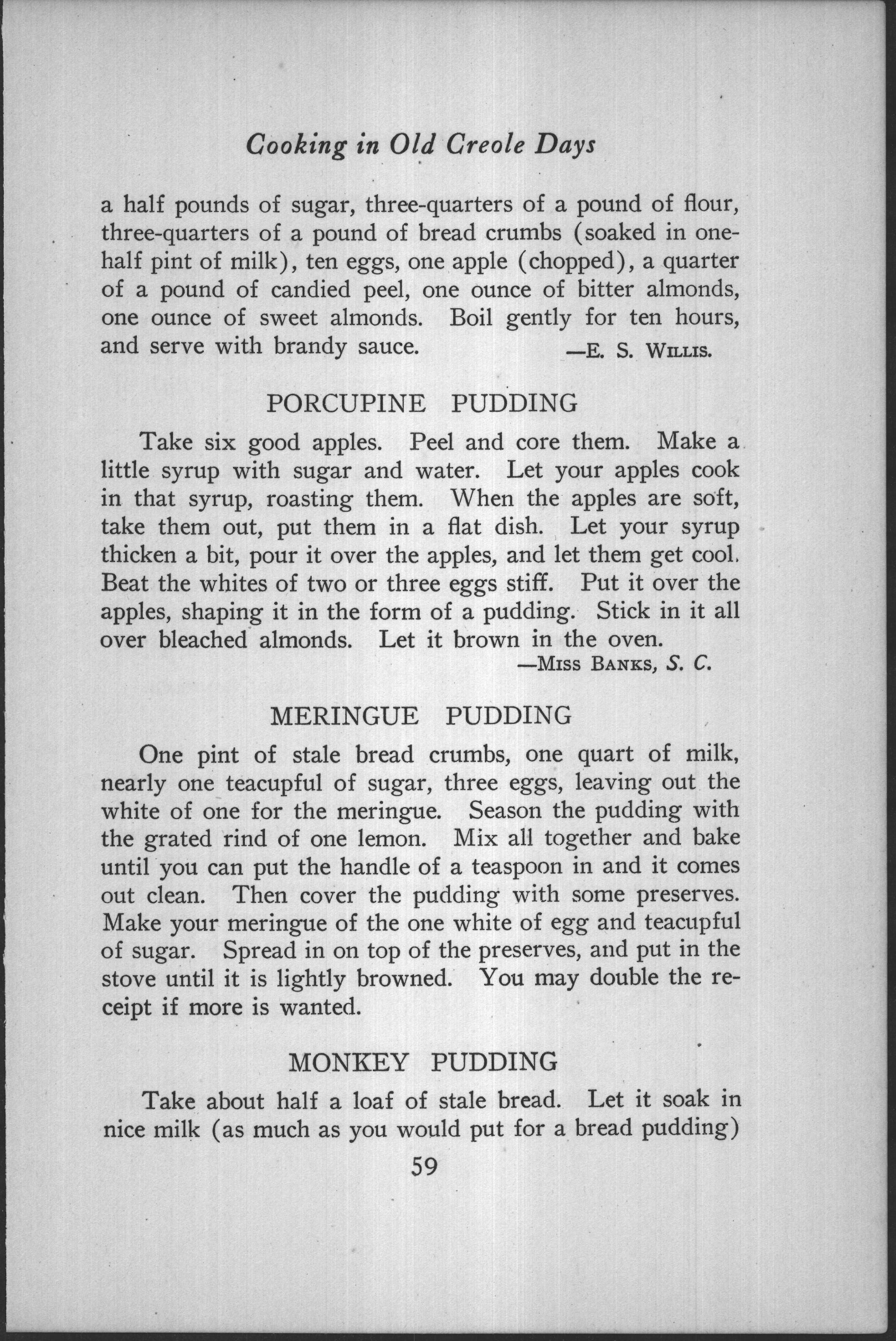
Take six good apples. Peel and core them. Make a little syrup with sugar and water. Let your apples cook in that syrup, roasting them. When the apples are soft, take them out, put them in a flat dish. Let your syrup thicken a bit, pour it over the apples, and let them get cool. Beat the whites of two or three eggs stiff. Put it over the apples, shaping it in the form of a pudding. Stick in it all over bleached almonds. Let it brown in the oven.
A whimsical Victorian sweet — syrup-poached apples cloaked in meringue and bristled all over with almonds like a porcupine’s quills.
- Poach, don’t just bakeThe apples cook in a light sugar syrup until soft, then the syrup is reduced and poured over — keep them whole for the shaping.
- “Bleached almonds” = blanchedThat means almonds with the brown skins slipped off (a brief soak in hot water); slivered or whole, they become the “quills.”
- Meringue coatBeat 2–3 whites stiff (a little sugar helps) and mound over the apples, shaping a dome before studding with almonds.
- Brown gentlyA moderate 325–350°F oven just colors the meringue and toasts the almond tips — watch closely so it doesn’t scorch.
- Serve coolLet the apples cool before the meringue goes on, or the whites will slump on the warm fruit.
Studding a domed dessert with slivered almonds to mimic a bristling animal was a genuine fashion in English and American kitchens. The best-known cousin is the “hedgehog” pudding or cake — a shaped, almond-spiked sweet that appears in cookbooks from the eighteenth century onward, sometimes built on apples, sometimes on a rich almond cream. “Porcupine” is simply the same conceit under another spiny name. These playful, sculptural desserts flattered a hostess’s skill in an era when a dish’s appearance at table mattered nearly as much as its taste.
From page 59 of the 1904 edition.
Original page from the book