Meringue Pudding
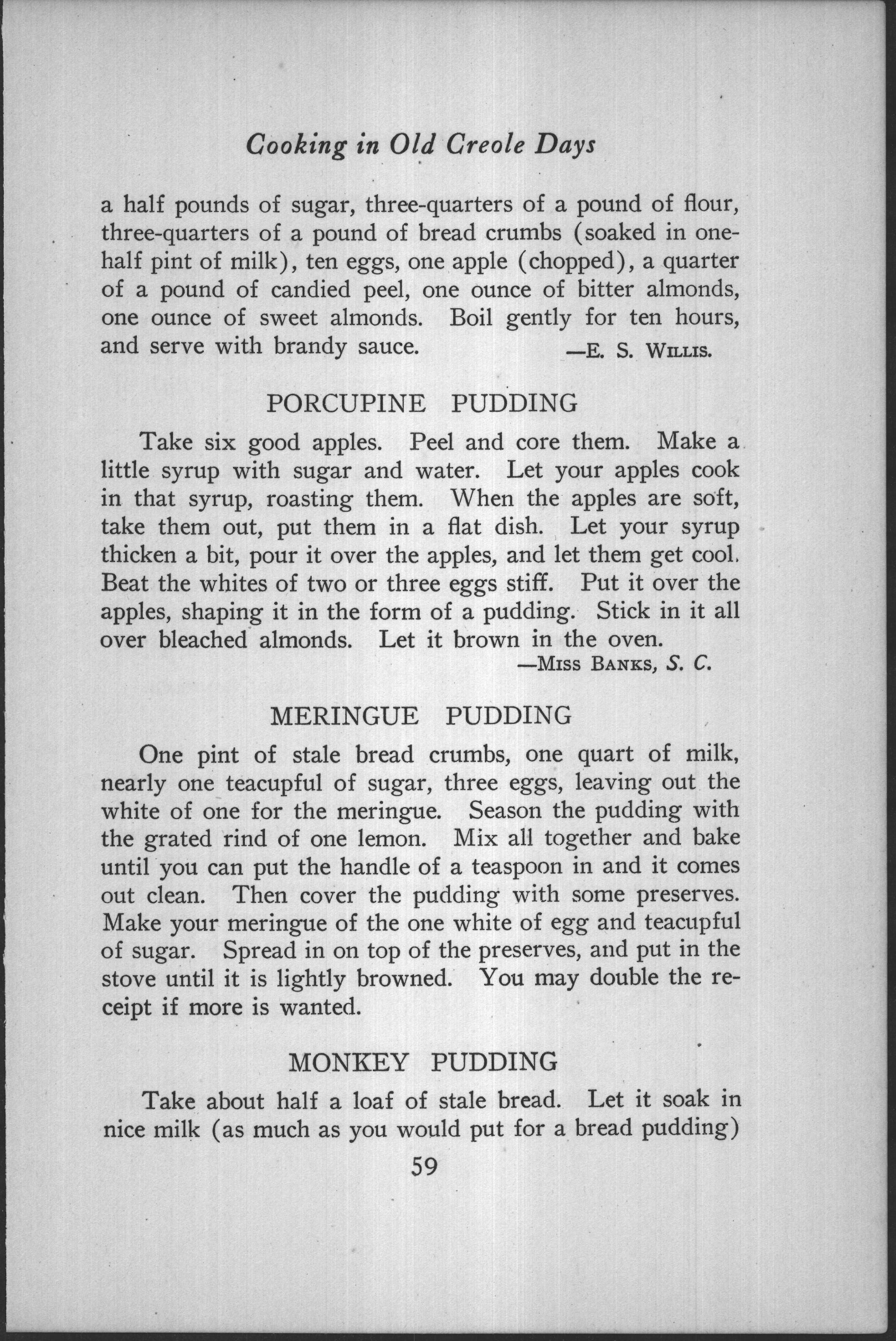
One pint of stale bread crumbs, one quart of milk, nearly one teacupful of sugar, three eggs, leaving out the white of one for the meringue. Season the pudding with the grated rind of one lemon. Mix all together and bake until you can put the handle of a teaspoon in and it comes out clean. Then cover the pudding with some preserves. Make your meringue of the one white of egg and teacupful of sugar. Spread in on top of the preserves, and put in the stove until it is lightly browned. You may double the receipt if more is wanted.
A homely bread-and-milk custard crowned with jam and meringue — the American twin of England’s Queen of Puddings.
- Teacupful measuresA teacupful is about ¾ cup (6 oz); you need one of sugar for the pudding and another for the meringue.
- Reserve a whiteThree eggs go in, but hold back one white for the meringue on top.
- Stale crumbs, fresh lemon1 pint (2 cups) stale bread crumbs soak up the quart of milk; grated lemon rind lifts the custard.
- The doneness testIt’s set when a spoon handle comes out clean — about a moderate 350°F (175°C) bake until just firm.
- Jam, then meringueSpread preserves over the warm pudding, pile on the meringue, and return it to the oven just until lightly browned.
This is, in all but name, England’s Queen of Puddings — a thrifty Victorian dish that turned stale bread, milk, and a few eggs into something worthy of company by layering it with jam and a cloud of meringue. Bread-based puddings were the frugal heart of the nineteenth-century kitchen, a way to let nothing go to waste, and the meringue lid was the flourish that dressed economy as elegance. Legend ties the “Queen” name to Victoria’s table, though that story is more charming than documented; the pudding itself was at home in ordinary households.
From page 59 of the 1904 edition.
Original page from the book