Sauce for Veal Balls
Josephine Nicaud
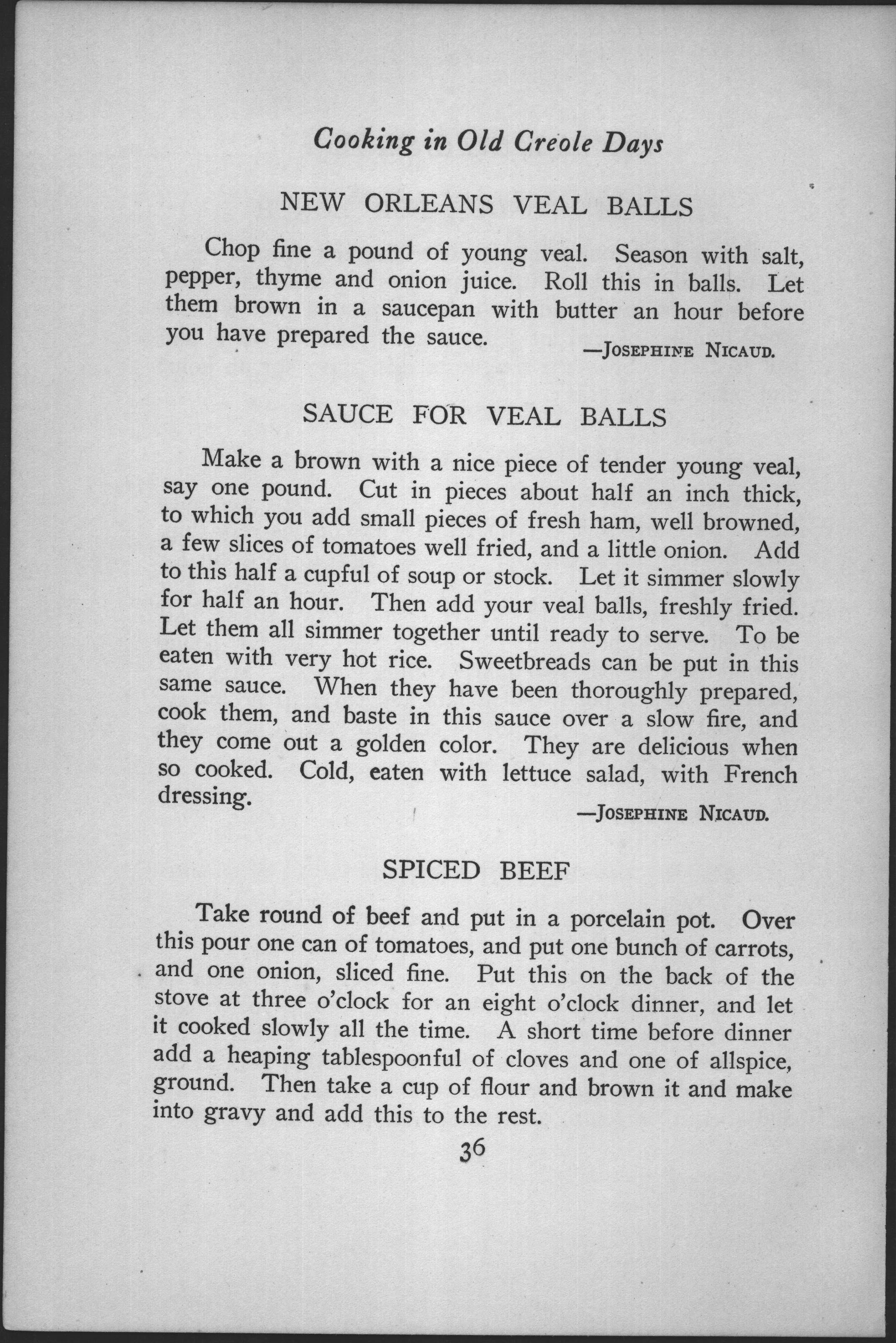
Make a brown with a nice piece of tender young veal, say one pound. Cut in pieces about half an inch thick, to which you add small pieces of fresh ham, well browned, a few slices of tomatoes well fried, and a little onion. Add to this half a cupful of soup or stock. Let it simmer slowly for half an hour. Then add your veal balls, freshly fried. Let them all simmer together until ready to serve. To be eaten with very hot rice. Sweetbreads can be put in this same sauce. When they have been thoroughly prepared, cook them, and baste in this sauce over a slow fire, and they come out a golden color. They are delicious when so cooked. Cold, eaten with lettuce salad, with French dressing.
More a Creole braise than a mere sauce — browned veal, ham, tomato, and onion simmered down and spooned, with the veal balls, over hot rice.
- “Make a brown”Brown the veal (and a light flour roux if you like) deeply first — that fond is the whole flavor base of the sauce.
- “Fresh ham”Uncured pork leg, not the pink cured kind; it adds savory depth as it browns.
- Stock measure“Half a cupful” of soup or stock is ½ cup — just enough to loosen the browned bits into a sauce.
- Serve over rice, Creole-styleThe dish is built to be eaten “with very hot rice,” the way so much New Orleans cooking is.
- About the sweetbreadsThe optional sweetbreads (veal thymus) must be soaked, blanched, and peeled of membrane before they’re basted golden in the sauce.
Rice is the quiet foundation of the Creole kitchen, and a dish like this — a slow brown braise of veal and ham ladled over “very hot rice” — is the pattern behind everything from grillades to daube. Louisiana became a great rice-growing state in the 19th century, its warm, wet lowlands ideal for the crop, and rice accordingly anchored the local table. The French habit of building flavor by browning meat and loosening the pan with stock, married to that bowl of rice, is Creole cooking in miniature.
From page 36 of the 1904 edition.
Original page from the book