Tomato Soup
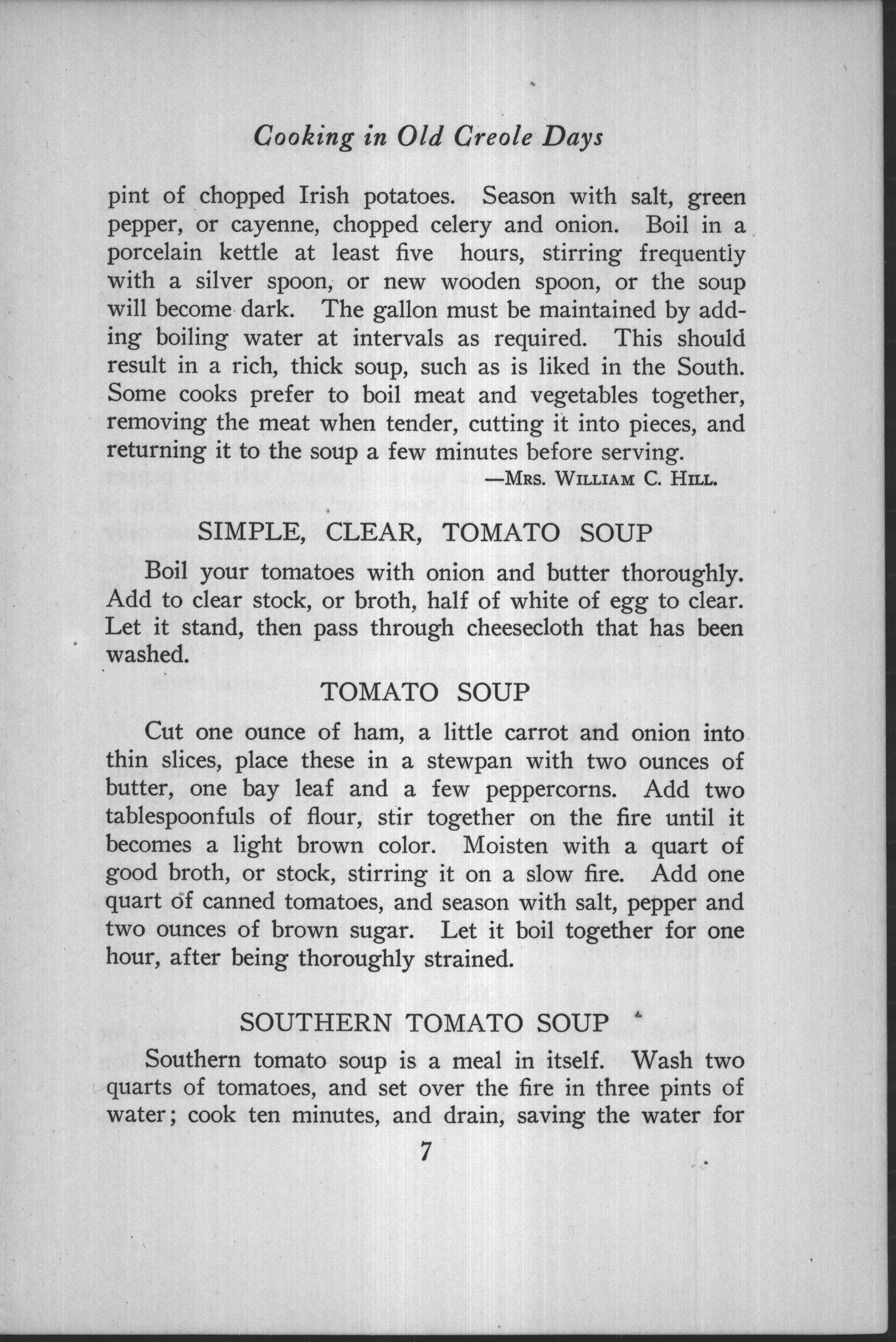
Cut one ounce of ham, a little carrot and onion into thin slices, place these in a stewpan with two ounces of butter, one bay leaf and a few peppercorns. Add two tablespoonfuls of flour, stir together on the fire until it becomes a light brown color. Moisten with a quart of good broth, or stock, stirring it on a slow fire. Add one quart of canned tomatoes, and season with salt, pepper and two ounces of brown sugar. Let it boil together for one hour, after being thoroughly strained.
A proper cream-of-tomato ancestor, built on a browned roux of ham and vegetables. The pinch of brown sugar is not optional — it’s doing important work.
- The roux baseHam, carrot, and onion softened in butter, then flour cooked to light brown, then moistened with broth — a classic velouté method that gives the soup body.
- Why the brown sugarTwo ounces of sugar balances the acidity of the tomatoes. Modern taste might use less (start with 1 Tbsp), but don’t skip it — a little sweetness rounds the whole soup.
- Canned tomatoes are period-correctThe call for “canned tomatoes” in 1904 is no anachronism — commercial canning made them a year-round staple by then. A 28-oz can stands in perfectly.
- FinishStrain for a smooth soup, or leave it rustic; a splash of cream makes it cream of tomato.
By 1904 the tomato had completed a remarkable rehabilitation. Long eyed with suspicion in Europe and North America — a pretty but faintly sinister member of the nightshade family — it became, over the 19th century, one of the most beloved foods in America, helped enormously by the rise of canning, which freed it from the season. A soup like this, leaning confidently on a can of tomatoes, marks the moment the fruit had fully won its place at the everyday table.
From page 7 of the 1904 edition.
Original page from the book