Waffles
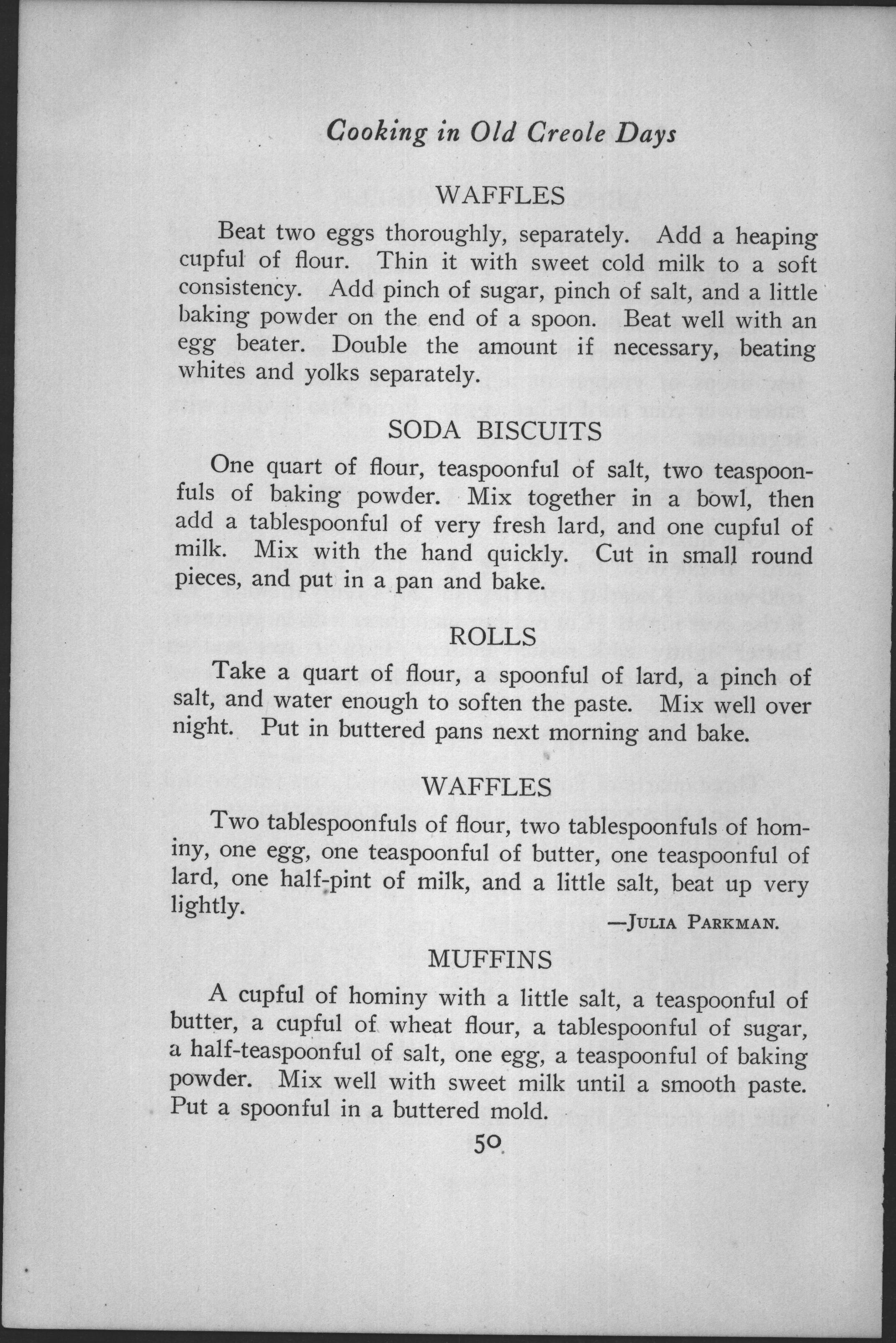
Beat two eggs thoroughly, separately. Add a heaping cupful of flour. Thin it with sweet cold milk to a soft consistency. Add pinch of sugar, pinch of salt, and a little baking powder on the end of a spoon. Beat well with an egg beater. Double the amount if necessary, beating whites and yolks separately.
A light, thin waffle batter that leans on beaten eggs — whites and yolks whipped apart — as much as on the pinch of baking powder.
- Separating the eggsBeating the whites separately and folding them in at the end gives these waffles their lift and crisp-tender crumb; it’s the step that matters most.
- “A heaping cupful of flour”About 1 cup plus a couple of tablespoons; thin with milk to a pourable, “soft” batter.
- “Sweet cold milk”“Sweet” simply means fresh, not soured — use whole milk. Cold is fine here; it keeps the beaten whites from deflating.
- A whisper of leavening“A little baking powder on the end of a spoon” reads as about ½ teaspoon — a gentle boost, since the eggs are doing most of the work.
- Heat the iron wellA modern waffle iron on medium-high, well greased, stands in for the old stovetop iron; pour, close, and cook until the steam slows and the waffle is golden.
The waffle is medieval European in origin, baked between hinged iron plates held over the fire — the honeycomb pattern pressed into the batter is centuries old. Dutch settlers are usually credited with bringing the wafel to America, where it took firm root, and by the nineteenth century a waffle iron was standard kitchen kit. In French-speaking Louisiana the waffle answered to gaufre, and thin, egg-rich batters like this one — the whites beaten separately for lightness — were prized at the breakfast and café table, crisp enough to shatter and soft within.
From page 50 of the 1904 edition.
Original page from the book