Frying
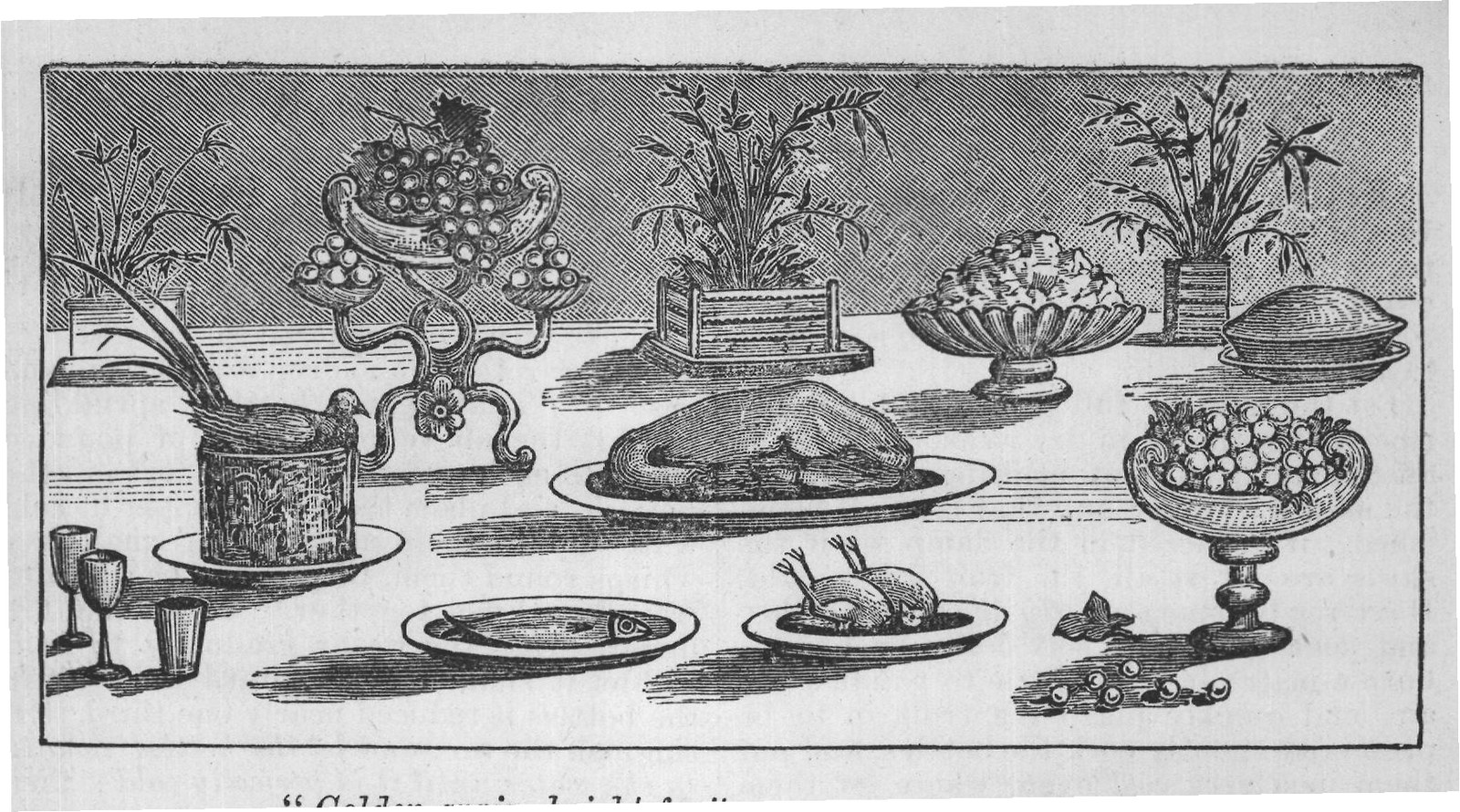
Frying is a pleasant ana quick mode of cooking, suitable for tender meats of any kind. Melted fat can be brought to a higher temperature than boiling water, although it never boils; so it can be understood that frying is not a mode of cooking to be adopted for any tough meat or vegetable food, unless it is only the primary part of their cooking, such as frying vegetables for soups, &c. Such fish as soles, plaice, whitebait, &c., are well cooked by this mode; and the secret of success in frying such things is the use of sufficient fat to cover what is being cooked. "Golden grain, bright fruits, Sweet herbs which grow for all." - EDWIN ARNOLD.
GAME, HASHED.
AME, Hashed.
ENTS. - (Cold Meat Cookery.) - INGREDI- The remains of cold game, 1 onion stuck with 3 cloves, a few whole peppers, a strip of lemon-peel, salt to taste, thickening of butter and flour, 1 glass of port wine, 1 tablespoonful of lemon-juice, 1 tablespoonful of ketchup, 1 pint of water or weak stock. AVERAGE COST, exclusive of the cold game, 8d.
Cut the remains of cold game into joints, reserve the best pieces, and the inferior ones and trimmings put into a stewpan with the onion, pepper, lemon-peel, salt and water or weak stock; stew these for about an hour, and strain the gravy; thicken it with butter and flour; add the wine, lemon-juice and ketchup; lay in the pieces of game, and let them gradually warm through by the side of the fire; do not allow it to boil, or the game will be hard. When on the point of simmering, serve, and garnish the dish with sippets of toasted bread or fried croutons.
TIME.-Altogether, 1 hour.
SEASONABLE from August to March.
Note.-Any kind of game may be hashed by the above recipe, and the flavour may be varied by adding flavoured vinegars, curry powders, GAME PIE. &c.; but we cannot recommend these latter ingredients, as a dish of game should really have a gamey taste; and if too many sauces, essences, &c., are added to the gravy, they quite overpower and destroy the flavour the dish should possess.
Two entries have run together here: a short essay on frying, and a full recipe for hashed game from the cold-meat chapter. The notes below deal with the hash, with one point on the frying advice.
- The hingeThe game is already cooked; it is only being warmed through. Hold the sauce below a simmer, as the recipe insists, or the reheated flesh tightens and turns dry and stringy. The book gives no separate time for this stage, only "gradually warm through by the side of the fire" until on the point of simmering.
- KetchupIn Beeton's kitchen ketchup meant mushroom or walnut ketchup, a thin, dark, salty condiment, not tomato ketchup. Use mushroom ketchup if you can find it; a teaspoon of Worcestershire sauce and a little soy is a closer substitute than the tomato kind.
- Thickening of butter and flourUsually taken as beurre manié: equal weights of soft butter and flour kneaded to a paste, whisked into the hot strained stock in small pieces. About 15 g of each per 600 ml of liquid gives a light coating sauce.
- MeasuresA pint here is the imperial 20 fl oz, about 570 ml. A glass of port means a wine glass, roughly 60-75 ml. The "average cost, 8d" is a mid-Victorian price and has no modern equivalent.
- Making the gravyThe hour of stewing is for the trimmings and inferior joints, which are then strained out and discarded. Their only job is to turn the pint of water or weak stock into game stock, so keep the simmer gentle.
- SippetsSippets are small triangles or fingers of toast, usually crusts removed; croûtons here are the same shape fried in butter or clarified fat rather than toasted.
- Seasonable August to MarchThis follows the British game seasons of the period. Farmed or frozen game is available year-round now, and the recipe works with any roast game bird, rabbit, or a mixture.
- YieldThe recipe assumes the leftovers of a roast. Reckon on 150 g of picked meat per person; a pint of sauce will comfortably dress enough for four.
- On the frying noteThe essay's rule still holds: deep frying needs enough fat to cover the food completely. Modern practice adds a temperature, 175-185C, which is the range where a coated fillet of sole or plaice sets and colours before the flesh overcooks.
Hashes belong to the "Cold Meat Cookery" strand that runs through Beeton and her Victorian imitators, a body of recipes whose purpose was to bring Monday's table something other than a plate of yesterday's roast. A household that shot or was given game had it in quantity and in season only, so the second-day dish mattered: the trimmings went into the stockpot, the good joints were held back, and port, lemon and a bottled ketchup were used to lift the reheated meat without disguising it. The closing note is unusually opinionated for the book, refusing curry powder and flavoured vinegars on the grounds that game should taste of itself. The August to March window reflects the statutory shooting seasons set out in the game legislation of the period.