Guinea Fowl, The
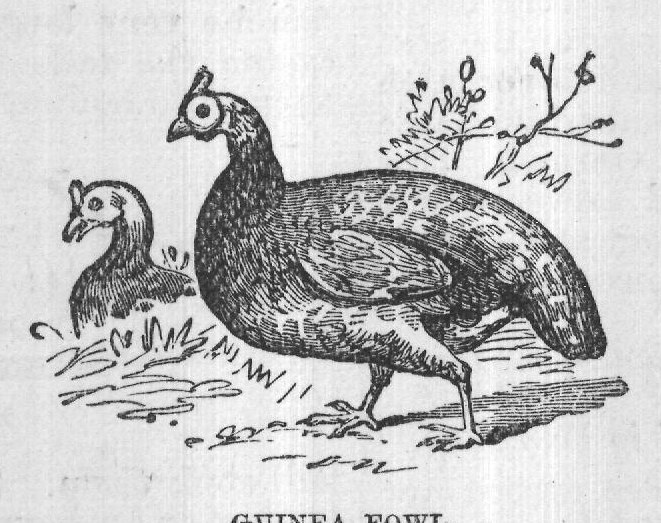
This bird be covered with a piece of paper, and removed takes its name from Guinea, in Africa, where it is found wild, and in great abundance.
It is gregarious in its habits, associating in flocks of two or three hundred; delighting in marshy ground, and at night roosting upon trees or on high situations. In size it is about the same as a common hen.
Though domesticated, it retains much of its wild nature and is apt to wander.
Guinea-Fowl, Roast, Larded. -INGREDIENTS.-A guinea-fowl, lardoons, flour and salt. AVERAGE COST, 3s. 6d.
When this bird is larded, it should be trussed the same as a pheasant; if plainly roasted, truss it like a turkey. After larding and trussing it, put it down to roast at a brisk fire; keep it well basted, and a short time before serving, dredge it with a little flour, and let it froth nicely. Serve with a little gravy in the dish, and a tureen of the same, and one of well-made breadsauce.
TIME. Guinea-fowl, larded, 1¼ hour; plainly roasted, about 1 hour.
SEASONABLE in winter.
Note. The flesh of this bird is very dry, and it should, therefore, be larded; the breast should about 10 minutes before serving.
A roast bird from the spit-and-open-fire era, written for a cook who could keep a joint turning in front of the coals. The essential point survives the move to an oven: guinea fowl is lean and dries out, so it needs fat added and it needs to come out sooner than the original says.
- Bard rather than lardLardoons are strips of pork back fat threaded through the flesh with a larding needle, a tool few kitchens now own. Draping the breast with streaky bacon or a buttered sheet of baking parchment does the same job, and the paper shield the recipe mentions should come off in the last 10 minutes so the skin colours.
- Fire to oven"A brisk fire" implies a hot oven; the book gives no temperatures, so treat this as a modern approximation: start at about 400-425F (200-220C) for 15 minutes, then drop to 375F (190C) for the remainder.
- Cut the timeAn hour and a half will ruin a modern bird. Farmed guinea fowl run 2-3 lb; count roughly 45-60 minutes total and pull it when the thickest part of the thigh reads 165F (74C). Rest it 10 minutes before carving.
- "Let it froth"A final dredge of flour, then a basting with hot fat, so the surface blisters and turns pale gold. It is a period substitute for a browning blast at the end and can be skipped if the skin is already crisp.
- Bread sauceThe tureen of bread sauce is not optional in the original's mind: milk infused with onion, clove and a blade of mace, thickened with stale white crumbs and finished with butter and cream. It supplies the moisture the dry flesh lacks.
- TrussingTrussed "like a pheasant" means legs drawn close to the body and the whole bird kept compact; a couple of turns of butcher's twine round legs and wings achieves it.
- Cost and season3s 6d was a real expense in a Victorian household, and "seasonable in winter" reflects a game-shop supply rather than year-round farming. Guinea fowl is now sold all year.
- YieldOne bird serves two generously, three at a stretch with a substantial garnish.
The guinea fowl (Numida meleagris) is a West African bird, taken up by Portuguese and later other traders working the Guinea coast, which is where the English name comes from. Its arrival in Europe is often said to have left a lasting muddle in poultry names, with "turkey" and "guinea fowl" used almost interchangeably in English for a time and the American bird eventually taking the name the African one had partly worn, though the story is contested rather than settled. It settled easily into English farmyards but never quite domesticated its temperament, which is why Mrs Beeton's descriptive note dwells on its wandering and its habit of roosting high. This recipe treats it as half poultry, half game, hence the pheasant-style trussing, the bread sauce, and the insistence on larding a carcass with almost no fat of its own.