Gurnet, or Gurnard
INGREDIENTS.-1 gurnet, 6 oz. of salt to each gallon of water.
Cleanse the fish thoroughly, and cut off the fins; have ready some boiling water, with salt in the above proportion; put the fish in, and simmer very gently for 1/2 hour.
THE GURNET.
Parsley and butter, or anchovy sauce should be served with this.
TIME. hour.
SEASONABLE from October to March, but in perfection in October.
Note. This fish is frequently stuffed with forcemeat, and baked.
GUINEA FOWL "Hesperus, thou bringest all good things, Home to the weary, to the hungry cheer."-BYRON.
HADDOCK, BAKED.
TYT HADDOCK, DRIED.
ADDOCK, above proportion. Simmer gently from 15 Baked. INGREDI- to 20 minutes, or rather more should the ENTS. A nice veal forcemeat, butter to taste, egg and breadcrumbs, haddocks.
AVERAGE COST, 6d. each.
Scale and clean the fish, without cutting it open much; put in a nice and sew up the slit.
THE HADDOCK. delicate forcemeat, fish be very large. For small haddocks, fasten the tails in their mouths, and put them into boiling water. 10 to 15 minutes Brush it over with egg, sprinkle over bread-crumbs, and baste frequently with butter. Garnish with parsley and cut lemon, and serve with a nice brown gravy. The egg and breadcrumbs can be omitted, and pieces of butter placed over the fish.
TIME.-Large haddock, hour; moderate size, 1/4 hour.
SEASONABLE from August to February.
Note.-Haddocks may be filleted, rubbed over with egg and bread-crumbs, and fried a nice brown; garnish with crisped parsley.
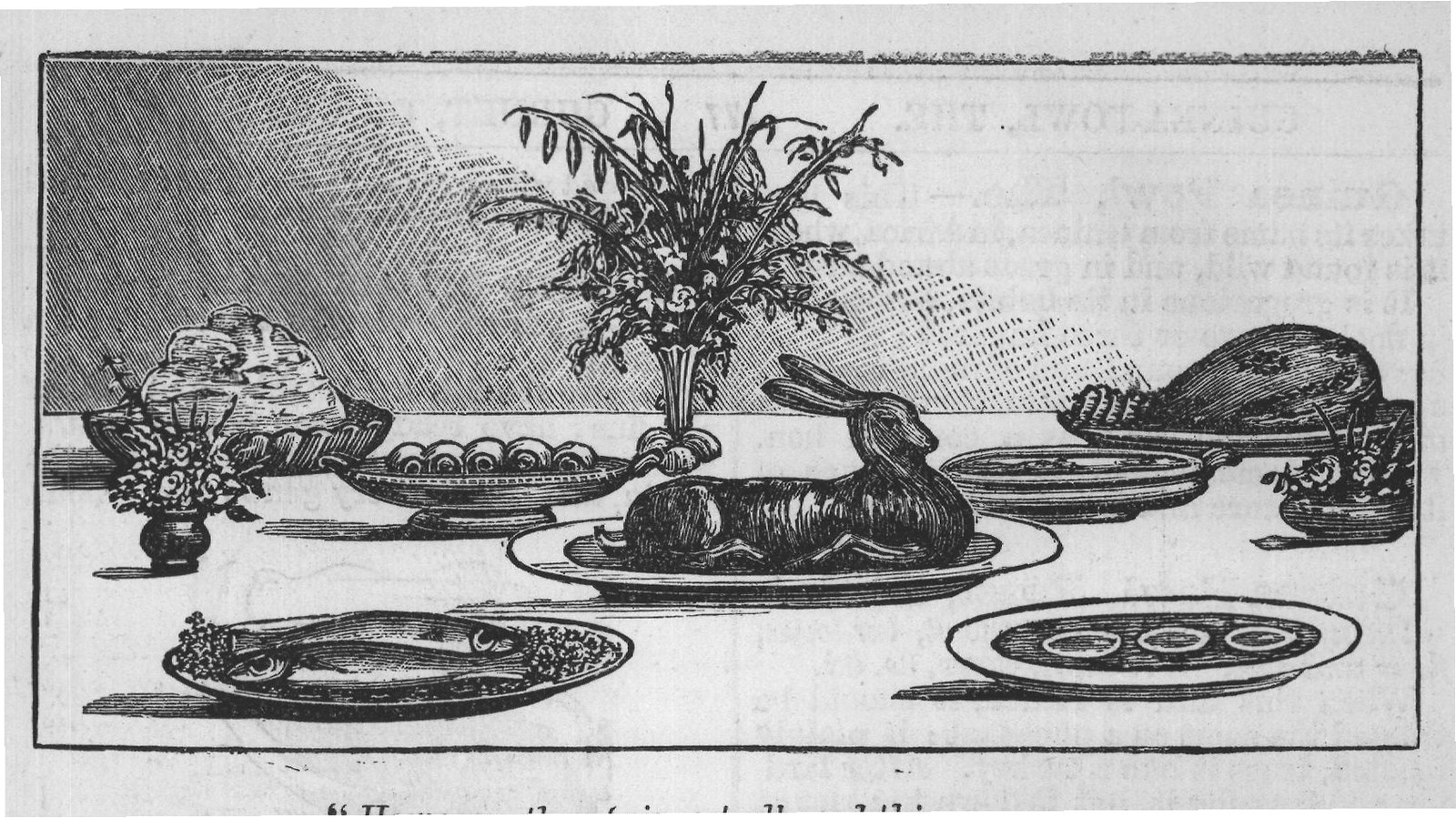
The page has been scrambled by the scanner: the gurnet instructions run straight into two haddock recipes and a stray line of Byron. The gurnet method itself is complete and simple — brine-poach a whole fish, serve with parsley and butter or anchovy sauce.
- The half hour is the problemHalf an hour of simmering will reduce gurnard to cotton wool. A whole fish of 1–1.5 lb is done in roughly 10–12 minutes at a bare shiver, when the flesh parts cleanly from the backbone. Take it off the heat the moment it does.
- The salt proportionSix ounces to the gallon is about 170 g in 4.5 litres, a brine of roughly 4 per cent — deliberately strong, because the fish is in it briefly and the seasoning has to reach the flesh through the skin. It is not a mistake, but it is saltier than most modern poaching liquor.
- "Simmer very gently"Means no bubbles breaking the surface. A rolling boil splits the skin and drives the delicate white flesh apart before the centre is warm.
- Buying gurnardSold today as red or grey gurnard, usually whole and often ungutted. Ask the fishmonger to gut and scale it; the fins and the bony head spines are genuinely sharp, which may be why the recipe has you cut the fins off first. Kitchen shears are the right tool.
- Parsley and butterIn Beeton this is a sauce, not a garnish: melted butter thickened with a little flour and finished with chopped parsley. Anchovy sauce is the same melted-butter base with anchovy essence stirred through.
- The baked variationThe note about stuffing with forcemeat and baking works well — a veal or breadcrumb-and-herb stuffing, the cavity closed with a skewer or a stitch, and 20–25 minutes at 180°C/350°F for a fish of about 1.5 lb, basted with butter.
- YieldOne gurnard of 1–1.5 lb feeds one generously or two modestly. The head and shoulders account for a large share of the weight, so buy more than the number on the scale suggests.
- SeasonThe October-to-March window still holds in northern European waters, and the frames make an excellent quick stock — gurnard bones are the classic base for a Mediterranean fish soup.
Gurnard — Beeton's "gurnet" is an older English spelling — takes its name through Old French gornart, generally traced to grondir, to grunt, after the noise the fish makes with its swim bladder when hauled from the water. It is an armoured, big-headed, small-bodied thing with fingerlike rays it uses to walk along the seabed, and for most of the nineteenth century it was cheap: plentiful in the Channel and North Sea, unfashionable at table, and priced accordingly. That is exactly why it earns an entry here. Beeton's book was built for households buying to a budget, and a fish that could be brined, poached and dressed with a flour-and-butter sauce for a few pence belonged alongside the turbot and the salmon rather than beneath them. The fish spent the twentieth century largely as bycatch before being taken up again by restaurant kitchens for its firm flesh and its excellent bones, which is much the position it held when this recipe was written.