Home › Some Useful Recipes › How to Bake a Ham
How to Bake a Ham
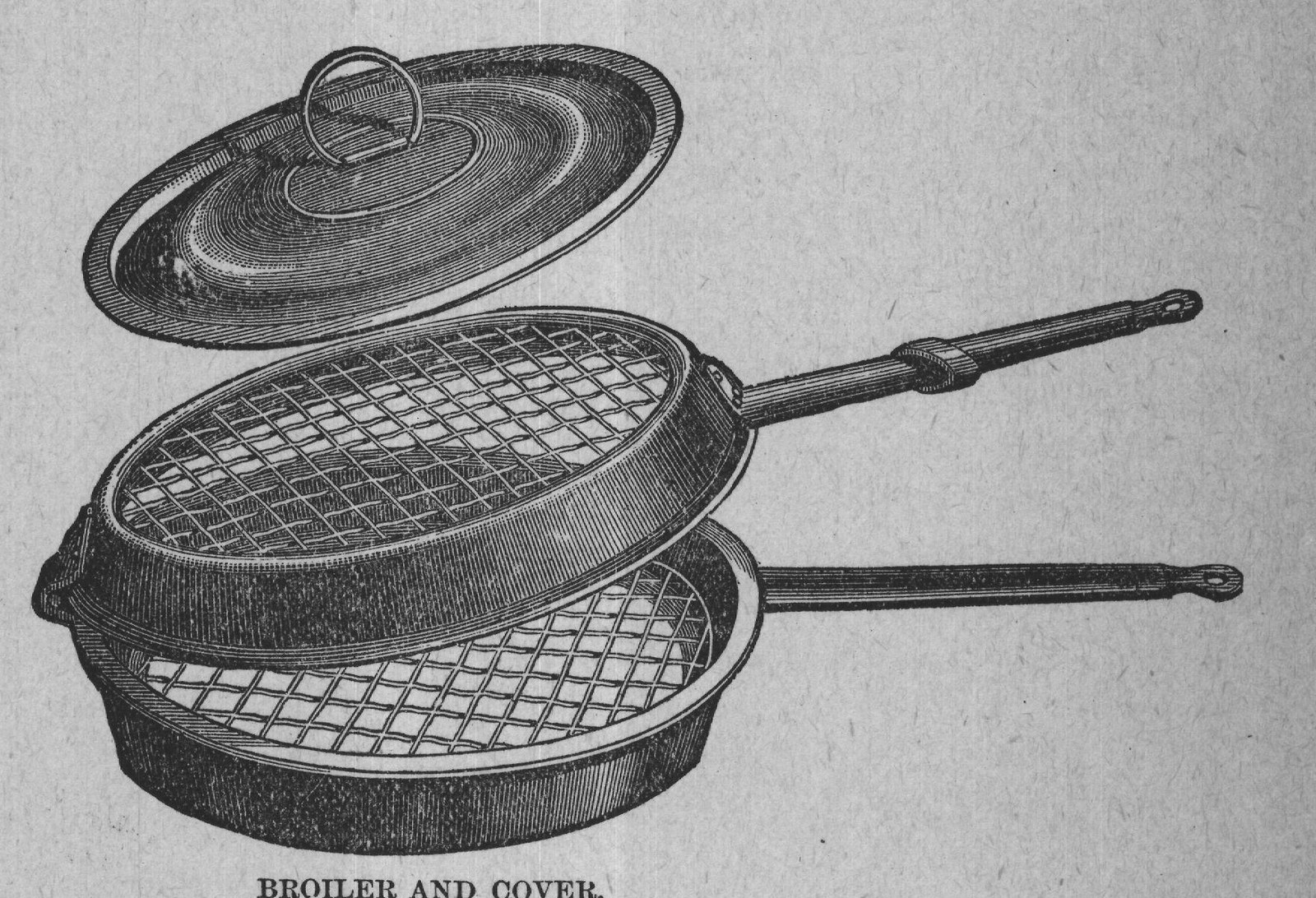
Skin the ham after boiling. Lay two flat pieces of wood in the bottom of the bake pan; lay the ham on them, and cover with a batter of flour and water spread equally. Bake two or three hours slowly, according to the size of the ham, remove the crust of batter, garnish and serve. It is excellent hot or cold, and all the better for having a half-pint of claret poured over it; or it may be eaten with a sauce of which wine is the basis.
XVI. Baked Beans.
THE marrow beans are really best, but the small navy beans are generally used. Put them to soak early in the evening, change the water before going to bed, and again in the morning. Parboil for two hours, or until they are tender, but will not break up. Pour off nearly all the water. Place the beans in a bean-pot-a deep pan will do if unsoldered. Score a piece of salt pork. Sink it into the middle of the beans, so it is just level with the surface, and add a very little molasses. Bake six hours, raising the pork toward the last so it may be well browned. To cook beans in the camp, after boiling, a hole is dug at the foot of the fire, filled with hot coals, the bean-pot is filled around with coals and covered with hot ashes, where it remains from supper-time in the evening until breakfast the following morning-about fourteen or fifteen hours. This, in fact, is the perfection of art in cooking beans for imparting a fine flavor.
XVII. Broiling and Frying.
In broiling and frying the same principle is carried out as in roasting, but it is somewhat different from that of baking. In baking, heat is applied to all sides of the meat during the whole operation. In roasting before the fire, heat is applied alternately to every side of the meat; the same thing is done in broiling and frying. Frying comes nearer to baking than broiling does, when the frying is done in a skilla with little fat. In broiling the meat comes into direct contact with the heat of the fire and is altogether preferable, except for ham, pork, bacon and fish, which are generally fried. The thing to do, in both broiling and frying, is to have a strong, clear fire, without smoke-hard coal, charcoal, or the coals of hard wood, are indispensable for broiling. Now that so many excellent and cheap implements for broiling are manufactured, so that the steak, cutlets, fish, etc., may be clasped between the leaves, thus saving the handling, frying is pretty much discontinued. In fact, in frying now, the articles
Two methods run together here: a boiled ham finished under a flour-and-water crust, and a long-baked pot of beans. Both are slow-oven work, and both assume a coal range that holds a low heat all day.
- The crust is a sealed jacket, not foodFlour and water spread over the ham forms a stiff huff paste that sets hard and traps moisture, the same trick used for baking fish and game in clay. It is cracked off and discarded before serving, so it needs no seasoning and no fat.
- The ham is already cookedThis begins after boiling, so the two to three hours in the oven are for flavour and gentle finishing, not for cooking the meat through. A modern equivalent is a bone-in cooked ham that only needs reheating.
- "Bake slowly"A slow oven; roughly 300F in modern terms, though the book gives no temperature. A hotter oven will scorch the paste crust and dry the ham underneath before the time is up.
- Two flat pieces of woodThey keep the ham off the bottom of the pan so the underside does not stew in its own drippings. A wire rack does the same job with no risk of the wood charring.
- Half a pint of claretOne cup of dry red wine. Claret in this period meant red Bordeaux or anything sold as such; any dry, unoaked red works, poured over the ham once the crust is removed.
- "A deep pan will do if unsoldered"Soldered seams on nineteenth-century tinware could fail in a long bake. The warning is obsolete for modern cookware, but it explains why a stoneware bean pot was preferred.
- Bean soaking and parboilingTwo changes of soaking water and a two-hour parboil reflect older, drier beans. Modern dried navy beans need an overnight soak and roughly 45 to 60 minutes of simmering to reach the stage described, tender but still whole.
- Six hours for the beansA slow oven again, covered. The recipe pours off nearly all the water, so check partway through and add boiling water if the pot dries out, or the top layer will harden.
- "A very little molasses"Proportions vary widely in New England versions; a couple of tablespoons per pound of dried beans fits 'a very little.' The recipe assumes salt pork supplies all the salt, so taste before adding more.
- YieldA pound of dried beans with a quarter-pound piece of salt pork feeds six to eight as a side. A bone-in ham of eight to ten pounds serves fifteen or more, which is why the text notes it is good cold.
Baking a boiled ham under a flour-and-water paste belongs to a family of sealing techniques much older than this book: the paste, sometimes called huff paste, was a working container rather than a pastry, and cooks used it for hams, venison haunches and whole fish long before it appeared in Victorian household manuals. Its survival in an American compilation like this one shows how long pre-industrial methods stayed in print alongside newer advice about ranges and broilers. The baked beans that follow are the New England version, distinguished by molasses and a buried piece of scored salt pork, and the camp method described here, a covered pot banked in coals from supper to breakfast, is the older communal form of the same dish; the long slow heat is what turns the beans creamy and lets the pork fat work all the way through. The essay on broiling that trails after both is a period argument, not a recipe, and its confidence that patent broiling irons had made frying obsolete is a reminder of how quickly kitchen gadgetry was changing when the book was compiled.