Home › Some Useful Recipes › Fried Oysters (Select large freshly shelled)
Fried Oysters (Select large freshly shelled)
Select large, freshly shelled oysters, dry them in a towel, dip into egg that has been slightly whisked, and then roll in bread-crumbs or powdered cracker. Let them dry, and cook in boiling lard until a light brown; or they may be fried in a little butter by turning.
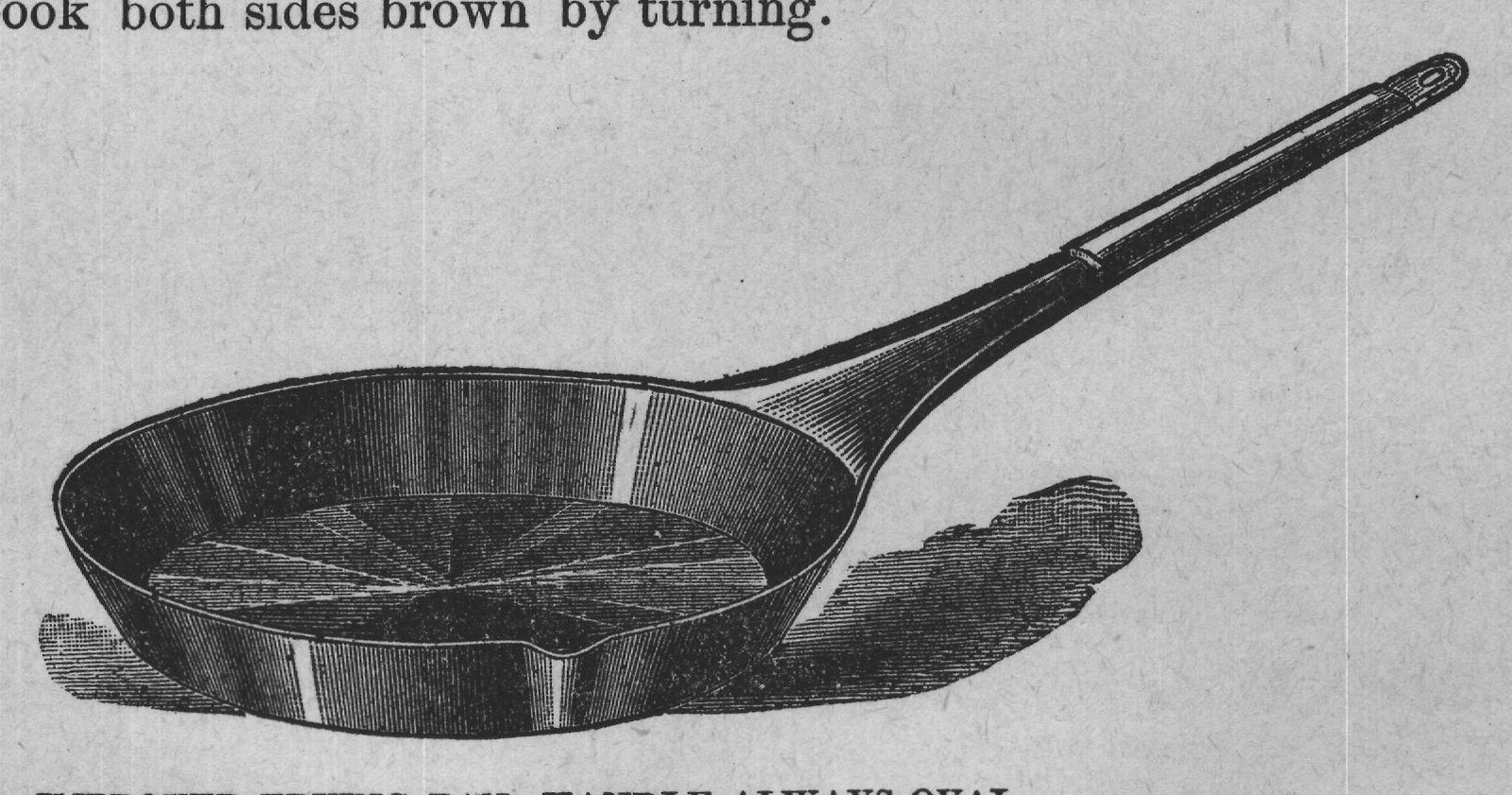
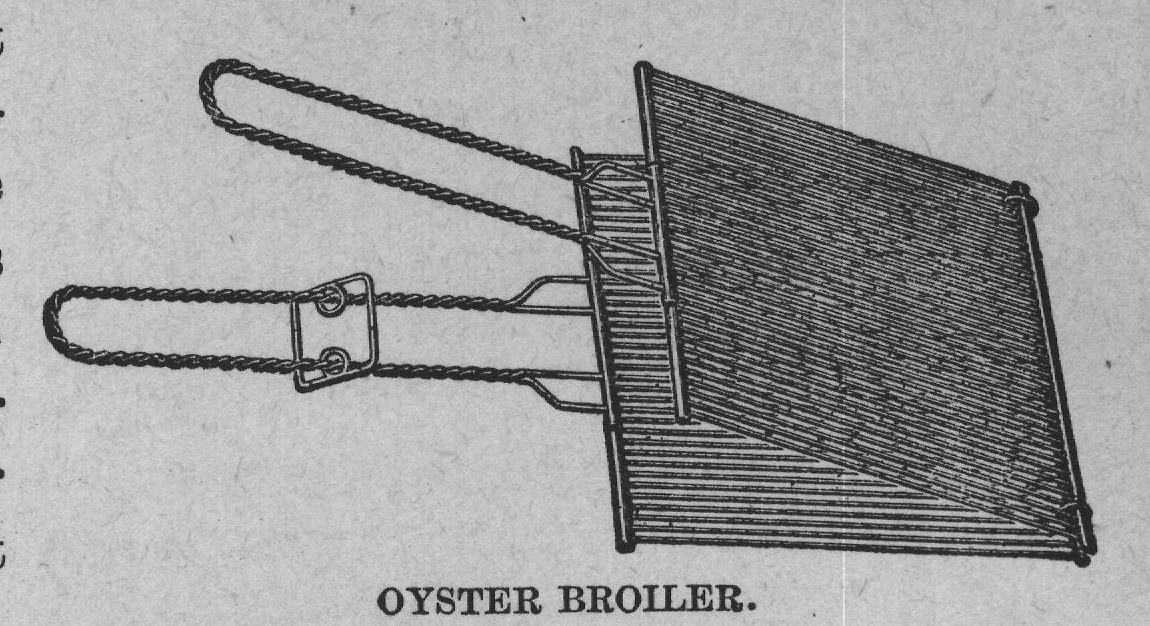
A plain egg-and-crumb fry, and the whole thing turns on getting the oysters dry and the fat hot. Two lines of stray catalogue text have crept into the page — the heading "Oyster Broiler" and the note about the oval frying-pan handle are advertising captions from the surrounding pages, not instructions.
- Dry the oysters properlyShucked oysters carry a great deal of liquor, and any of it left on the surface will keep the egg from gripping and will spit in the fat. Drain them in a sieve, then blot between towels until the surface looks matte.
- Let the coating setThe instruction to "let them dry" is the hinge of the recipe. Ten to fifteen minutes on a rack after crumbing lets the egg tighten around the oyster so the crust stays on in the pan.
- Boiling lard means 375FPeriod cooks judged fat by the haze and by a bread cube browning in about a minute. Use a thermometer: 370–375F, and fry in small batches so the temperature does not crash.
- Powdered crackerSoda or water crackers crushed fine — the nineteenth-century equivalent of fine dry breadcrumbs, and slightly starchier. Ordinary dry breadcrumbs or panko both work; skip fresh crumbs, which go soggy.
- Cooking timeLarge oysters need 1 to 2 minutes total in deep fat, or about a minute a side in butter. They are done when the crust colours; past that the oyster contracts and turns rubbery, which is the usual fault with this dish.
- Frying in butterButter alone will brown and burn before the crust sets. Use clarified butter, or half butter and half a neutral oil, in a pan barely filmed with fat.
- Quantity and servingReckon 6 to 8 large oysters per person as a first course, with lemon, cayenne or a vinegar-based sauce. Serve immediately — the crust softens within a few minutes.
- Buying today"Freshly shelled" means freshly shucked. Buy shucked oysters in their own liquor from a fishmonger, or shuck your own; the pasteurised tubs sold for stews are flabbier and hold more water.
Fried oysters belong to the period when oysters were cheap protein rather than a luxury: American beds in the Chesapeake, Long Island Sound and the Gulf were being dredged on an industrial scale through the second half of the nineteenth century, and canned and barrelled oysters travelled inland by rail to towns that had never seen salt water. General household compendiums like this one accordingly treat them as an everyday ingredient, and give a variety of ways to cook them — stewed, scalloped, in patties, on toast, and fried in crumbs as here. The recipe's own confusion is telling: it sits under a heading for an "oyster broiler" and ends with a line about frying-pan handles. The egg-and-crumb method itself is much older than the book, a standard English coating for anything small and wet that was to be fried, and it survives essentially unchanged in the fried-oyster platters of the American coast.