Home › Village Receipts › Omelet That Does Not Fall
Omelet That Does Not Fall
Add a pinch of salt and five teaspoons of cold water to the yolks of five eggs, and beat well; fold in the whites, beaten dry and stiff; place in a hot omelet pan and cover with melted butter. Cook over the fire until creamy; then place in a hot oven for a few minutes, until the top is set; then roll and serve.
— Mrs. Michael Schubert
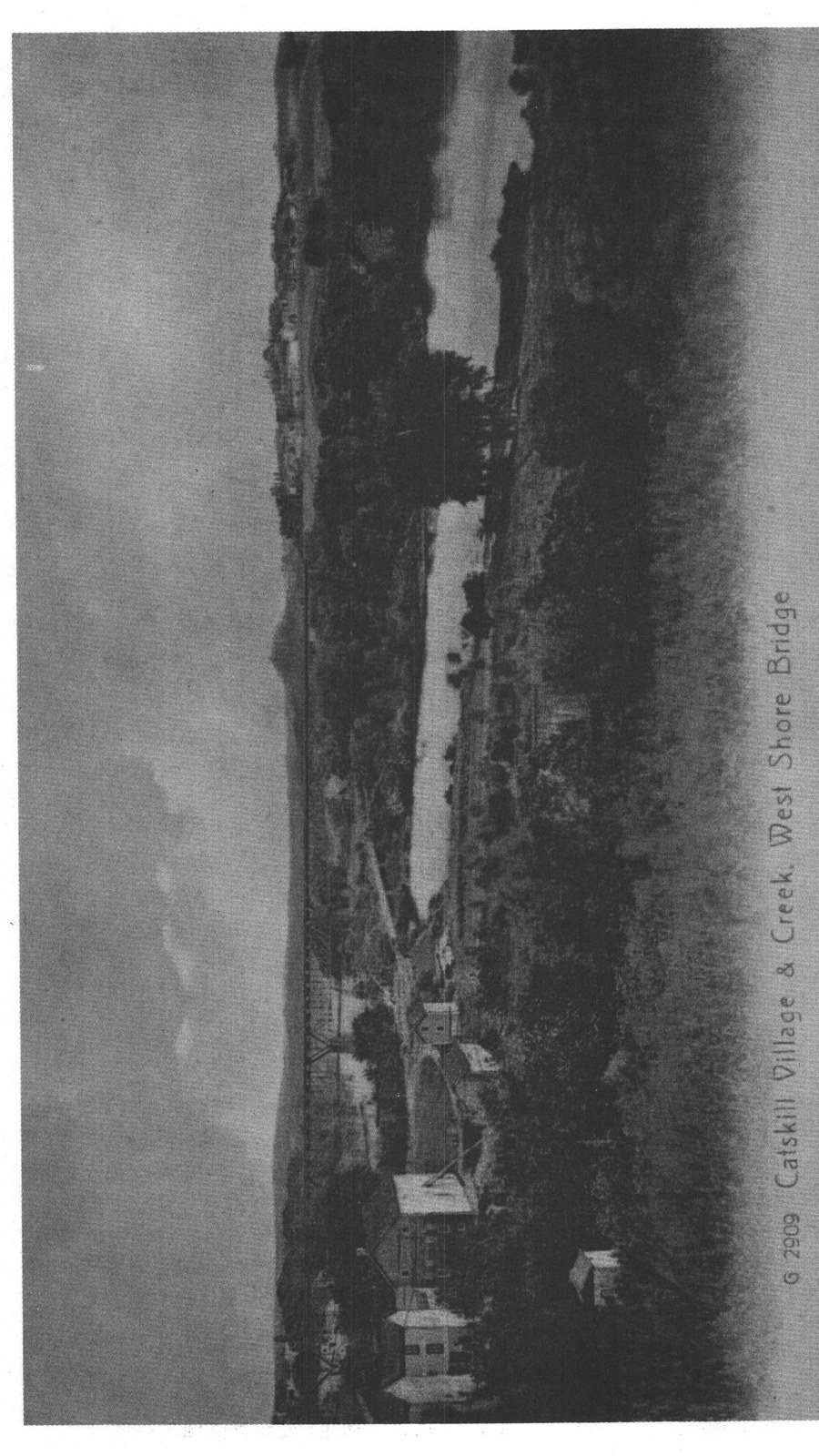
G 2909 Catskill Village & Creek. West Shore Bridge If you can't come can't come bll Berd. Fai, Ex.
This is a puffy or soufflé omelet — separated eggs, no milk, finished in the oven — and the whole thing lives or dies on how the whites are folded in. The receipt is sound; it just assumes you know what its pan and its oven were like.
- The hinge: fold, don't stirThe whites carry all the lift, so cut and fold them into the yolks with a spatula until barely combined, leaving a few streaks. Stirring them smooth collapses the foam and you get a flat, rubbery omelet instead of the one that "does not fall".
- "Beaten dry and stiff"Period books used "dry" for the very stiff stage of beaten whites; taken past that they turn grainy and weep, so in practice stop when the peak stands up and the surface still looks glossy.
- Five teaspoons of cold waterThe water stands in for milk, and the usual explanation is that it turns to steam and helps puff the omelet, where dairy enriches and weighs the foam down. The receipt gives no reason of its own.
- "A hot oven"In period usage roughly 400-450F, and the figure is only approximate. Three to five minutes is enough to set the top; longer and the omelet dries out and deflates on the way to the table.
- The omelet panA 9- or 10-inch skillet with sloping sides and an ovenproof handle. Cast iron or steel is ideal since the pan goes from burner to oven; a plastic-handled nonstick pan will not survive it.
- "Cover with melted butter"Most likely means pouring melted butter over the surface of the eggs once they are in the pan rather than buttering the pan alone. No quantity is given, so a couple of tablespoons is a guess. It bastes the top while the bottom sets.
- "Cook over the fire until creamy"Medium-low heat for two to three minutes — the bottom should be set and pale gold, the centre still loose. If the underside colours fast, the heat is too high and the interior will never set before the base burns.
- Rolling and yieldLoosen the edge, fold or roll it out of the pan onto a warmed platter, and serve at once; it begins to sink within a minute or two. Five eggs feed two generously or three modestly.
- The garbled tailThe text after Mrs. Schubert's name is not part of the receipt — it is scrambled matter picked up in transcription, seemingly a Catskill Village address and a fragment of a note. Ignore it.
Community cookbooks of this kind -- subscription volumes sold by church and village societies, each receipt signed by the woman who contributed it -- were a common way American home cooking got written down between about 1880 and 1920, and the contributor's name carried weight. The title is a small boast: a souffle omelet is the showy sort that puffs high in the pan and sinks the moment it cools, and a receipt promising one that holds is a claim to skill. The technique is French in ancestry, and the separated-egg method was taught in the American cooking-school movement of the later nineteenth century. Cold water in place of milk turns up in a number of such receipts, on the reasoning that steam lifts where dairy only enriches, though how standard the instruction was is not established here.