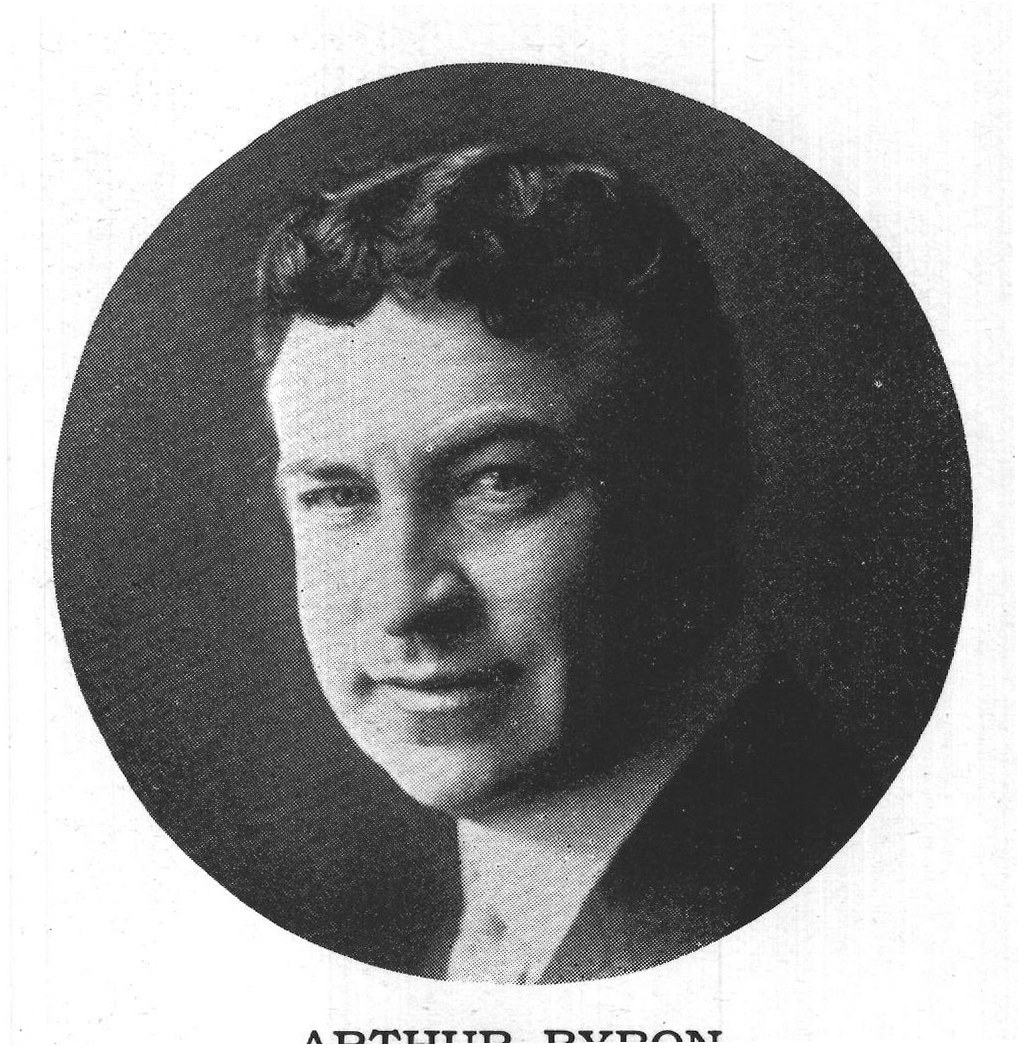
Arthur Byron

PERFECT COFFEE
Use an ordinary coffee pot. Ten-cent one is good as any other.
Don't use egg or egg shell to settle coffee. It will require no settling.
Before putting the coffee pot on the fire, put in five heaping tablespoonfuls of medium-ground coffee.
Add one cup of cold water, and let stand for fifteen or twenty minutes. Then add four cups of hot water and put pot on fire. Keep lid off and watch coffee; as soon as it boils, lift it off till it stops boiling. Put it on fire again and as soon as it begins to boil again remove it as before; put it back and when it boils for the third time, allow it to boil furiously for three or four seconds, then put it on low fire and let it simmer for seven minutes.
This will make four cups of perfect coffee. Put sugar and cream in cup and take cup to fire and pour the boiling coffee into the cream; that is the best way to serve it.
This is a perfect cup of coffee and can be made in camp, on the boat, in the flat-ANY PLACE.
Nhin Bupon
BELGIAN HARE-SOUR CREAM SAUCE
One hare cleaned and split. Lard the back and the hind legs. Cook one cup diced carrots and one-half a small onion in a little bacon fat five minutes. Place hare in pan and pour a cup of brown stock around it. Bake three-quarters of an hour and baste often. Now add one cup of cream and juice of one lemon. Cook fifteen minutes longer and baste every five minutes. Remove hare, strain and thicken sauce, season with pepper and salt and pour around hare and serve.
This is my one culinary accomplishment and while making it I always insist that some other fellow is busily engaged at hot biscuit-making at the same time, because the two are necessary to a perfect meal. Gastronomically yours,
Two contributions here: a boiled-coffee method that predates drip brewing, and a roast rabbit with a soured-cream pan sauce. Both assume a coal or gas range and a cook who watches the pot.
- The coffee is a boiled coffee, not a dripGrounds go loose into the pot with the water and are never filtered out; Byron's claim is that the method leaves nothing needing to be settled at all. The fifteen- to twenty-minute cold-water soak pre-wets the grounds before any heat goes on.
- Three boils and a seven-minute simmerThis is the one instruction modern practice has reversed. Coffee held near boiling for that long extracts bitter phenolics and drives off the aromatics; current guidance for drip and press brewing is water at 195-205F and contact of about four minutes with no boiling at all. Byron's method will give strong, dark coffee of the camp-kettle type.
- ProportionsFive heaping tablespoons of medium grind to five cups of water total (one cold, four hot). At roughly 7-8 g to a heaping spoonful that is about 35-40 g of coffee to some 1.2 litres of water, or 30-35 g per litre, which is weaker than a standard modern brew of about 60 g per litre. The "four cups of perfect coffee" from five cups of water reflects what the grounds absorb and what evaporates from the open pot.
- Settling without eggEgg white and crushed shell were common nineteenth-century clarifiers, binding fine grounds into a raft. Byron's point is that his medium grind and the long cold soak make them unnecessary. Pour slowly and stop before the last inch.
- Pouring coffee onto the creamHot coffee poured into cold cream is less likely to give the cooked, slightly curdled note you can get pouring cream into near-boiling coffee, and it brings the cup down to drinking temperature at once.
- "Belgian hare" is a rabbitThe Belgian Hare is a breed of domestic rabbit, bred to look like a hare, and was a fashionable meat animal in the United States around 1900. Buy a 2.5-3 lb rabbit; a true wild hare is darker, stronger and far tougher, and would need braising rather than this short roast.
- Oven heat and timeNo temperature is given; the recipe says only "bake." A moderate oven, around 350F, will suit a rabbit of this size for the three-quarters of an hour specified, plus the fifteen minutes after the cream goes in. Lean rabbit dries fast, which is why he insists on basting often.
- Larding and the sour creamLarding means threading strips of fatback or thick bacon through the back and hind legs with a larding needle; barding the saddle with bacon slices is the practical substitute. The title says sour cream and the method says cream plus lemon juice: the acid sours the cream in the pan. Add it off the boil and keep the heat gentle, or it will break.
- Yield and servingOne rabbit serves two to three. He is right that something starchy is wanted for the sauce; hot biscuits, buttered noodles or boiled potatoes all do the job.
Both dishes place this page in a period. The Belgian Hare arrived in America from England in the late 1880s and set off a genuine speculative boom around 1900, with breeders' clubs, stud registers and inflated prices, before the bubble collapsed and the animal settled back into being an ordinary meat and show rabbit. The coffee is the older tradition of the two: boiled coffee, made in an open pot on the stove and settled rather than filtered, was the American default through the nineteenth century, and the egg-and-eggshell clarifier Byron dismisses appears in domestic manuals of the period. Byron (1872-1943) was a stage actor of the generation collected in these celebrity cookery albums, where the charm lay in the confession as much as the method: he is careful to say the rabbit is his single accomplishment in the kitchen, and that a ten-cent pot makes coffee as well as an expensive one.