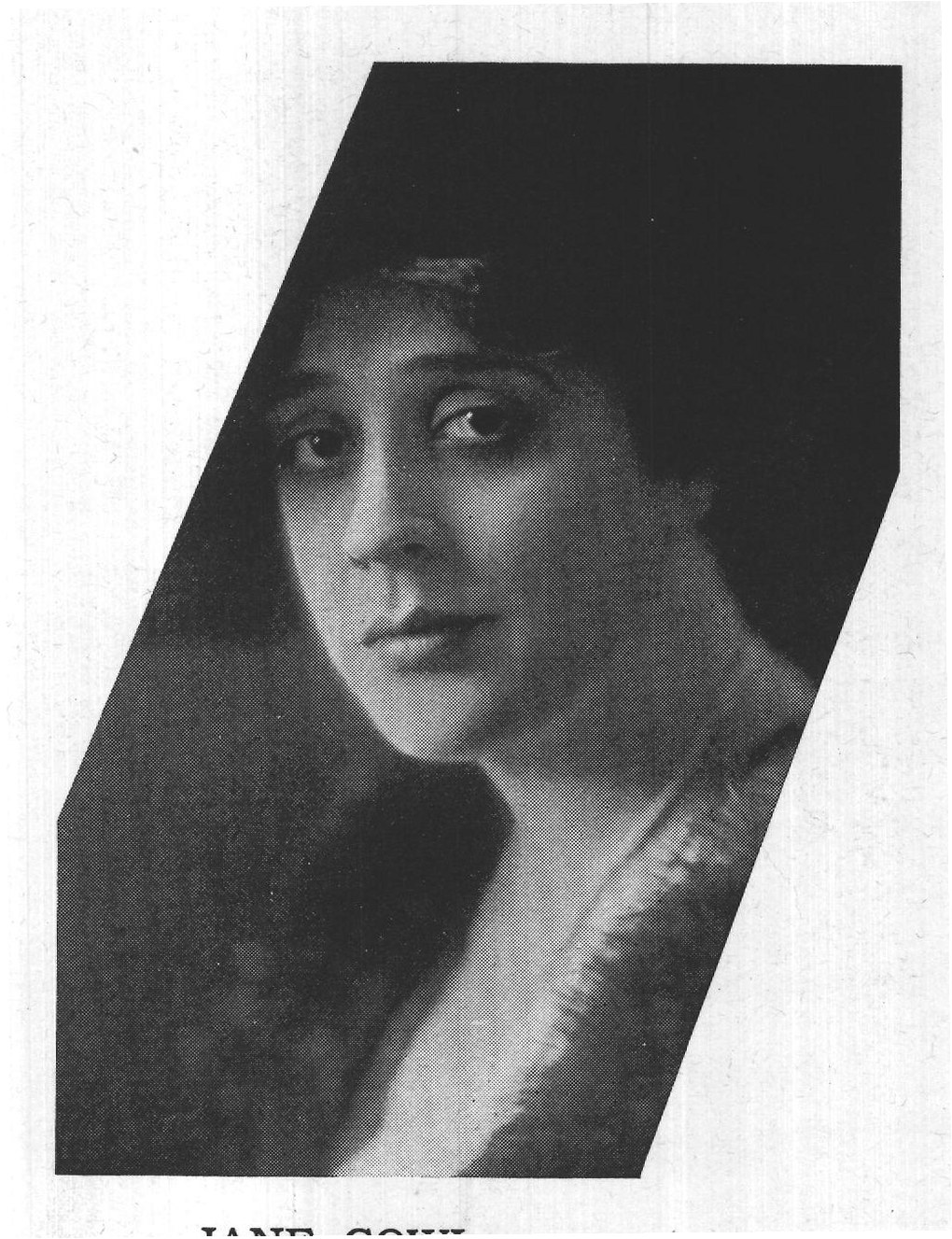
Jane Cowl

YAMADORE SALAD
Small oysters Boiled potatoes Large sliced truffles Boiled sliced celery knobs, sliced very thin Oyster juice should be soaked in with potatoes while still warm.
Vinaigrette dressing with French herbs, and some of the oyster juice mixed together, poured over all.
I pull from my memory this, which I believe to be the best salad in the whole world. It is a little vague as to quantities, but I think it's about right. Very sincerely yours, Janetool.
FROG'S LEGS FRICASSEED a la HENRY 10
CHAFING DISH
Unjoint one dozen of frog saddles and braise in one ounce of butter and a few drops of lemon juice. Add two cups of heavy cream sauce, the yokes of two raw eggs, a couple of dashes of Worcestershire sauce; stir well and cook over slow fire. When nearly done, add a little chopped parsley.
Two separate dishes sit under Cowl's name, and both are written as notes to a cook who already knows the technique. The salad genuinely has no quantities; the fricassee has quantities but no timings.
- Celery knobsThese are celeriac (celery root), not celery stalks and not a bulb of anything else. Boil peeled celeriac until just tender, cool, then slice paper-thin; it discolours, so acidulate the water with a little lemon.
- The oystersNothing here says to cook them. Some oyster salads of the period plumped them in their own liquor over low heat for a minute or two, just until the edges ruffled, then cooled them, and that reading fits the dish; but the recipe leaves it open. If you use them raw, buy shucked oysters from a source you trust and keep them cold; if anyone eating is pregnant, elderly or immunocompromised, poach them.
- Oyster liquor and warm potatoThis is the one instruction in the salad that matters. Dress the potatoes with the strained oyster liquor while they are still hot, so they absorb it rather than sitting in it. Cold potato takes up almost nothing.
- TrufflesThe recipe says only "large sliced truffles", which in this period could mean fresh black truffle or, as often, the tinned French sort. Tinned or jarred truffle, or a few drops of truffle juice from the tin stirred into the vinaigrette, is the honest option; truffle oil tastes of nothing that belongs here.
- Proportions to aim atFor four as a first course: about 1 lb waxy potatoes, a dozen oysters with their strained liquor, one medium celeriac, and truffle to taste. "Vinaigrette with French herbs" is unspecified; fines herbes — chervil, chives, tarragon, parsley — in a 3:1 oil-to-vinegar dressing is a reasonable reading.
- Frog saddlesThe "saddle" is the joined pair of hind legs with the lower back attached. Supermarket frog legs are usually sold already separated and frozen; a dozen saddles is roughly two dozen legs, which serves three or four. Thaw and dry them thoroughly before they meet the butter.
- Cream sauce"Two cups of heavy cream sauce" means a béchamel enriched and reduced until it coats a spoon, not two cups of cream. Make a light roux sauce with milk, reduce it, and finish with cream.
- The egg yolks are the hingeYolks stirred into hot sauce over direct heat will scramble. Take the pan off the fire, temper the yolks with a ladle of the hot sauce, return it, and hold it below a simmer from then on — no bubbles at all. "Braise" here is closer to a gentle sauté; the legs are done in six to eight minutes.
- Chafing dishThe dish was designed for tableside cooking over a spirit lamp, which is why the heat is described as slow. A heavy saucepan over the lowest burner, or a bowl set over barely simmering water, reproduces it.
Both dishes belong to the chafing-dish and supper-club cookery that flourished around American theatres in the first decades of the twentieth century, when actors ate after the curtain came down and restaurants near Broadway built menus of oysters, truffles, sweetbreads and frogs' legs that could be assembled fast and finished at the table. The salad's name is unexplained in the book; "Yamadore" echoes the Japonisme fashionable in the theatre of Cowl's youth — the Madame Butterfly material — but the connection is suggestive rather than documented, and the dish itself is thoroughly French in construction. Frogs' legs "à la Henry" is the sort of attribution restaurant cooks gave to a house chef or a particular room, and such names are often said to have circulated without any recorded owner. Cowl's cheerful admission that the recipe is "a little vague as to quantities" is characteristic of celebrity cookbooks of the period, which are generally thought to have leaned more on collected recollection than on tested formulas.