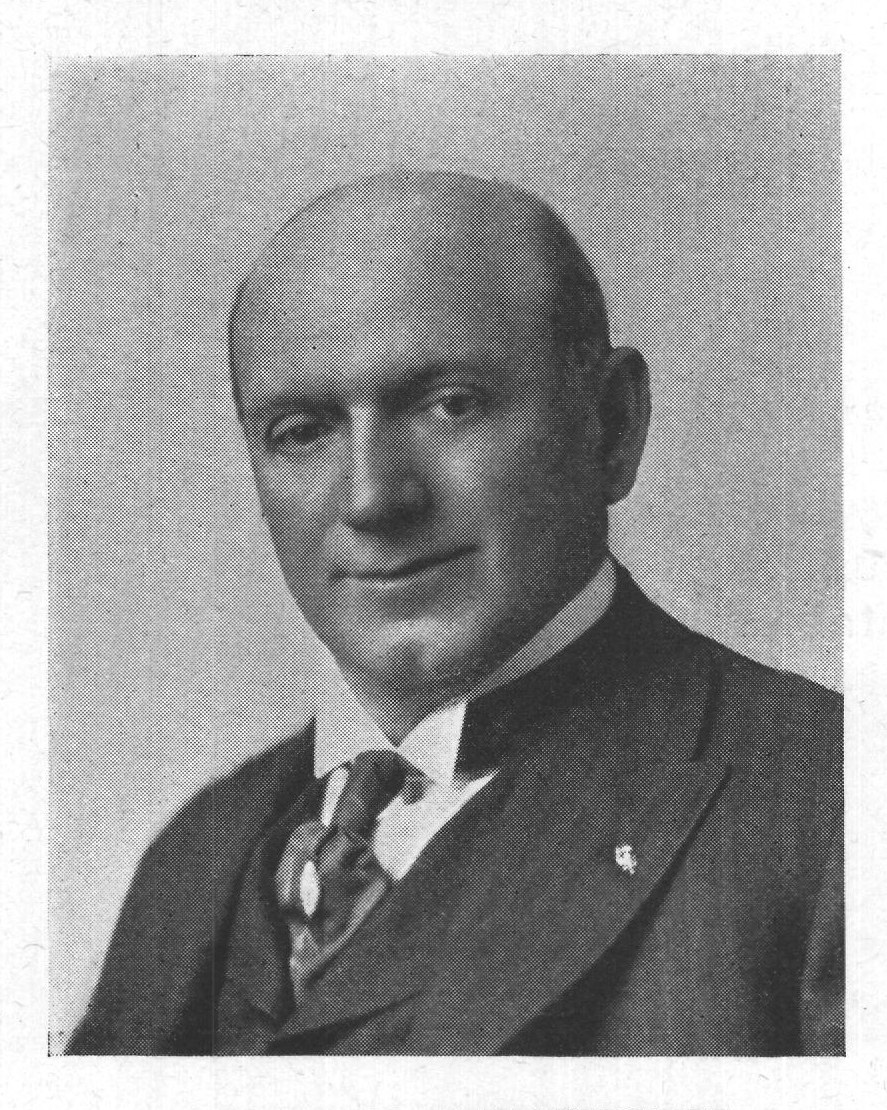
Joseph Cawthorn

WELSH RAREBIT
I have seen them built, and have a vague idea of the plans and specifications, but that's about all. However, to the best of my knowledge, you first of all get a piece of cheese; and you must be sure and tell the man in the store that it's for a rarebit. You then cut the cheese up into pieces about an inch square, and put into some sort of a pan. After that, a lot of things happen that I am not quite clear on. I know there is a lot of stirring and pouring, beating of eggs, mixing of English mustard, and hunting for the Worcestershire bottle. A crowd of friends usually stands 'round the stove giving advice to the builder, and sometimes one or two of them volunteer to help in the stirring. But care must be taken to trust no one to this important part of the work unless he be an enthusiastic rarebit fiend. For 'tis said, there is a psychological moment in the building of a rarebit which means success or failure if the stirring be neglected; and experts say, that the most kindly disposed cheese will turn itself into a trunk hinge if given the slightest encouragement.
At a certain stage of the procedure, the builder will be heard to cry out, "Is the toast ready?" or "Come on with the toast." And believe me, it had better be ready to his hand! This is the signal that the parts are about to be assembled. A portion of the cheese is poured on each piece of toast, and you have only to decide whether to eat it or throw it out the window. Sincerely, Joseph Cauthor.
Celebrity
BAKED CUP CUSTARD
4 cups hot milk 4 eggs 1/2 cup sugar I 1/4 teaspoon salt Nutmeg Beat eggs slightly; add sugar and salt, then pour hot milk on slowly. Strain mixture into cups; place cups in a pan of hot water and sprinkle a few gratings of nutmeg over each one. Bake over a low flame until custard is firm and a knife can be inserted and removed without the custard sticking to it. Do not let water in pan boil or custard will whey.
Yours very truly,
The page is mostly a comic monologue about Welsh rarebit; the actual instructions belong to the baked cup custard that follows. It is a sound recipe, written loosely enough that a few numbers help.
- The hinge: keep the water bath below a simmerThe original says it outright and it is the whole technique. Once the surrounding water boils, the custard passes 180F at the edges and curdles, weeping the watery whey the note warns about. Hot but still water, and pull the custards while the centres still wobble slightly.
- "Bake over a low flame" means a moderate-to-low oven"Bake over a low flame" -- the book gives no dial setting anywhere, and the wording probably reflects a range described by its fire rather than by numbers. A moderate-to-low oven, in the region of 325F (or 300F if yours runs hot), suits a custard of this ratio; the custards are done at an internal temperature of about 170-175F.
- TimingNone is given. Individual cups in a water bath at 325F generally take 30-45 minutes depending on the depth of the cup. Start checking at 30 minutes with the knife test described.
- Pour the hot milk in slowly, and mean itFour eggs beaten only "slightly" have no protection against four cups of hot milk dumped in at once. Add a ladleful, whisk, then the rest in a thin stream. The straining step afterwards catches any threads of cooked egg and the chalazae.
- The ratio makes a soft custardOne egg per cup of milk is at the loose end of the range; expect a delicate, spoonable set rather than a sliceable one. Whole milk is assumed here, and the recipe suffers noticeably with skim.
- YieldRoughly six 6-oz custard cups, or eight smaller ones. Use a deep roasting pan and fill it with hot water to about two-thirds up the sides of the cups.
- NutmegGrated from a whole nutmeg, as the wording implies. Pre-ground nutmeg is flatter and tends to sit on the surface as a grey film rather than perfuming the top.
- About the rarebitCawthorn's account is a joke, not a method, and there is no usable recipe in it. If you want the dish, the standard approach is melting cheese with a little beer or milk, mustard and Worcestershire over gentle heat; the "trunk hinge" he describes is what happens when cheese is heated too fast and the fat breaks out of the protein.
This comes from a genre that flourished in the early twentieth century: the celebrity cookbook, in which stage and screen performers were asked to contribute a favourite dish, and frequently contributed a comic paragraph instead. Joseph Cawthorn (1868-1949) was a dialect comedian who worked in vaudeville and Broadway musical comedy before moving into films, and his rarebit monologue is essentially a vaudeville bit set down on paper -- it trades on the chafing-dish craze of the 1890s and 1900s, when a Welsh rarebit made at the table by an amateur, surrounded by advising friends, was a familiar form of late-evening entertainment. The baked cup custard printed after it is the opposite kind of writing: a plain, unattributed formula of the sort that filled cookery manuals from the 1880s onward, cheap, digestible and long recommended for invalids and children. The transcription signs off "Joseph Cauthor," most likely a scanning error for Cawthorn.