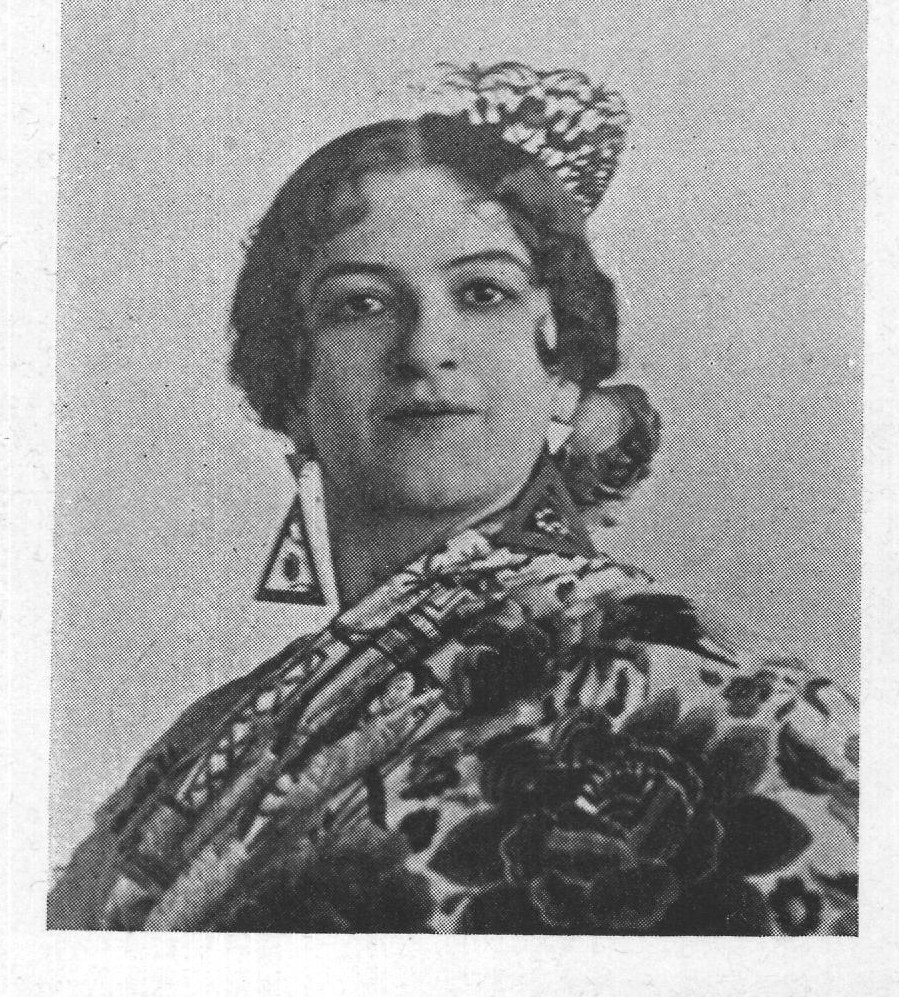
Maria Barrientos

6 pounds plums 5 pounds sugar
PLUM CONSERVE
Cook one-half hour. 1 pound seeded raisins 2 oranges-juice and yellow rind -chopped See that jars are warm and always soak rubbers in warm water before using. "Sweets to the sweet."
The page is a printer's collision: the heading "Queen Cake" sits above what is plainly a plum conserve, and the method line has been set before the ingredient list. Read it as one recipe — plums, sugar, raisins, orange — cooked half an hour and put up in jars.
- Read the order, not the layoutThe ingredients are 6 lb plums, 5 lb sugar, 1 lb seeded raisins, and the juice and chopped yellow rind of 2 oranges. "Cook one-half hour" belongs at the end, after everything is combined.
- This is a very large batchEleven pounds of fruit and sugar plus raisins yields roughly 8 pints of conserve. A quarter batch — 1 1/2 lb plums, 1 1/4 lb sugar, 4 oz raisins, half an orange — fits an ordinary pot and gives about 2 pints.
- Yellow rind means zest onlyPare or grate just the colored outer layer of the oranges. The white pith underneath turns the finished conserve bitter, and it will not soften in half an hour of boiling.
- Seeded raisins"Seeded" here means the seeds had been removed, as distinct from seedless varieties; seeding was tedious work, and raisins were sold both with seeds in and ready-seeded. Modern seedless raisins substitute weight for weight.
- Half an hour is a starting pointThirty minutes at a steady boil suits ripe, juicy plums. Judge by the fruit: the syrup should sheet off a cold spoon, or read about 220F on a thermometer. Stir often near the end, as the sugar and raisins scorch easily.
- Plums need no added pectinPlum skins and the flesh near the stone are pectin-rich, so no commercial pectin is needed. Leave the skins in; with dark-skinned plums they also contribute much of the colour.
- The rubbers"Rubbers" are the rubber sealing rings used with the jars of the period, both zinc-capped Mason jars and glass-lidded clamp jars; soaking them in warm water made them pliable so they would seat. Two-piece modern lids replace them and are not soaked. Warming the jars still matters -- hot conserve into a cold jar can crack it.
- SealingThe book assumes open-kettle filling, which is no longer considered a reliable seal for shelf storage. Follow current boiling-water canning directions for fruit preserves, or simply refrigerate the filled jars and use within a few weeks.
Maria Barrientos (1884-1946) was a Barcelona-born coloratura soprano who sang at La Scala and, from 1916, at the Metropolitan Opera; her appearance in a volume of "celebrated actor folks" cookeries reflects the era's fashion for soliciting recipes from stage and opera names for charity and promotional cookbooks, where the signature mattered more than the copy-editing — hence the stray "Queen Cake" heading left standing over a conserve. Conserves in this period were distinguished from plain jams by the addition of raisins, nuts or citrus, and the combination of stone fruit with orange rind and raisins was common American practice for putting up the late-summer plum glut. The closing tag, "Sweets to the sweet," is Gertrude's line as she strews flowers in Ophelia's grave in Hamlet — a bit of theatrical garnish entirely in keeping with the book's premise.