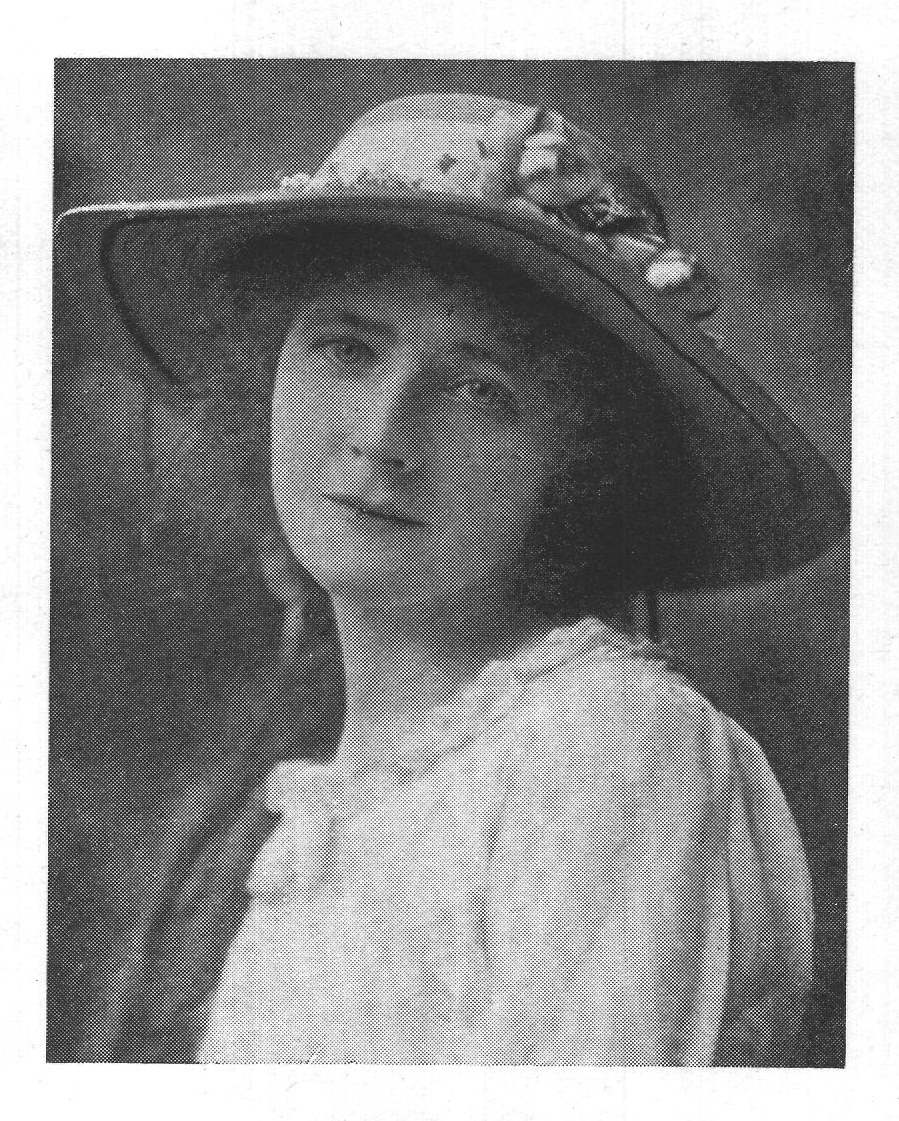
Mary Ryan

OLD-FASHIONED VEGETABLE SOUP
1¾ lbs. beef, cover with cold water ½ cup coarse barley Allow this to come to boiling-point and skim.
Cut up soup greens, consisting of: 1 white turnip 1 yellow turnip Parsley Leeks 1 potato 1 can tomatoes Let come to a boil all together. Boil slowly and long.
It is good and nourishing, believe me!
With good wishes always Mary Ryan
YORKSHIRE TART
is a variety of pie little known in America, but very good. Line a pie-tin with pastry and spread with a layer of preserves; strew chopped blanched almonds over this, and bake till the pastry is a delicate brown. Then cool and cover with sweetened and flavored whipped cream. Serve with cream or boiled custard.
Two unrelated dishes share the page: a contributed soup written in shorthand, and an editorial filler note on Yorkshire tart. Both assume a cook who already knows the shape of the dish.
- The meat1¾ lb of "beef" for soup was most likely a bone-in cut with connective tissue — shin, shank or chuck. Start it in cold water so the scum rises and can be skimmed before the vegetables go in, which is why the instruction order matters.
- Barley1½ cups of barley in a pot this size will produce something closer to porridge than soup, since barley swells three to four times. Half a cup of pearl barley is nearer modern expectations, or keep the full amount and add water as it thickens. "Coarse" barley meant a large-grain pearl or pot barley.
- Yellow turnipThat is rutabaga (swede), sold in most markets waxed. The white turnip is the ordinary purple-topped turnip. The two behave differently in the pot — the rutabaga sweetens, the white turnip stays peppery.
- Soup greens and leeks"Soup greens" was often sold as a ready-assembled bunch by the greengrocer, root vegetables plus herbs, though here the recipe spells out its own list. Wash leeks split lengthwise; grit sits in the layers and will not cook out.
- A can of tomatoesCanned tomato sizes varied in this period, a No. 2 can of roughly 20 oz being common; a standard 14.5 oz can today is a workable stand-in. Add it with the vegetables rather than at the start, as acid can slow the softening of both barley and root vegetables.
- "Boil slowly and long"Read that as a bare simmer for 2 to 2½ hours, until the beef shreds. An actual rolling boil clouds the broth and toughens the meat. Salt is nowhere in the original; season near the end, once the barley has taken up liquid.
- YieldEnough for six to eight bowls, more if barley is reduced. Better on the second day, though it will need thinning with water or stock.
- Yorkshire tart: the crustThe recipe gives no oven setting; a modern equivalent for baking the pastry to "a delicate brown" would be around 375F for roughly 25 minutes. The jam layer keeps the base from crisping, so use a metal tin on a preheated baking sheet and keep the preserve layer thin.
- Yorkshire tart: finishingThe shell should be fully cold before the whipped cream goes on, or it will collapse. "Flavored" most likely meant a spoonful of sherry or brandy, or an extract, stirred into the cream. "Boiled custard" is a stirred egg custard — thickened over gentle heat and never actually boiled, which would scramble it.
This page comes from a charity-style stage collection in which Broadway and vaudeville performers sent in favorite dishes, which explains its tone: Mary Ryan writes a note to a friend rather than a recipe, ending with "believe me" and good wishes, and leaves out salt, times and pan sizes, assuming a cook who has made beef-and-barley soup before. Barley soup with beef shin and root vegetables was a common cheap winter pot in the northern European and Jewish immigrant kitchens of New York, where pre-bunched "soup greens" were sold. The Yorkshire tart that follows may not be Ryan's at all but matter set below her contribution; jam tarts of this kind, sometimes called jam or curd tarts depending on the filling, belonged to Yorkshire baking traditions that traveled less readily than the pies Americans already had.