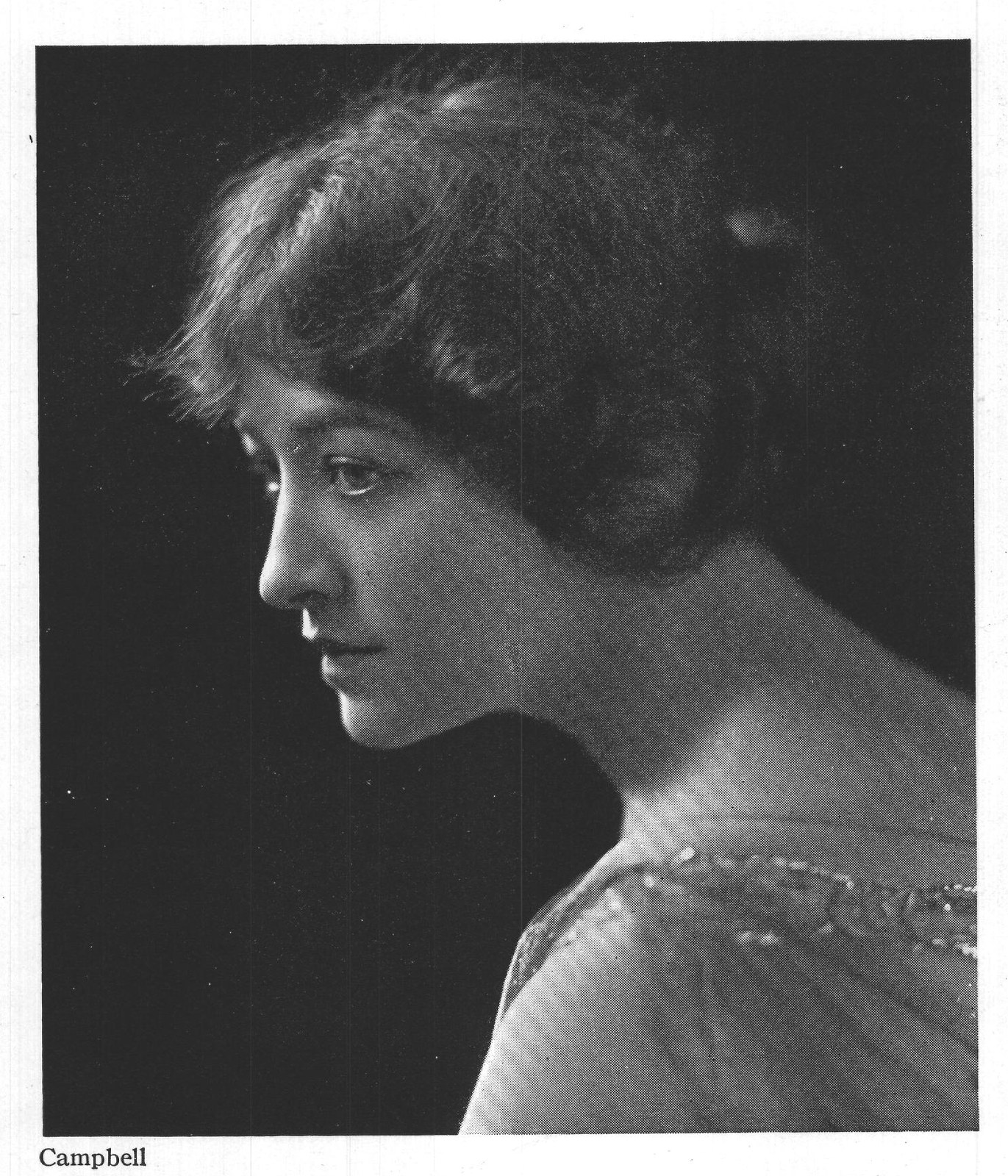
Pauline Frederick

DAZIE
COTTAGE
Use any milk that is left over.
Place same in large saucepan, on back of stove SO that it will scald, but not boil.
When milk is thoroughly loppered and separated from the whey, pour into a piece of cheesecloth, which you tie at the ends and hang over the kitchen sink to drain. Allow to hang until thoroughly drained, but do not squeeze. Empty into a bowl and mix thoroughly with a tablespoonful of butter and cream to make it the desired consistency; adding salt, pepper and granulated sugar to taste.
Place on a small platter, pat into a mould and serve.
Though simple to make it is one of my favorite dishes. Sincerely yours, Dazir
CHOPPED MEAT
BALLS
One pound chuck steak.
Soak it in cold water about five minutes.
Chop meat very fine, add one slice stale white bread and one small onion; both grated very fine.

Two items run together here: a clabbered milk cheese signed by Dazie, and the opening lines of a meatball recipe that the page cuts off. Neither can be followed as printed, for different reasons.
- Why the cheese fails today"Loppered" milk is raw milk that has soured and set through the action of its own native lactic bacteria. Pasteurized milk lacks that flora in useful quantity; held warm it tends to spoil rather than lopper cleanly. The method as written suits raw milk, and raw milk held for hours in the warm zone at the back of a stove is a documented vehicle for Listeria monocytogenes, Salmonella, Campylobacter and E. coli O157:H7. The instruction to "scald, but not boil" is too vague to guarantee that the milk ever reaches a temperature that would kill them.
- No measured acidificationSafe fresh-cheese making depends on the curd reaching a low enough pH fast enough to suppress pathogens, which is why modern recipes specify a starter culture, a holding temperature and a time. This one specifies none of the three. "Scald, but not boil" on the back of a stove is not a temperature a reader can reproduce, and the milk is then left until it happens to set.
- Draining over the sinkThe curd hangs in cheesecloth at room temperature over a kitchen sink for as long as it takes to drain, which in a warm kitchen is several hours in the exact range where surviving bacteria multiply. Refrigeration is not mentioned anywhere in the recipe. If you want fresh cheese, use a current recipe with pasteurized milk and a measured acid or culture.
- Leftover milk"Use any milk that is left over" presumes milk that would sour on its own rather than simply spoil, which points to unpasteurized milk. It is a thrift instruction, not a quality one, and it leaves the starting material unpredictable.
- The meatball recipe is a fragmentThe chuck steak entry breaks off after the bread and onion, with no egg, seasoning, shaping, cooking method or time. There is nothing here to follow. The recipe gives no reason for the five-minute cold-water soak before chopping.
- "Chop meat very fine"The instruction assumes the meat is reduced at home, with a hand grinder or a chopping bowl and crescent knife, though butchers also sold chopped meat by this period. A hand-chopped mixture is likely to be coarser and more irregular than a supermarket grind.
- Seasoning the curdButter, cream, salt, pepper and granulated sugar in fresh cheese is worth noting as period taste, and the recipe has it patted into a mould and sent to table on a small platter.
Celebrated Actor Folks' Cookeries collected recipes solicited from stage performers of the mid-1910s, and the appeal was the signature as much as the dish; a cottage cheese contributed by the dancer known as Mlle. Dazie sits under an unrelated heading, for reasons the pages themselves do not make clear. Clabbered or "loppered" milk cheese of this kind is one of the oldest domestic preparations in the Western repertoire, made wherever households kept a cow and had milk turning faster than it could be drunk, and it survives in American regional cooking as smearcase, in German as Schmierkäse or quark, and in Eastern European kitchens as tvorog. That a vaudeville star of the period would name it as a favourite dish tells you something about the book's charm: the answers tend to be farm-kitchen food remembered from childhood rather than anything a restaurant would serve.