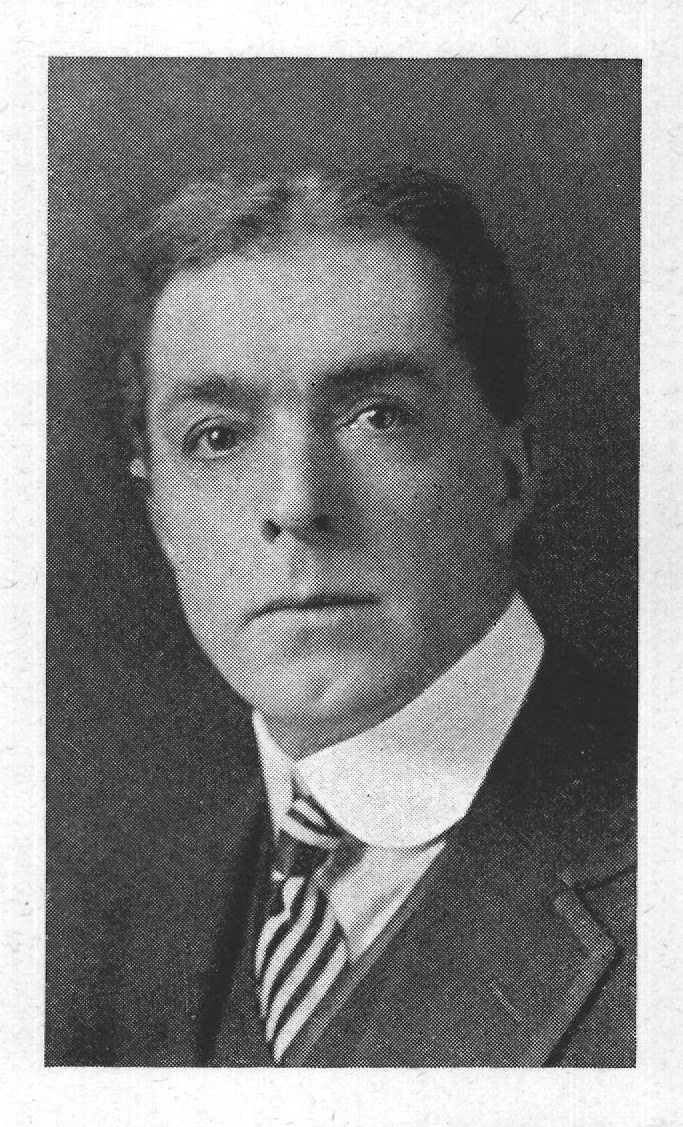
William Faversham

POTATOES
Plain Boiled Put your potatoes in cold water for about a minute, then take them out and peel them. Take the point of your knife and remove all the "eyes." Put them in a saucepan, cover with cold water and put in about a pinch of salt to each potato. Then set them on the fire until they boil. Every now and then stick a fork through them, until they are soft enough to receive the fork without any pressure. Then strain off the water. Stand the saucepan by the side of the fire.
Put a clean napkin or towel over the top, and leave the lid off, and you will have nice floury, mealy potatoes. 5 Silhain Faveralian "Eat therefore to live, and do not live to eat."
BORTSCH POLONAISE
(A Russian Soup) 1 small duck 1 lb. brisket of beef 1 bouquet-garni, consisting of fennel, marjoram, thyme, bay-leaf, carrot and parsley 2 cloves 3 fresh cup-mushrooms 2 oz. butter 1 small beet root 1 cabbage-heart 1 leek 1 onion 2 quarts clarified beef broth (white consomme) I ¼ lb. Italian sausage, sour cream and seasoning Cook the duck in a brisk oven till tender. Boil the beef in one quart of seasoned water with the bouquetgarni and skim well. Remove the fillets of the duck, cut them into dice, cut the cooked beef into similar dice and put them in a clean stew pan with the strained broth in which the beef was cooked. Add the mushrooms, previously washed and cut in dice. Cut the remainder of the vegetables into fine Julienne strips and blend with the butter, pour off the fat, add the consomme, season to taste, cook gently till tender, removing the scum and fat. Add this to the broth containing the meat. Cook all together for another ten minutes. The sausage is cut into very thin slices, and served in the soup or separately. The remainder can be used up as salmi, or served hot or cold. Add a little parsley to the soup and serve. Just before serving mix two tablespoonfuls of sour cream and one tablespoon of beet-root juice and serve it in a sauceboat with the soup.
Two recipes sit on this page: Faversham's method for plain boiled potatoes and an unattributed bortsch polonaise that follows it. Both are sound, though the soup's ingredient list has suffered in transcription.
- The hinge: drying the potatoesEverything in the potato recipe leads to the last step. Once drained, the pan is stood beside the fire (a modern equivalent is very gentle residual heat) with the lid off and a cloth laid across the top, so steam goes into the towel rather than condensing back onto the potatoes. A few minutes of this is what gives a floury rather than waxy result; the recipe itself sets no time.
- Choose a floury varietyThe method only pays off with a high-starch potato — russet, King Edward, Maris Piper. Waxy salad potatoes will stay firm and damp no matter how carefully you dry them.
- The cold-water soakThe recipe does not say what the minute in cold water is for; it plausibly loosens dirt and makes peeling easier, and can probably be skipped if the potatoes are already clean.
- Salt quantityA pinch per potato is light by modern standards for a large pot. Salt the water as you would for pasta — roughly a teaspoon per quart — and start the potatoes in cold water as written so they cook evenly from the outside in.
- "A brisk oven" for the duckBrisk means a hot oven; period equivalents are usually given as roughly 400-425F, though the book states no temperature. Roast a small duck until the leg joint moves freely, then take the fillets for dicing. The 'remainder ... used up as salmi' most likely means the rest of the duck, though the sentence follows the sausage and is ambiguous.
- How much sausage to useThe printed page was checked: the sausage quantity is 1 1/4 lb., as our text now gives. For two quarts of soup that is generous, so slice it paper-thin and serve the remainder separately, as the recipe suggests.
- Cup-mushrooms and clarified brothCup-mushrooms are ordinary white or chestnut mushrooms at the stage where the cap has opened but the gills are still pale. "Clarified beef broth (white consomme)" means a clear, well-skimmed beef stock; a good unsalted stock, strained through muslin, does the job.
- The beet is a garnish, not the bodyUnlike most borschts, this one gets almost no beet in the pot — one small root, cut julienne with the other vegetables. The colour and sharpness come at the table, from the sour cream stirred with a spoonful of raw beet juice and passed separately. Grate a raw beet and press it through a sieve for the juice.
- YieldTwo quarts of broth plus the meats and vegetables serves eight generously as a first course, four as a meal.
The potato recipe is the book's best joke on itself: Faversham and James K. Hackett, two of Broadway's most photographed romantic leads, sent in the same recipe for plain boiled potatoes from opposite ends of the world, apparently without collusion. The boiled potato is the honest end of the spectrum of what such a book collects. The bortsch that follows is a different animal entirely he French manner, with its julienne, its clarified consommé and its garnish served in a sauceboat, rather than anything a Polish household would recognise. That the two sit on the same page is a fair picture of Edwardian eating: a plain national staple and an elaborate cosmopolitan soup, both taken seriously.