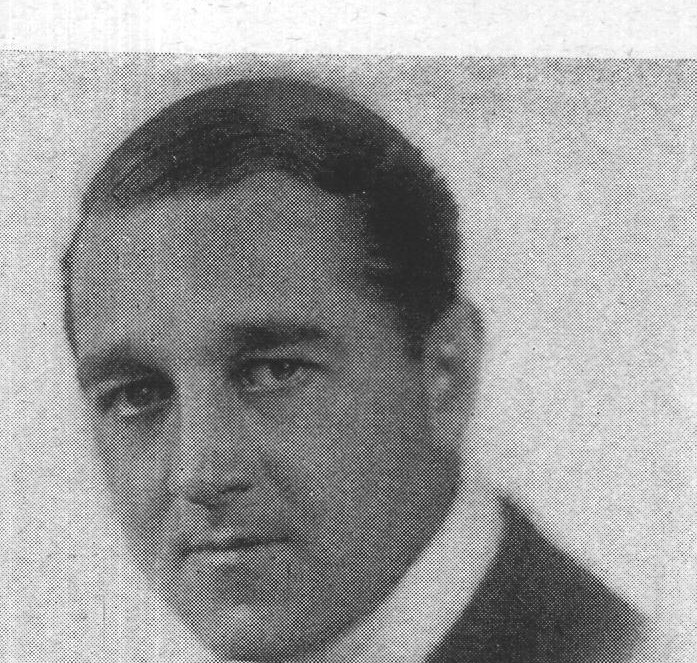
Phillip Merivale

TENDERLOIN STEAK
With a very sharp knife, make s'anting scores here and there across the surface of a nice thick steak.
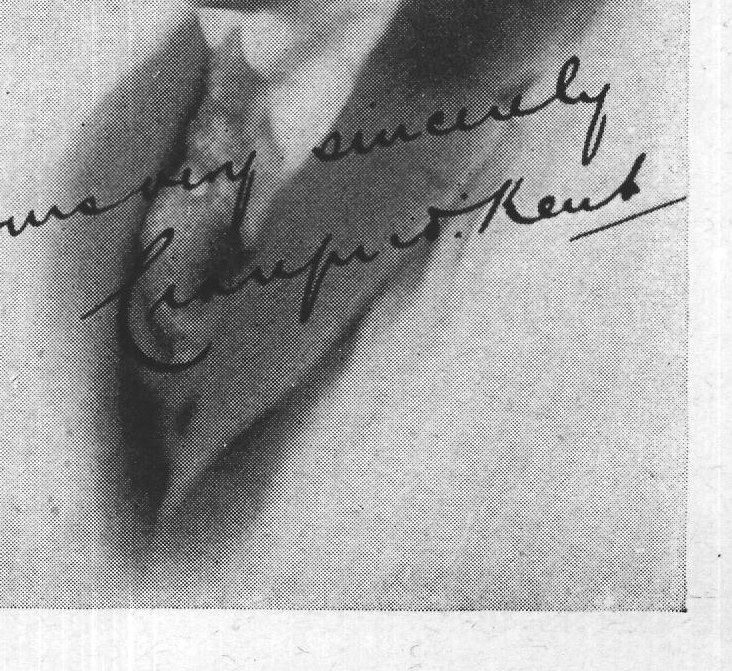
Peel a clove of garlic and rub it across the cuts in the steak. Repeat on the other side; throw the garlic away and broil the steak. My favorite dish depends upon my state of health. At my best, I like tenderloin steak with beer. your very tinly Philip her wale - Yours sincerely
One quart thin cream; three-quarters cup of sugar; one and one-half tablespoons vanilla. Mix and freeze! Next to vanilla ice cream I like spaghetti-the canned variety. Very succerely yours Cranend kent
Two short contributions run together here: a garlic-rubbed broiled tenderloin and a Philadelphia-style vanilla ice cream with no eggs and no cooking. Both are more method than recipe, and both assume equipment that has changed.
- "S'anting" scoresRead this as slanting — shallow diagonal cuts through the surface, not deep gashes. They exist only to give the cut garlic clove something abrasive to catch on; cutting into the meat proper will let juice escape under the broiler.
- Garlic without garlicRubbing a peeled clove over a scored surface and discarding it leaves a faint aromatic film, nothing more. If you want it to read as garlic on the plate, that is a different dish.
- Broiling heatThe recipe asks only for "a nice thick steak." For a thick cut, want the broiler element as hot as it goes, with the meat 3 to 4 inches below it, and go by an instant-read thermometer at 130-135F rather than by the clock.
- Rest itThe original says nothing about resting. Give a thick broiled steak 8 to 10 minutes off the heat before cutting.
- "Thin cream"This corresponds to what is now sold as light cream, roughly 18 to 20 percent butterfat, rather than heavy whipping cream; half-and-half is lighter still, nearer 12 percent. Heavy cream is more likely to over-churn and turn buttery, so light cream is the closer match.
- "Mix and freeze"Written for a hand-crank freezer packed with ice and rock salt. In a modern machine, chill the mixture thoroughly first — stir the sugar until it has fully dissolved, then refrigerate several hours — and churn 20 to 25 minutes. Without a machine this is a still-frozen ice, and needs beating every 30 minutes for the first two hours.
- Sugar and vanillaThree-quarters cup of sugar to a quart of cream is on the lean side by current standards, and sugar is what keeps the texture scoopable. Expect a firm, icy result straight from the freezer; let it stand 10 minutes before serving. One and a half tablespoons of extract is generous and correct for an uncooked base.
- YieldThe ice cream makes about 1 1/2 quarts, or six to eight servings. The recipe gives no weight or size for the steak.
Celebrity cookbooks of this kind traded on the name rather than the cooking, and the two entries here are typical of what actors sent in: a steak done the way a chophouse would do it, and an ice cream so plain it barely qualifies as a formula. The ice cream is what is generally called Philadelphia-style -- sweetened cream and flavouring, frozen without eggs or a cooked custard -- a straightforward American approach that stood in contrast to the French egg-yolk base and was common in home ice-cream freezers in the nineteenth and early twentieth centuries. Philip Merivale (1886-1946) was a British stage actor who moved between London and Broadway and later into Hollywood character parts; his candid admission that his favourite dish depends on his health, and that after vanilla ice cream he likes canned spaghetti, is the sort of thing that makes these compilations worth reading long after the recipes stop being useful.