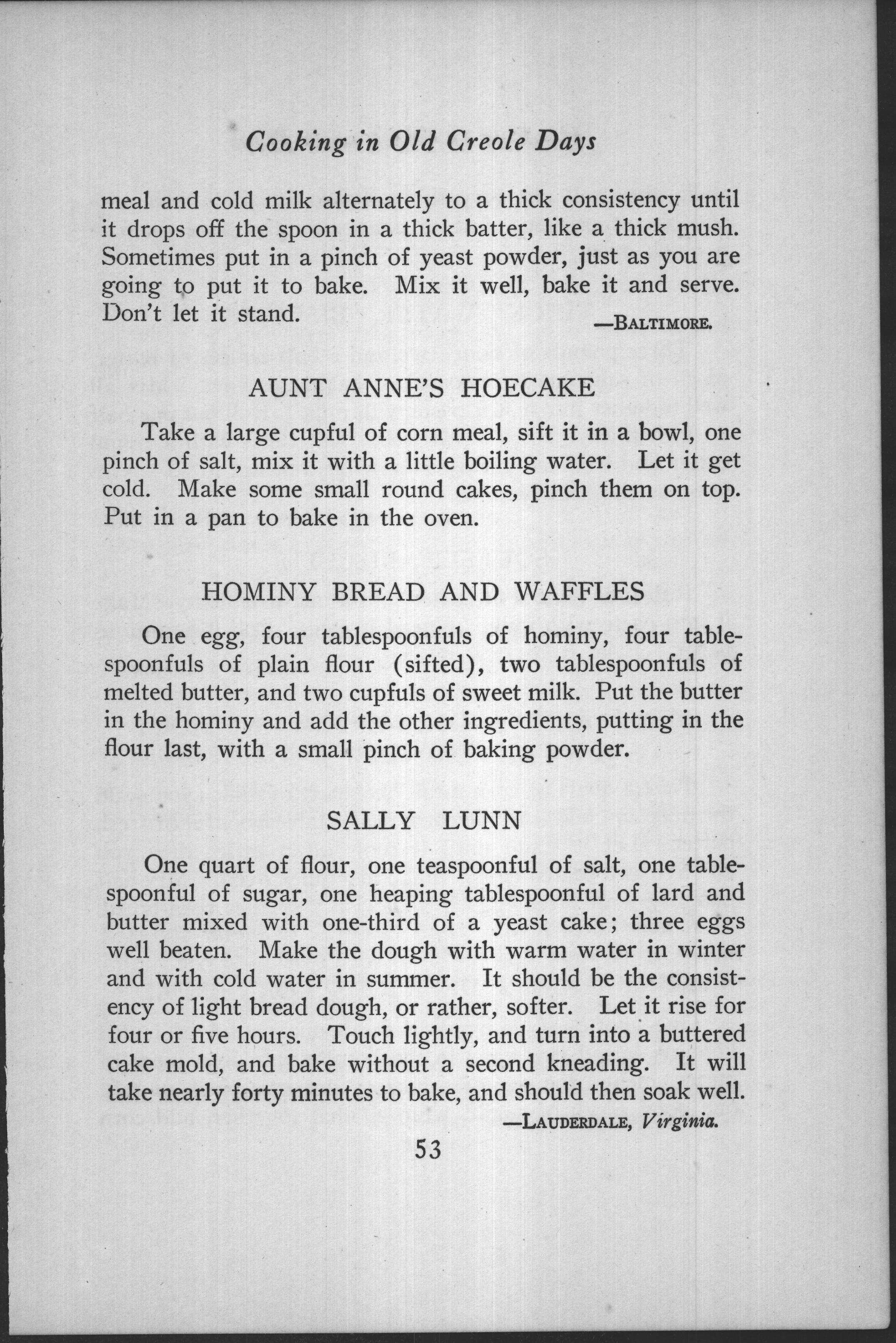
Aunt Anne's Hoecake
Take a large cupful of corn meal, sift it in a bowl, one pinch of salt, mix it with a little boiling water. Let it get cold. Make some small round cakes, pinch them on top. Put in a pan to bake in the oven.
About as old and plain as American bread gets — just cornmeal, salt, and scalding water.
- Scalding is the whole trickBoiling water gelatinizes the cornmeal, letting it hold together without eggs or flour; let it cool so it’s stiff enough to shape.
- “A large cupful”Read that as a generous 1 cup of cornmeal; add the water a little at a time until you get a stiff, moldable paste.
- Shape and “pinch on top”Form small flat rounds and press a ridge or pinch on top; keep them under ½ inch thick so they cook through.
- Oven vs. hoeThe original was a griddle cake; in a modern oven bake at about 425°F until set and lightly browned, or pan-fry in a little fat for a crisper crust.
- Serve hotThese are best straight from the heat, split and buttered.
A hoecake is cornmeal at its most elemental, and the name is as rustic as the food. By tradition it is said the cakes were baked on the flat blade of a field hoe held over the coals; some word-historians argue “hoe” may instead have meant a griddle, but the field-hoe story is the one that stuck. Hoecakes were everyday bread for settlers and, especially, for enslaved cooks across the South, who made them on any hot surface at hand. George Washington was famously fond of them for breakfast — by one account, swimming in butter and honey.
From page 53 of the 1904 edition.
Original page from the book