Hominy Bread and Waffles
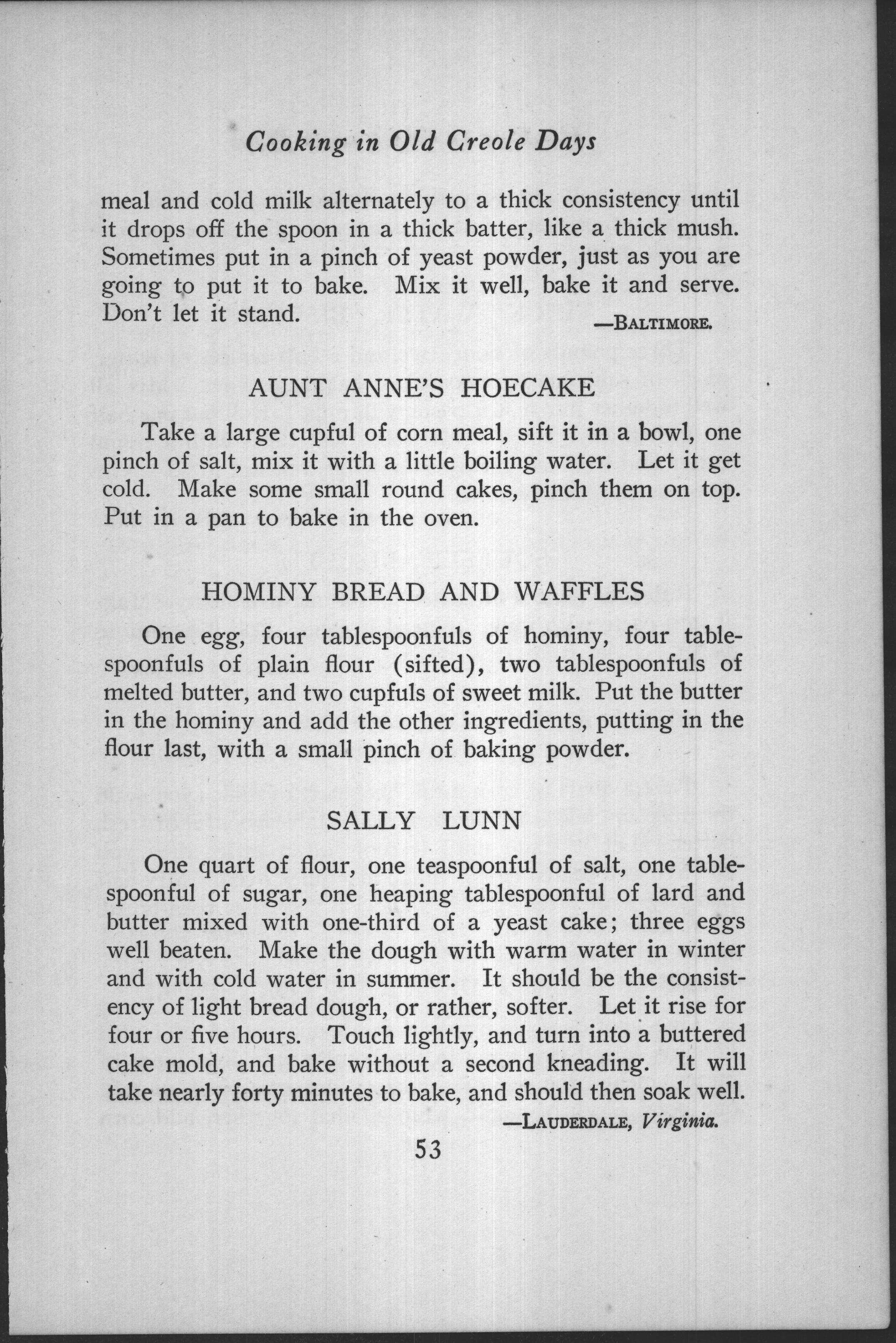
One egg, four tablespoonfuls of hominy, four tablespoonfuls of plain flour (sifted), two tablespoonfuls of melted butter, and two cupfuls of sweet milk. Put the butter in the hominy and add the other ingredients, putting in the flour last, with a small pinch of baking powder.
One soft batter that works both ways — baked as a bread or poured into a hot waffle iron.
- “Sweet milk” = whole milkSweet milk simply meant fresh, unsoured whole milk.
- “Hominy” hereUse cooked hominy grits or mashed canned hominy, and beat the melted butter into it while warm as directed.
- A thin batterTwo cups of milk to only 4 Tbsp flour makes a very loose batter — right for waffles and for a soft, spoonbread-like baked loaf.
- Modern leaveningThat “small pinch” of baking powder is light; ½–1 tsp gives a more reliable rise for modern tastes.
- Waffle-iron heatFor waffles, heat and grease the iron fully; for bread, bake in a greased pan at 400–425°F.
The waffle came to America in the baggage of Dutch settlers, whose wafel irons — long-handled hinged plates pressed over the fire — had been turning out patterned cakes in the Low Countries since the Middle Ages. “Waffle” and “wafer” share that same Dutch and Germanic root. In the American South, cooks folded local ingredients like hominy and cornmeal into the batter, marrying an Old World technique to New World corn. Waffle irons were prized kitchen tools, frequently listed in old household inventories and handed down through families.
From page 53 of the 1904 edition.
Original page from the book