Candied Orange
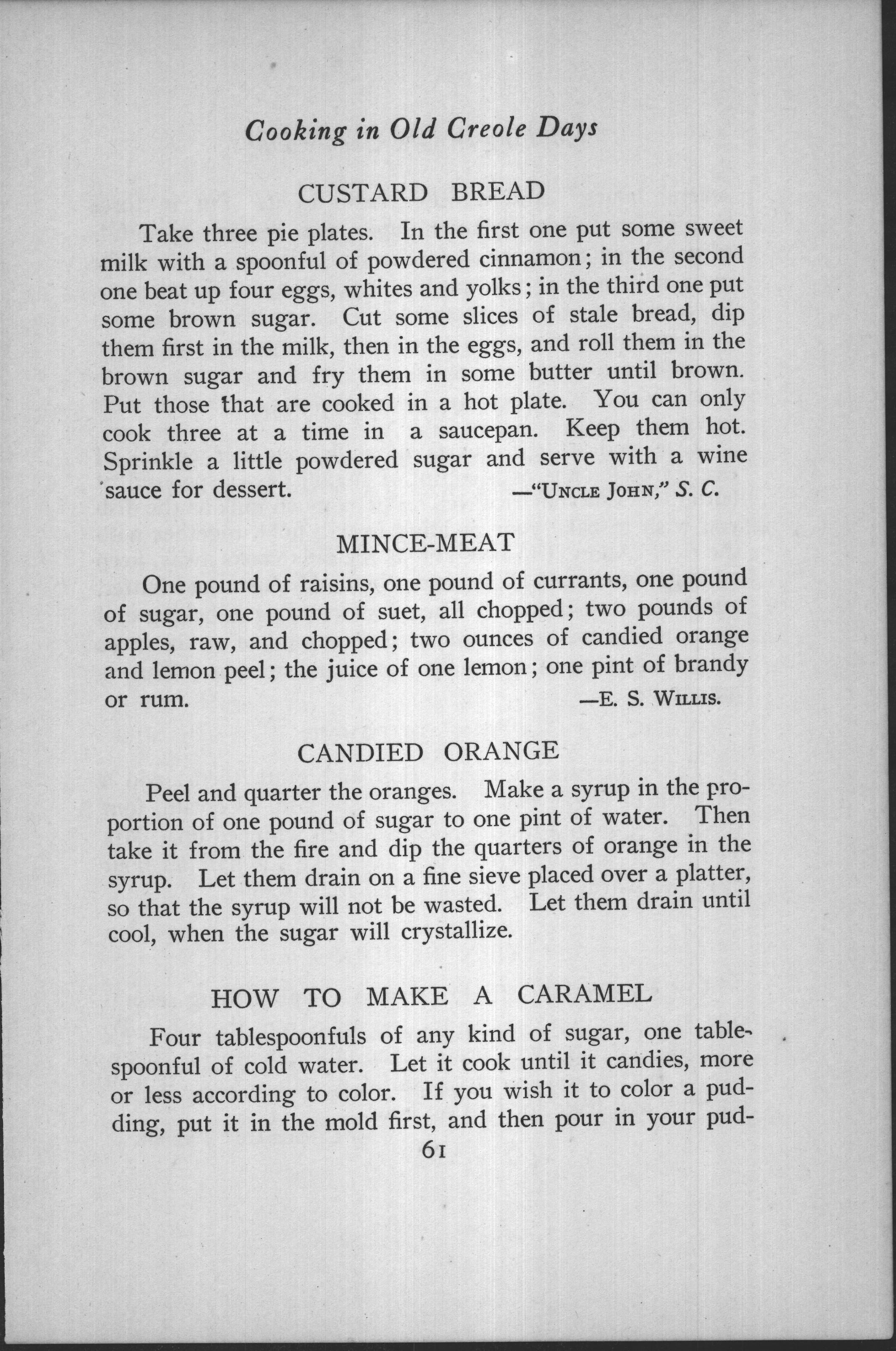
Peel and quarter the oranges. Make a syrup in the proportion of one pound of sugar to one pint of water. Then take it from the fire and dip the quarters of orange in the syrup. Let them drain on a fine sieve placed over a platter, so that the syrup will not be wasted. Let them drain until cool, when the sugar will crystallize.
Orange quarters glazed in a simple syrup and left to dry until the sugar crystallizes — an old confectioner’s sweet and a way to preserve fruit.
- Syrup ratio1 lb sugar to 1 pint (2 cups) water — boiled to dissolve, then the fruit is dipped and drained.
- Save the dripDraining over a platter catches the precious syrup — reuse it rather than waste it, as the recipe urges.
- Crystallizing takes patienceAs the coated quarters cool and dry, the sugar sets to a firm, glassy crust; give them time and air, not heat.
- A gentler modern methodFor candied peel specifically, simmer the strips in syrup until translucent, then toss in sugar and dry — a more reliable set than a single dip.
- Use good fruitThick-skinned, unblemished oranges candy best; scrub them well if you’ll keep any of the zest.
Before refrigeration, candying was serious preservation, not just confectionery: saturating fruit with sugar drew out its moisture and locked out spoilage, letting summer’s harvest survive into winter. It was costly work, for sugar itself was long a luxury dear enough to be kept under lock and key. Candied citrus — oranges, lemons, citron — ranked among the prized “sucket” sweetmeats of the wealthy Renaissance and colonial table, served at the meal’s end as a mark of hospitality and status. What reads today as a quaint treat was once edible evidence of a well-stocked, prosperous house.
From page 61 of the 1904 edition.
Original page from the book