Mince-Meat
E. S. Willis
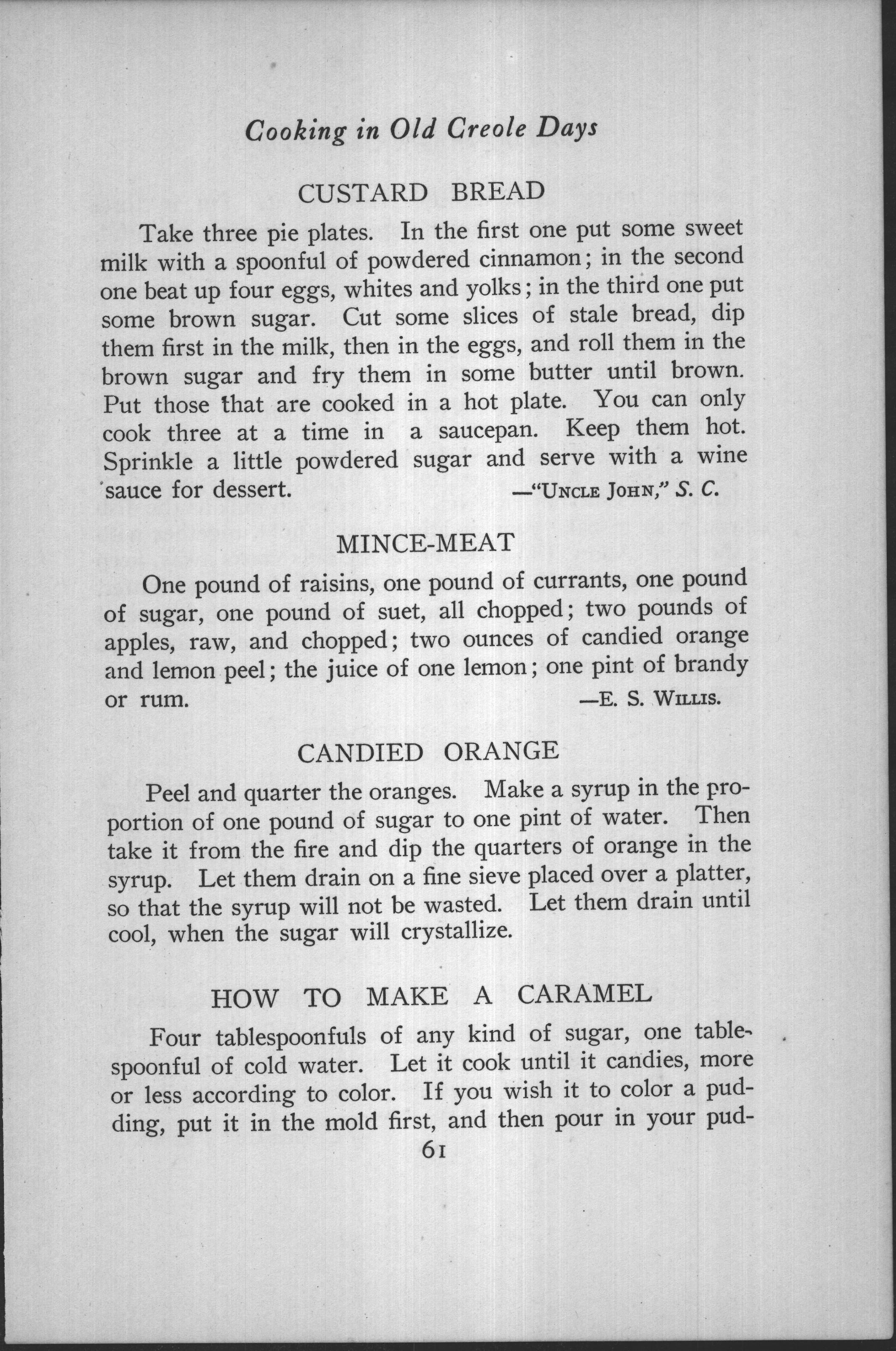
One pound of raisins, one pound of currants, one pound of sugar, one pound of suet, all chopped; two pounds of apples, raw, and chopped; two ounces of candied orange and lemon peel; the juice of one lemon; one pint of brandy or rum.
A meatless mincemeat — the classic pie filling of dried fruit, suet, apples, and spirits, matured for the holidays.
- No meat, despite the nameThis version is all fruit and suet; over the centuries the actual meat quietly dropped out of most mincemeat, leaving the beef fat behind.
- Suet substituteSuet is hard beef kidney fat; use prepared suet, frozen grated butter, or vegetarian suet.
- The spirits preserve itA pint of brandy or rum is both flavor and preservative — it lets the mixture mellow for weeks in a cool place.
- Chop evenlyEverything is finely chopped (“minced” — the source of the name) so the filling holds together in a pie.
- Let it ageMincemeat improves with time; make it ahead so the fruit, peel, and liquor marry before baking into pies or tarts.
Mincemeat once lived up to its name. Medieval and Tudor “shred” or mince pies were true meat pies — chopped beef or mutton bound with suet, dried fruit, and costly Eastern spices, the sweet and the savory mingled in one dish, as was the fashion of the age. As sugar grew cheaper and tastes shifted, the meat dwindled and finally vanished, leaving the fruit, the suet, and the spirits. The suet is the last relic of that carnivorous past — a pot of mincemeat maturing in the pantry is, in effect, a fossil of the medieval kitchen.
From page 61 of the 1904 edition.
Original page from the book