Chicken Croquettes
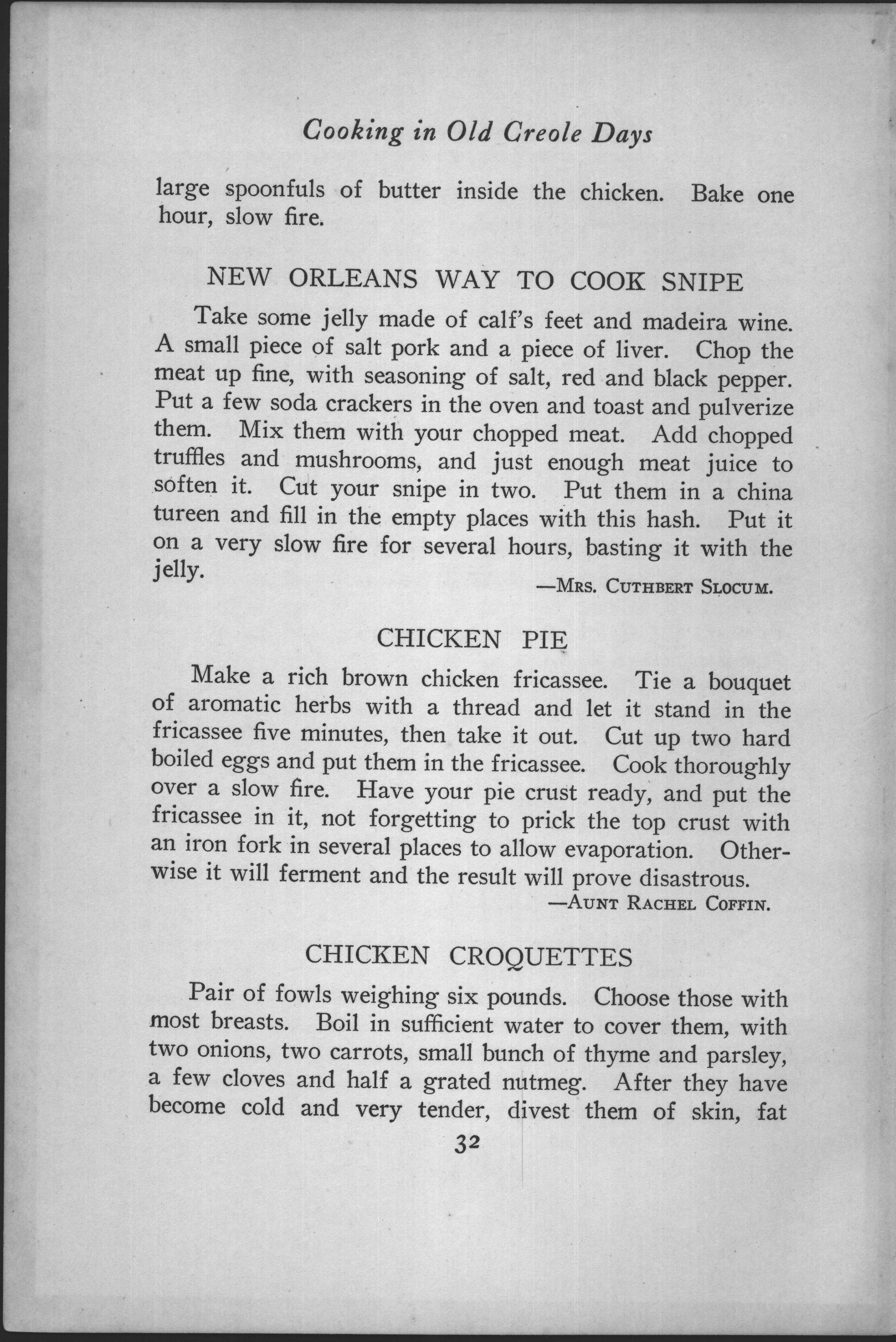
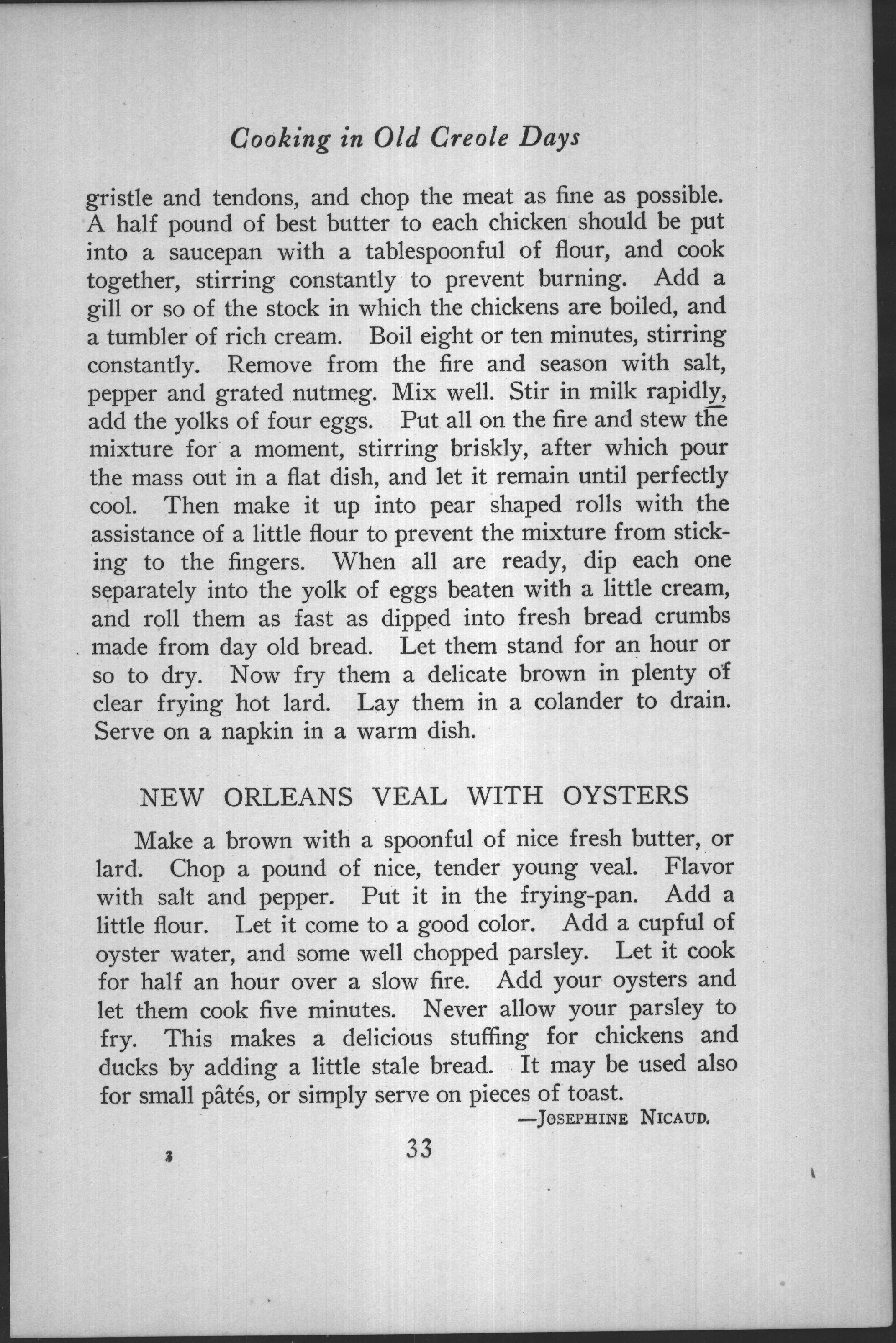
Pair of fowls weighing six pounds. Choose those with most breasts. Boil in sufficient water to cover them, with two onions, two carrots, small bunch of thyme and parsley, a few cloves and half a grated nutmeg. After they have become cold and very tender, divest them of skin, fat, gristle and tendons, and chop the meat as fine as possible. A half pound of best butter to each chicken should be put into a saucepan with a tablespoonful of flour, and cook together, stirring constantly to prevent burning. Add a gill or so of the stock in which the chickens are boiled, and a tumbler of rich cream. Boil eight or ten minutes, stirring constantly. Remove from the fire and season with salt, pepper and grated nutmeg. Mix well. Stir in milk rapidly, add the yolks of four eggs. Put all on the fire and stew the mixture for a moment, stirring briskly, after which pour the mass out in a flat dish, and let it remain until perfectly cool. Then make it up into pear shaped rolls with the assistance of a little flour to prevent the mixture from sticking to the fingers. When all are ready, dip each one separately into the yolk of eggs beaten with a little cream, and roll them as fast as dipped into fresh bread crumbs made from day old bread. Let them stand for an hour or so to dry. Now fry them a delicate brown in plenty of clear frying hot lard. Lay them in a colander to drain. Serve on a napkin in a warm dish.
A Gilded-Age dinner-party classic — creamy minced chicken bound rich, shaped, breaded, and fried to a shattering crust.
- Poach and minceSimmer the fowls with onion, carrot, and herbs, then chop the cooled meat fine — older “fowls” are tougher, so poaching until very tender really matters.
- It’s a thick veloutéButter and flour cooked together, then stock and cream, make the panade that binds the croquette, enriched with four egg yolks; a gill or so of stock ≈ ½ cup, and a tumbler of cream ≈ 1 cup.
- Go easy on the butter“Half a pound to each chicken” is enormous by modern taste — 4–6 Tbsp for the whole batch makes a firm, workable paste.
- Chill until firmThe mixture must cool solid before shaping — that’s what lets you roll the classic pear shapes without it sticking to your hands.
- Bread and restDip in an egg-and-cream wash, roll in day-old breadcrumbs, and let them dry an hour so the coating sets and won’t burst in the fat.
- Fry hot and drainFry in clean fat at about 350–375°F (175–190°C) until deep gold, then drain — a napkin-lined dish, as the recipe says, keeps them crisp.
The croquette is French to its crackling core — the name comes from croquer, “to crunch,” an echo of the very sound it makes. Cooks had long bound leftover meat in a thick sauce, but the polished croquette belongs to the great age of French cuisine, and it swept fashionable American tables in the late nineteenth century. It was the era’s ideal company dish: it turned a boiled fowl into something elegant, could be shaped and breaded hours ahead, and arrived at the table golden and impressive. The tidy pear shape was a Victorian flourish — a small bit of edible refinement.
From page 32 of the 1904 edition.
Original pages from the book