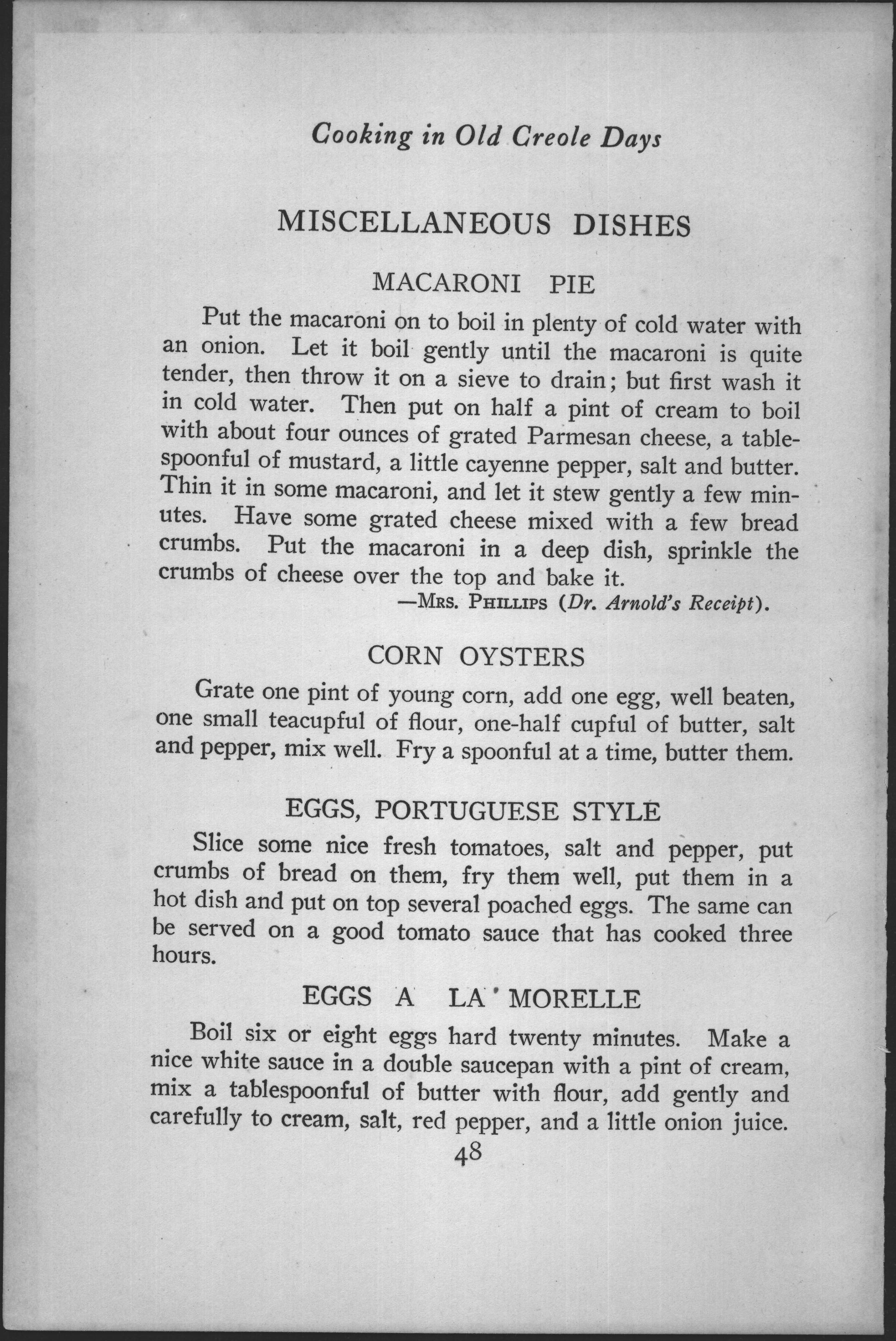
Corn Oysters
Grate one pint of young corn, add one egg, well beaten, one small teacupful of flour, one-half cupful of butter, salt and pepper, mix well. Fry a spoonful at a time, butter them.
Not a seafood dish at all — these little corn fritters are said to take their name from the way they curl and crisp in the hot fat, ruffling at the edges like a fried oyster.
- “One pint of young corn”Grated from the cob, a pint is about 2 cups, roughly 4–6 ears. “Young” means milky, sweet summer corn; frozen kernels pulsed in a food processor work off-season.
- “One small teacupful of flour”A teacupful is about ¾ cup, so a small one is a generous ½ cup — enough to bind the corn, not to make a heavy batter.
- “One-half cupful of butter”That’s 8 Tbsp, quite rich; you can cut it to 2–3 Tbsp in the batter and simply keep more butter or oil for the pan.
- Fry in spoonfulsDrop tablespoons into hot fat over medium-high heat (about 375°F on a thermometer) and fry until deep golden on both sides.
- “Butter them”Finish with a little butter and salt as they drain, and serve them hot and crisp.
Corn oysters were a fixture of nineteenth-century American tables, and the name is a bit of kitchen wit: dropped in spoonfuls into hot fat, the ragged little cakes are said to curl and crisp at the edges like a fried oyster — though whether the name is for that likeness or for their old role as a thrifty stand-in for real oysters, no one can say for certain. Cooks prized them in high summer, when sweet corn was at its milky best. In a Gulf city like New Orleans, where real oysters were cheap and everywhere, giving a humble corn fritter the name of a delicacy was a knowing, affectionate joke.
From page 48 of the 1904 edition.
Original page from the book