Delicious Breakfast Dish
Mme. Alzire Dubroca, Baton Rouge
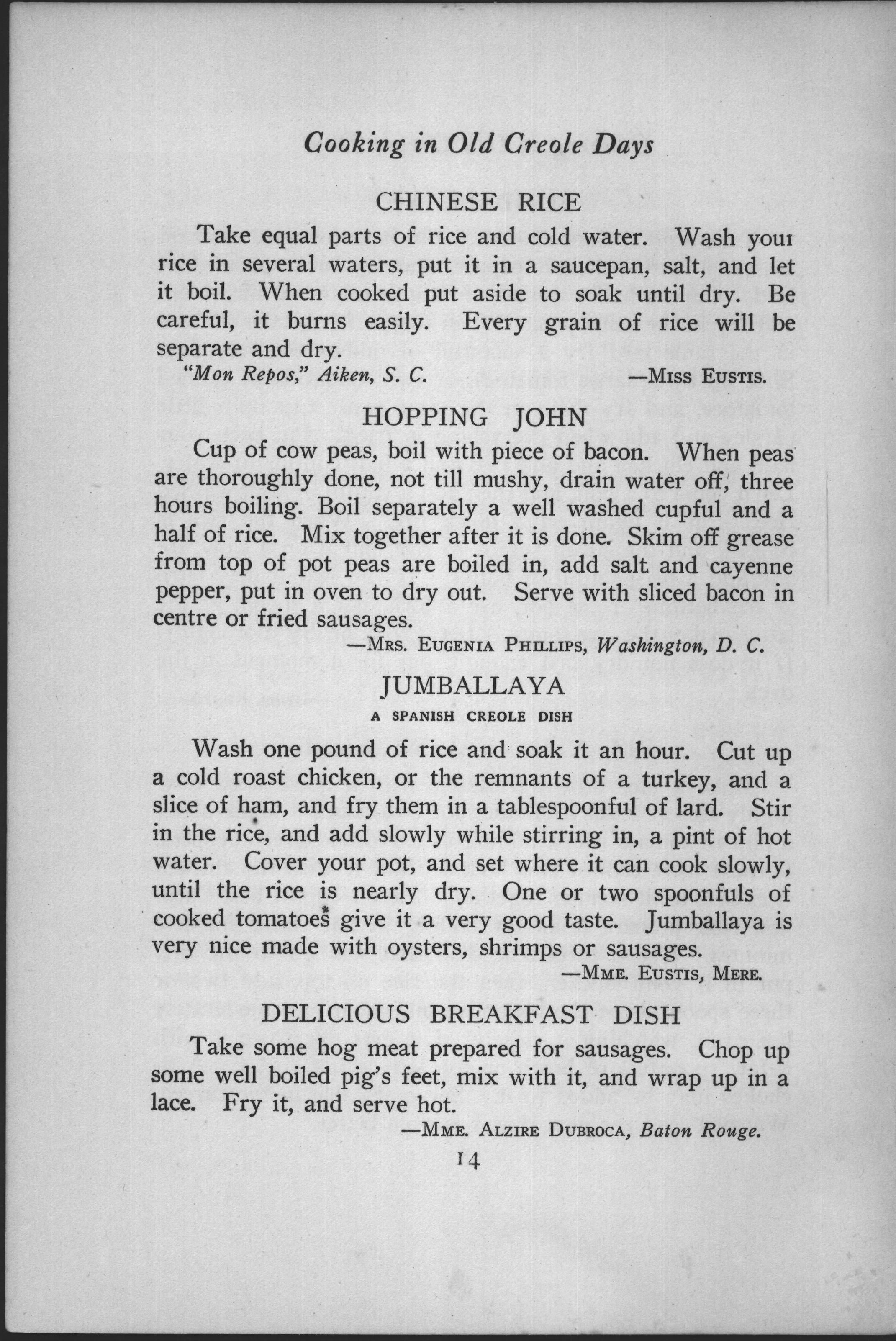
Take some hog meat prepared for sausages. Chop up some well boiled pig's feet, mix with it, and wrap up in a lace. Fry it, and serve hot.
This is a crépinette in all but name — seasoned pork wrapped in a lacy membrane that bastes and binds it as it fries.
- “A lace” = caul fatThe “lace” is caul fat (French crépine), the thin web of fat from around a pig’s stomach; it melts as it cooks, holding the parcel together without a casing. Ask a butcher for it, or simply shape the mix into patties.
- “Hog meat prepared for sausages”This is just bulk (uncased) pork sausage — ground pork seasoned with salt, pepper, and perhaps sage, thyme, or cayenne. About ¾ lb makes a modest breakfast for two.
- The pig’s feetBoil the trotters until fork-tender, 2–3 hours, then pick and chop the soft meat and skin; it adds a rich, gelatinous bind. One large foot is plenty per ½ lb of sausage.
- Cook it throughPork must reach 160°F at the center. Fry the parcels gently in a little fat over medium heat so the outside browns before the inside overcooks.
- A modern shortcutSkip the caul and the feet entirely: season good ground pork, form small patties, and pan-fry. You lose the silk but keep the spirit of the dish.
Wrapping seasoned meat in caul fat is one of the oldest tricks in the European kitchen, running from the French crépinette to the English faggot to the Cypriot sheftalia. The caul’s lacy fat bastes and binds without a casing, which made it a thrifty favorite in households that butchered their own hogs — nothing was wasted, right down to the feet. In Creole Louisiana, where French technique met a make-do farm larder, a dish like this turned the humblest scraps of butchering day into a hot, satisfying breakfast.
From page 14 of the 1904 edition.
Original page from the book