Crème d'Orge
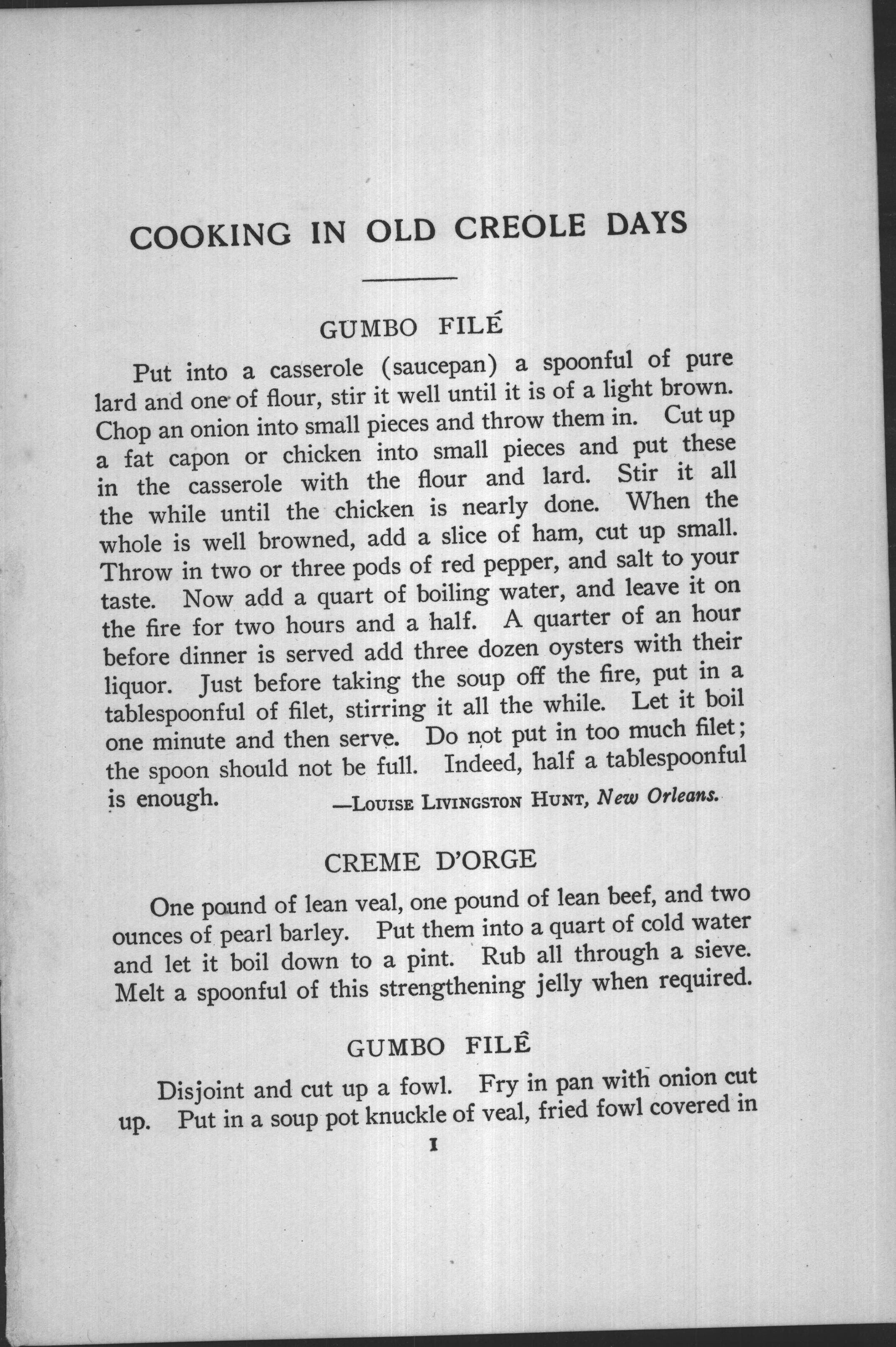
One pound of lean veal, one pound of lean beef, and two ounces of pearl barley. Put them into a quart of cold water and let it boil down to a pint. Rub all through a sieve. Melt a spoonful of this strengthening jelly when required.
This isn’t a soup to serve in bowls — it’s a concentrated meat-and-barley essence, boiled down and set aside to be melted into broth “when required.” A restorative from the age before bouillon cubes.
- The measures1 lb lean veal + 1 lb lean beef + 2 oz (about ¼ cup) pearl barley, in 1 quart water, reduced to 1 pint — a 50% reduction that concentrates everything.
- “Rub through a sieve”Press the cooked solids and liquid through a fine sieve; chilled, the strained essence sets to a savory jelly (the gelatin from the veal).
- How it was usedA spoonful was melted into hot water for an instant nourishing broth — the homemade ancestor of a stock cube.
- To make it a real soup todaySkip the reduction: simmer the meats and barley in the full quart of water, season with salt, and serve as a light beef-barley broth.
Crème d’orge — “cream of barley” — belongs to the once-vast world of invalid cookery, the branch of 19th-century kitchens devoted to feeding the sick and convalescent. Before canned broth or vitamins, a strong, easily digested meat essence was considered medicine as much as food, and cooks kept concentrates like this “strengthening jelly” on hand to revive the weak. Barley itself is one of humanity’s oldest cultivated grains, and barley water and barley broths as remedies reach all the way back to the physicians of ancient Greece.
From page 1 of the 1904 edition.
Original page from the book