Gumbo Filé
Louise Livingston Hunt, New Orleans
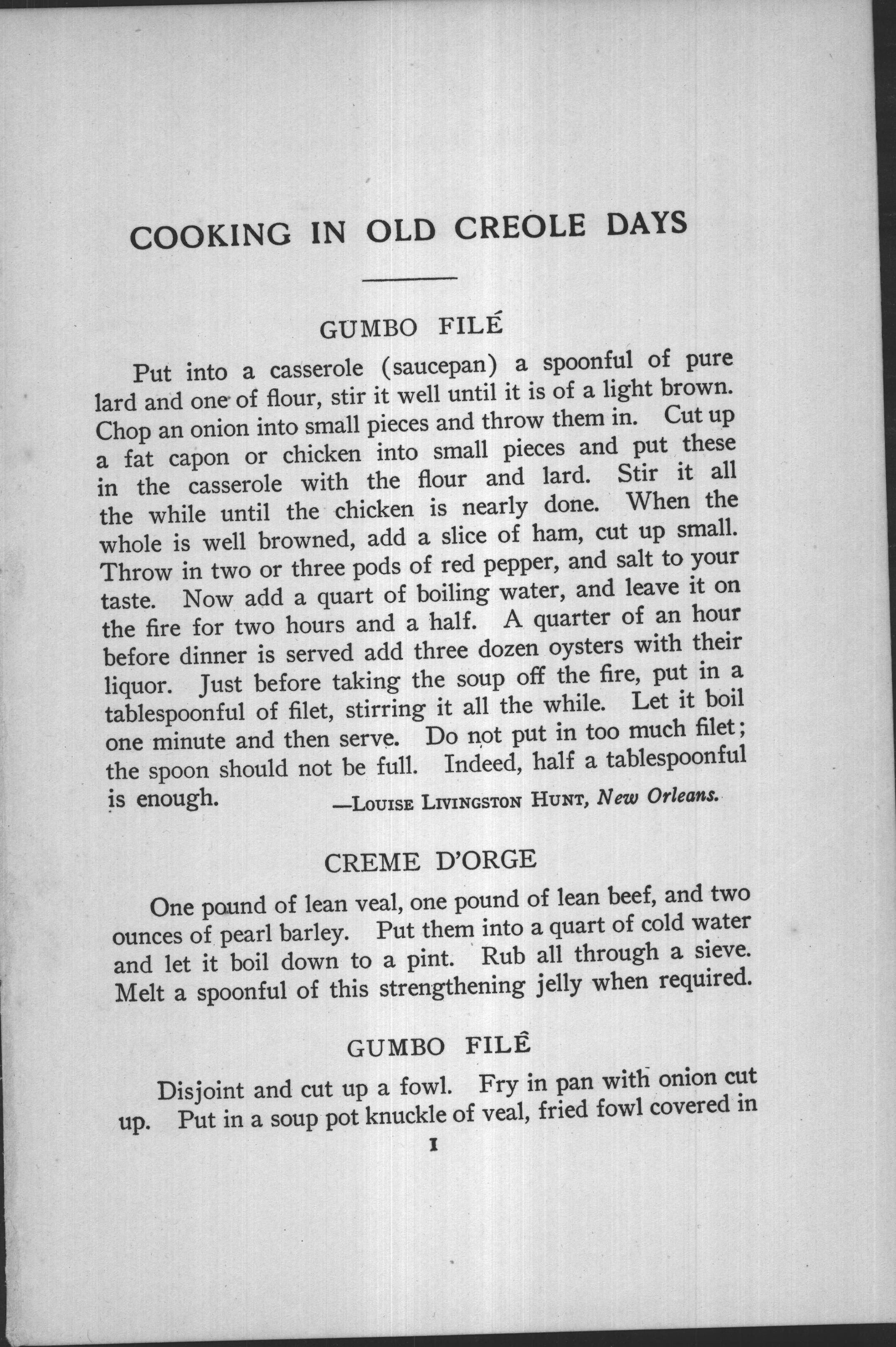
Put into a casserole (saucepan) a spoonful of pure lard and one of flour, stir it well until it is of a light brown. Chop an onion into small pieces and throw them in. Cut up a fat capon or chicken into small pieces and put these in the casserole with the flour and lard. Stir it all the while until the chicken is nearly done. When the whole is well browned, add a slice of ham, cut up small. Throw in two or three pods of red pepper, and salt to your taste. Now add a quart of boiling water, and leave it on the fire for two hours and a half. A quarter of an hour before dinner is served add three dozen oysters with their liquor. Just before taking the soup off the fire, put in a tablespoonful of filet, stirring it all the while. Let it boil one minute and then serve. Do not put in too much filet; the spoon should not be full. Indeed, half a tablespoonful is enough.
The bones of a great gumbo are all here. Two clarifications make it foolproof: what filé is, and the one rule for adding it that the original gets slightly wrong for modern stoves.
- What is filé?Filé powder is ground, dried sassafras leaves — an ingredient the Choctaw contributed to Louisiana cooking. It both thickens and adds an earthy, root-beer-like note. Sold today in the spice aisle as “gumbo filé.”
- Add filé OFF the heatThis is the key fix. Filé turns ropy and stringy if it boils. Ignore “let it boil one minute” — pull the pot off the heat, stir in the filé, and serve. (Or let each diner stir it into their own bowl.)
- “A spoonful of lard and one of flour”This is a roux: about 1 Tbsp fat + 1 Tbsp flour. Use lard, oil, or butter, and cook it to “light brown” — or darker, peanut-butter colored, for deeper flavor.
- “Pods of red pepper”Whole dried cayenne or similar chilies. Two or three makes it warm, not punishing; adjust to taste.
- Timing“A fat capon” is a large roasting chicken; the 2½-hour simmer suits a whole cut-up bird. Add the oysters only in the last 15 minutes so they stay plump.
Gumbo is the taste of Louisiana’s cultural collision in a single bowl. The word itself comes from a West African term for okra (ki ngombo); the technique of the roux is French; and the filé that thickens this version is Choctaw — ground sassafras, a Native American ingredient. Cooks generally chose one thickener or the other: okra in summer when it was fresh, or filé in the cooler months. This recipe, from a New Orleans home cook, is a filé gumbo — African, French, and Indigenous heritage simmering together, which is Créole cooking in a nutshell.
From page 1 of the 1904 edition.
Original page from the book