Delicate Cake
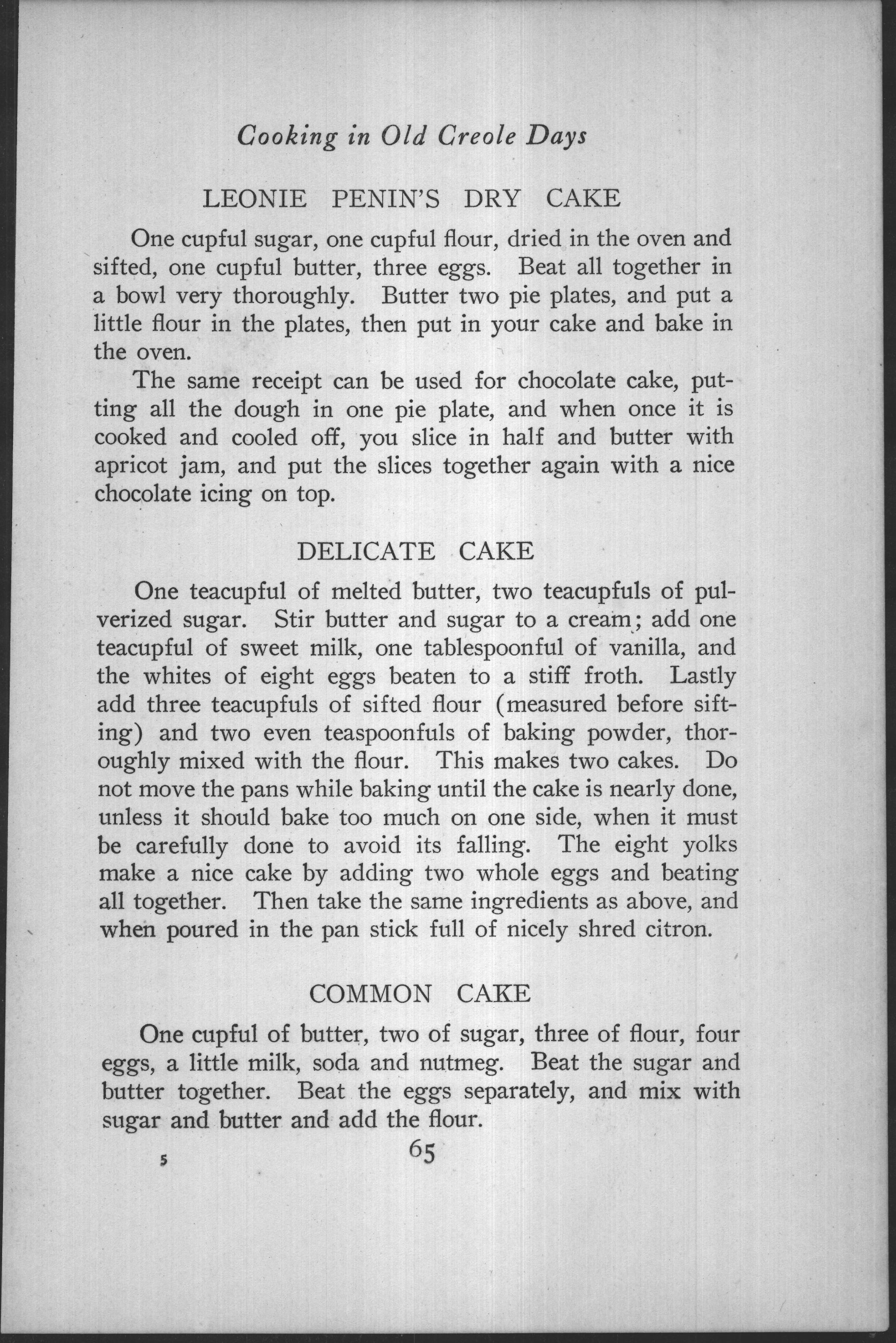
One teacupful of melted butter, two teacupfuls of pulverized sugar. Stir butter and sugar to a cream; add one teacupful of sweet milk, one tablespoonful of vanilla, and the whites of eight eggs beaten to a stiff froth. Lastly add three teacupfuls of sifted flour (measured before sifting) and two even teaspoonfuls of baking powder, thoroughly mixed with the flour. This makes two cakes. Do not move the pans while baking until the cake is nearly done, unless it should bake too much on one side, when it must be carefully done to avoid its falling. The eight yolks make a nice cake by adding two whole eggs and beating all together. Then take the same ingredients as above, and when poured in the pan stick full of nicely shred citron.
A classic white “silver” cake, tender and pale from using only egg whites — with a companion “gold” cake to use up the yolks.
- Teacup measuresA teacupful is about ¾ cup: ¾ cup melted butter, 1½ cups sugar, ¾ cup milk, and 2¼ cups sifted flour.
- “Pulverized sugar”Here this is closest to today’s superfine (caster) sugar — finely ground granulated — not modern confectioners’ sugar, which contains cornstarch and would change the crumb.
- Whites onlyEight stiffly beaten whites give the cake its delicate, snow-white texture; fold them in last and gently.
- Don’t open the ovenAs the recipe warns, jarring or opening the oven early can make a whites-only cake fall; bake undisturbed at a moderate 350°F.
- The gold cakeUse the leftover 8 yolks (plus 2 whole eggs) for the companion cake, studded with candied citron — the shred of preserved citron peel.
The “delicate” or silver cake belongs to a clever nineteenth-century pairing: bake one pale cake with the whites and a golden one with the yolks, wasting nothing. The fashion spread in an age when improving hand-cranked egg-beaters were making light work of whipping eight whites to a froth — a task that had once meant long minutes with a fork or whisk. White layer cakes became a mark of refinement, their tender, ivory crumb showing off the baker’s skill; the companion gold cake, enriched with yolks and often citron or spice, ensured that a dozen eggs went twice as far.
From page 65 of the 1904 edition.
Original page from the book