Leonie Penin's Dry Cake
Leonie Penin
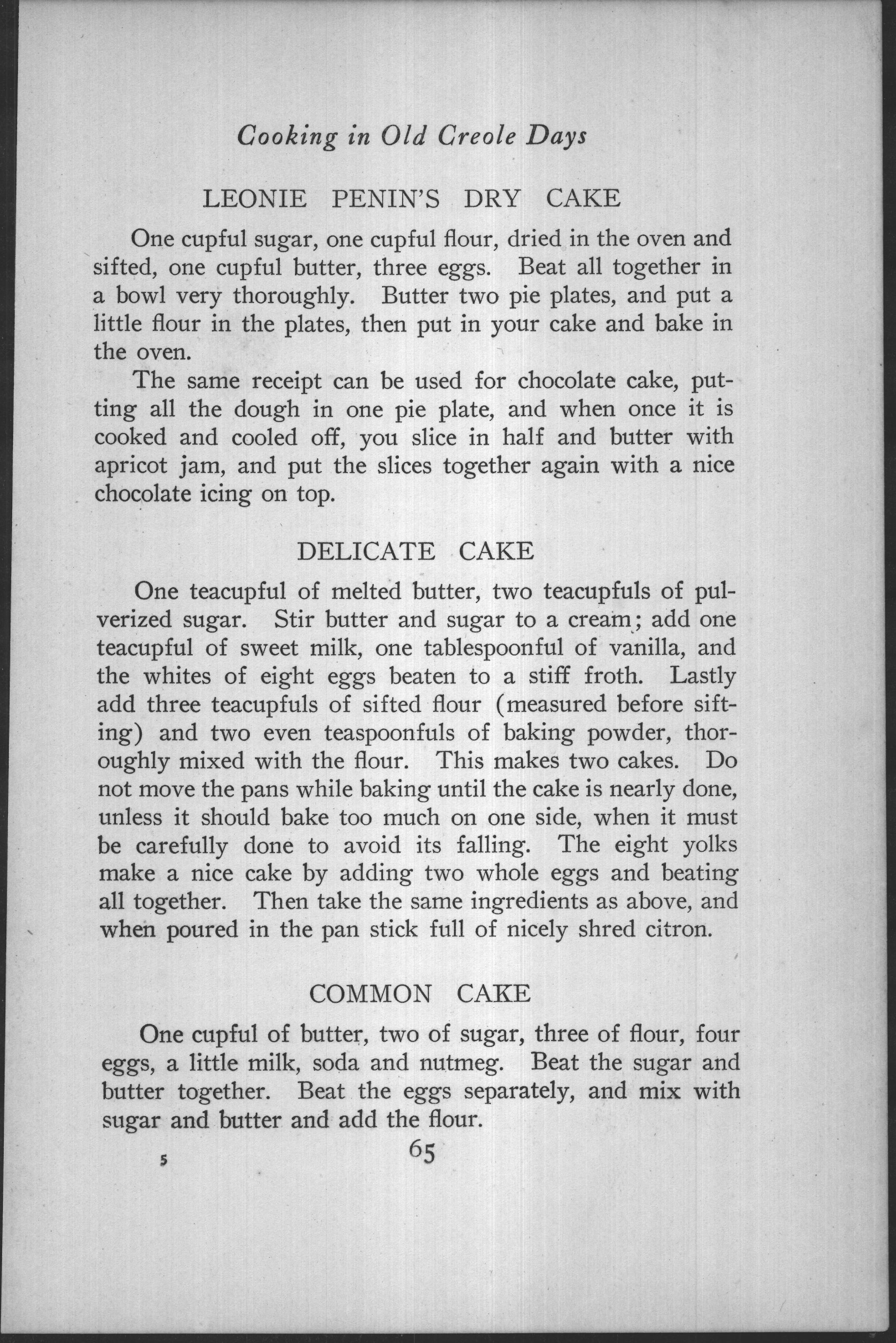
One cupful sugar, one cupful flour, dried in the oven and sifted, one cupful butter, three eggs. Beat all together in a bowl very thoroughly. Butter two pie plates, and put a little flour in the plates, then put in your cake and bake in the oven.
The same receipt can be used for chocolate cake, putting all the dough in one pie plate, and when once it is cooked and cooled off, you slice in half and butter with apricot jam, and put the slices together again with a nice chocolate icing on top.
A plain, buttery “dry cake” in the French style — equal cups of sugar, flour, and butter — that doubles as the base for a filled chocolate cake.
- Why dry the flour“Flour dried in the oven” drove off moisture for a finer crumb in the days of damp, uncertain flour; modern flour needs no drying — skip it, or warm briefly and cool fully.
- Equal-cup richnessOne cup each of sugar, flour, and butter with 3 eggs makes a dense, pound-cake-like batter — a French gâteau sec.
- Pie plates as pansButter the plates and dust with flour, as directed, so the cakes release cleanly.
- Moderate ovenNo temperature is given; bake at a moderate 350°F until golden and a pick comes clean.
- The chocolate versionBake the batter in one plate, split it, spread with apricot jam, and finish with chocolate icing for a simple layer cake.
Recipes named for the woman who contributed them — Leonie Penin’s cake, Leonie’s cake — are the signature of the community cookbook, a genre in which the ladies of a church, guild, or benevolent society pooled their household receipts to raise money. In Francophone New Orleans those contributors often carried French names and French techniques, and a gâteau sec like this — literally a “dry cake,” meaning a firm keeping cake rather than a moist one — was exactly the sort of dependable family recipe passed hand to hand and finally set down in print under its owner’s name.
From page 65 of the 1904 edition.
Original page from the book