Delicious Stew
Katie Seabrook, Pres. McKinley's Colored Cook
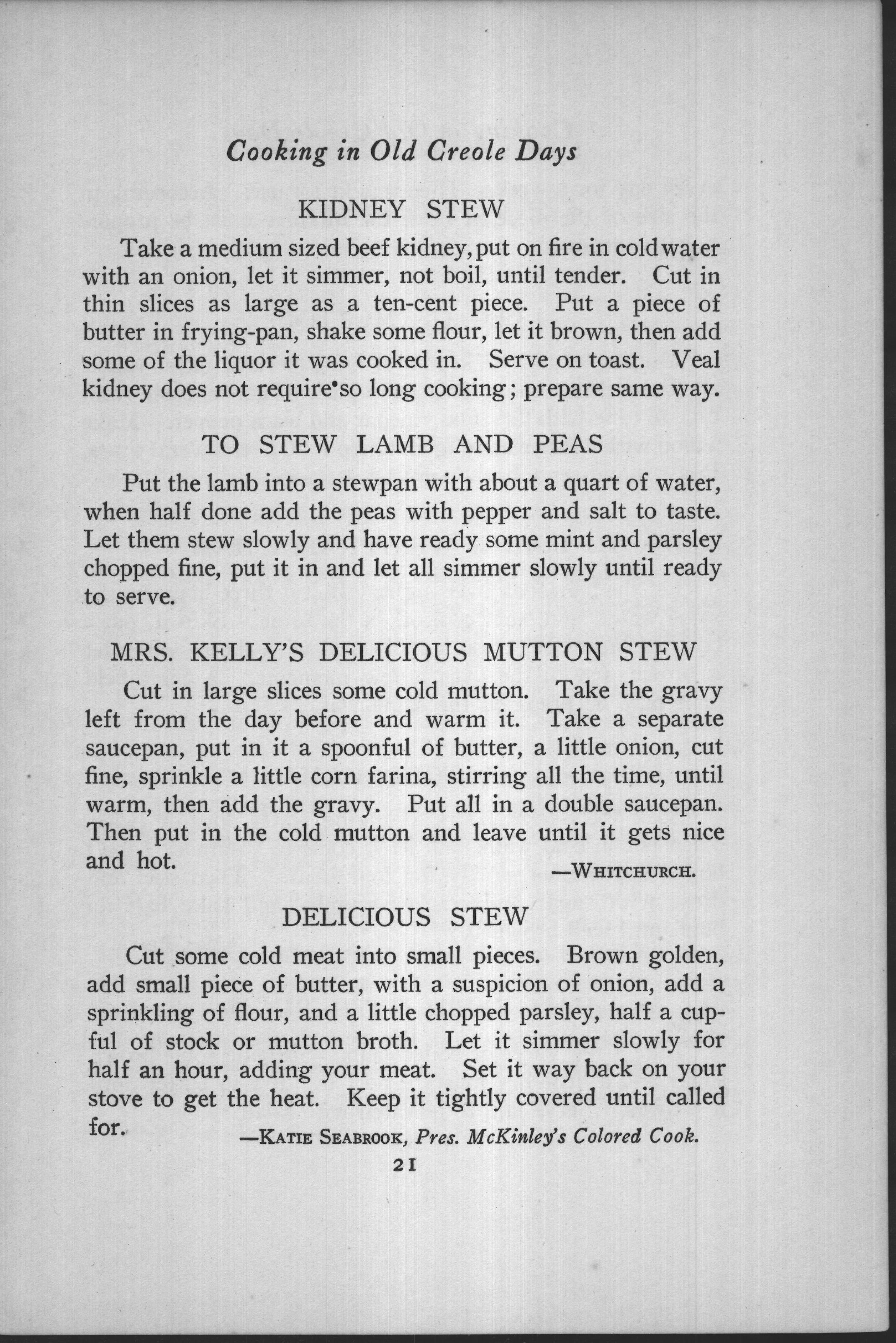
Cut some cold meat into small pieces. Brown golden, add small piece of butter, with a suspicion of onion, add a sprinkling of flour, and a little chopped parsley, half a cupful of stock or mutton broth. Let it simmer slowly for half an hour, adding your meat. Set it way back on your stove to get the heat. Keep it tightly covered until called for.
Another handsome way with cold meat — browned this time for deeper flavor, then held low and slow until the table calls.
- “A suspicion of onion”One of the era’s loveliest measures: the barest hint. Read it as a teaspoon or two of finely chopped onion — present, but not announcing itself.
- “Half a cupful of stock”About 4 fl oz of broth. Mutton broth adds richness, but any good stock works; add a splash more if it tightens while it waits.
- Brown, then a little flourColor the meat first for flavor; the sprinkling of flour then thickens the small amount of liquid into a light gravy.
- “Set it way back on your stove”Old ranges ran hottest at the front, with the back the gentle, warm zone. Translate to your lowest burner or a 200°F oven — a covered hold, not a hard simmer.
- Keep it coveredA tight lid keeps the meat moist and the gravy from cooking away “until called for.”
This recipe carries a proud credit line — the cook to President William McKinley, who held office from 1897 to 1901. Community and charity cookbooks of the period often prized such attributions, crediting recipes to the skilled cooks of prominent households. Behind those brief lines stood countless Black women whose labor shaped American cooking, in the White House and far beyond, and who were only rarely named in print. A quick, thrifty stew of made-over meat like this one was exactly the sort of everyday brilliance that professional cooks turned out daily, whether or not history recorded their full stories.
From page 21 of the 1904 edition.
Original page from the book