Devilled Crabs
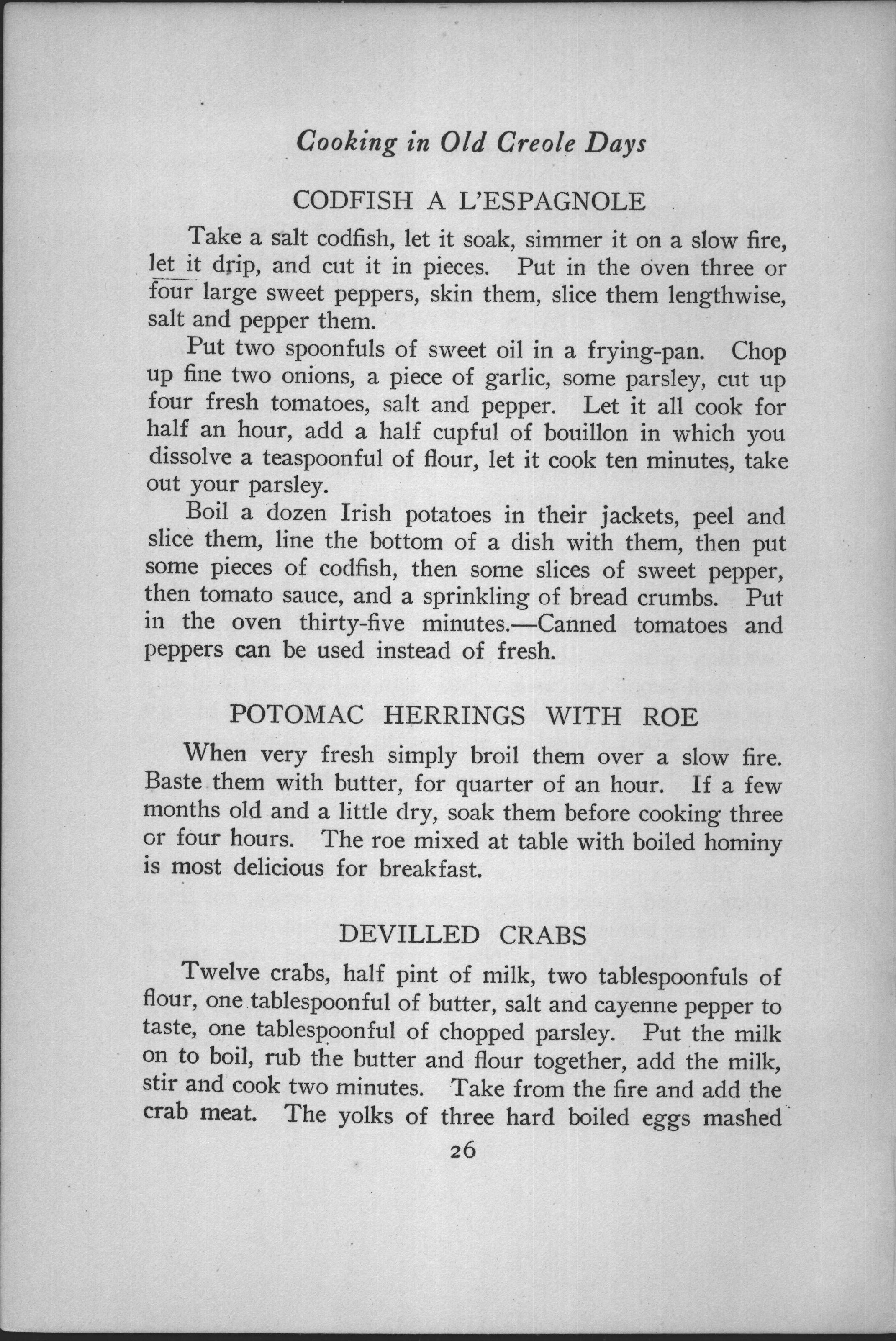
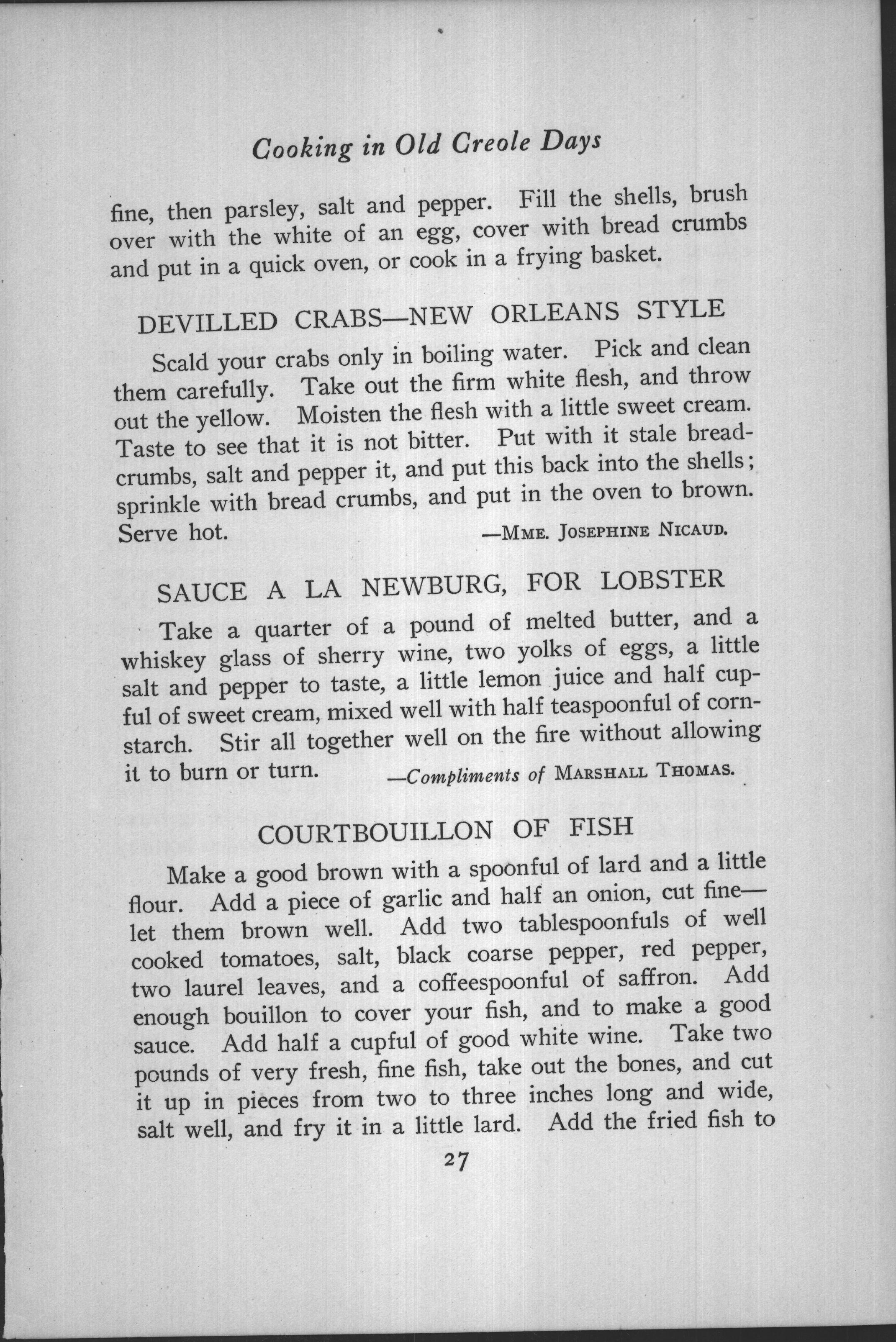
Twelve crabs, half pint of milk, two tablespoonfuls of flour, one tablespoonful of butter, salt and cayenne pepper to taste, one tablespoonful of chopped parsley. Put the milk on to boil, rub the butter and flour together, add the milk, stir and cook two minutes. Take from the fire and add the crab meat. The yolks of three hard boiled eggs mashed fine, then parsley, salt and pepper. Fill the shells, brush over with the white of an egg, cover with bread crumbs and put in a quick oven, or cook in a frying basket.
A creamy, cayenne-spiked crab filling baked back in the shell — the “devil” being the heat.
- What “devilled” meansTo devil a dish is to season it with something hot — here cayenne — a cooking term at home in English-speaking kitchens by the early 1800s.
- Half a pint of milkThat’s 1 cup; cooked with a tablespoon each of butter and flour, it makes a thick white sauce to bind the crab.
- Twelve crabsBlue crabs; you’ll want their cleaned top shells (or ramekins) as baking vessels, and about 1 lb of picked meat in all.
- Egg wash and crumbsBrushing the tops with beaten egg white helps the breadcrumb crust brown and hold together.
- “A quick oven”That means hot, about 425–450°F, just long enough to heat through and brown the crumbs; a frying basket was the deep-fry alternative.
“Deviled” is one of the oldest bits of kitchen slang still in use: by the early nineteenth century, to devil a dish meant to fire it up with mustard, cayenne or other hot seasoning, the culinary equivalent of hellish heat. Applied to the Chesapeake and Gulf blue crab, it produced a beloved regional supper — sweet picked meat bound in a peppery sauce, packed into the crab’s own scrubbed shell, and browned. Serving food in its shell was both practical and theatrical, and deviled (or “stuffed”) crab remains a fixture of American coastal cooking from Maryland to Louisiana.
From page 26 of the 1904 edition.
Original pages from the book