Swedish Cream
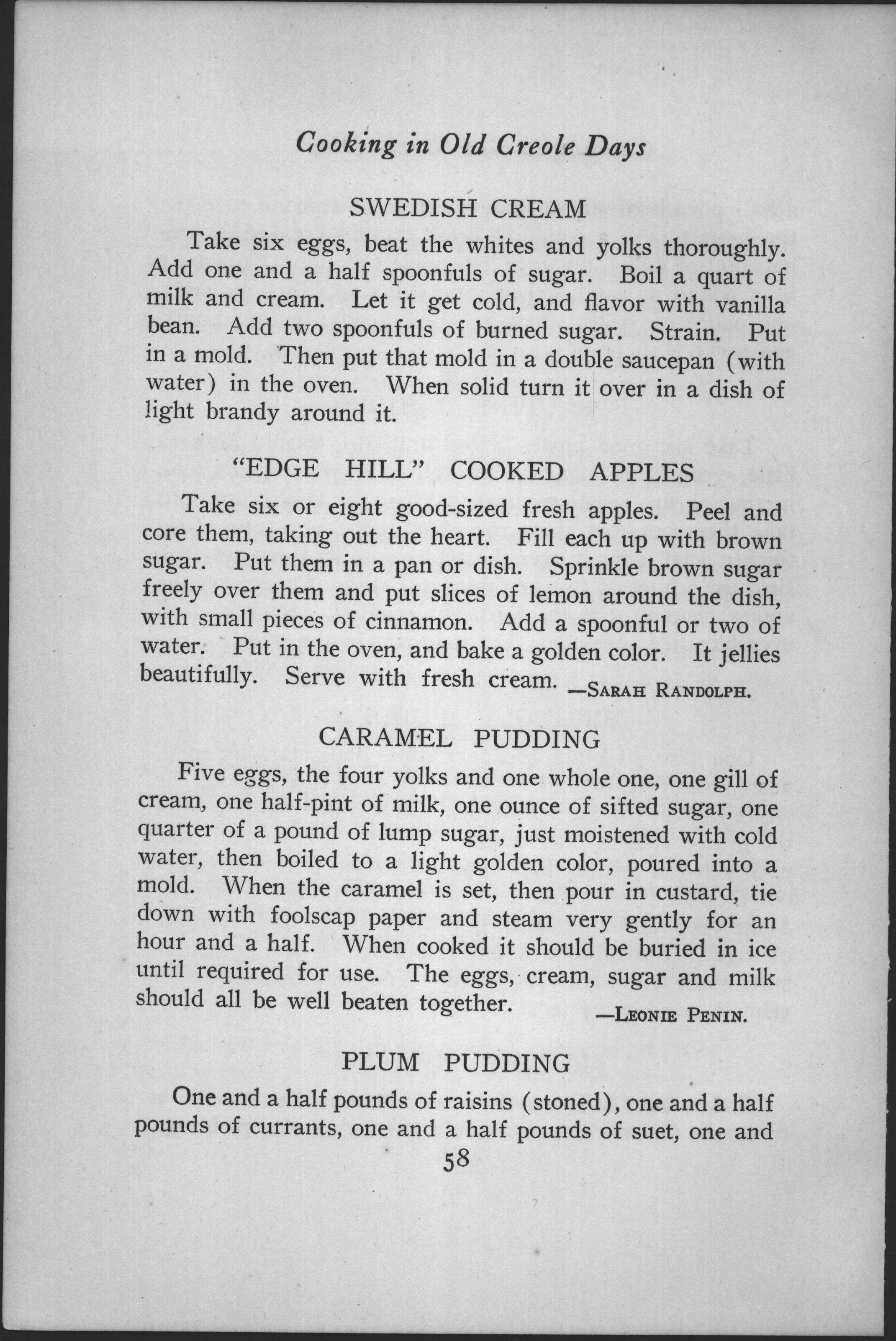
Take six eggs, beat the whites and yolks thoroughly. Add one and a half spoonfuls of sugar. Boil a quart of milk and cream. Let it get cold, and flavor with vanilla bean. Add two spoonfuls of burned sugar. Strain. Put in a mold. Then put that mold in a double saucepan (with water) in the oven. When solid turn it over in a dish of light brandy around it.
A molded, caramel-touched cream baked in a water bath and ringed with brandy at the table.
- “Burned sugar” = caramelThe two spoonfuls of burned sugar are caramel, added for color and a faint toasty flavor; make it as the book’s caramel method shows.
- Spoonfuls, clarifiedRead the sugar “spoonfuls” as tablespoons: 1½ to sweeten the eggs, 2 of caramel for color (this is a lightly sweetened cream).
- Bake in a bain-marieThe “double saucepan with water in the oven” is a water bath; a moderate 325–350°F sets it gently without curdling.
- Cool the milk before mixingBoiling the milk and cream then letting it cool keeps it from cooking the beaten eggs on contact; strain for silkiness.
- The brandy ring“Light brandy around it” means pouring brandy around the unmolded cream — sometimes lit for show; skip the flame if serving children.
Victorian and Edwardian dessert tables loved a molded cream with a foreign name — Bavarian, Spanish, Italian, Swedish — and the labels were often more fashionable than geographic. A true Swedish cream is usually set with gelatin and soured cream, but American cookbooks applied the name loosely to almost any elegant molded cream. This baked, caramel-tinged version leans closer to a custard than to any Scandinavian original. What ties them together is the mold: turning a trembling cream out whole was the mark of an accomplished kitchen, and a splash of brandy made it a showpiece.
From page 58 of the 1904 edition.
Original page from the book