Egg Plant
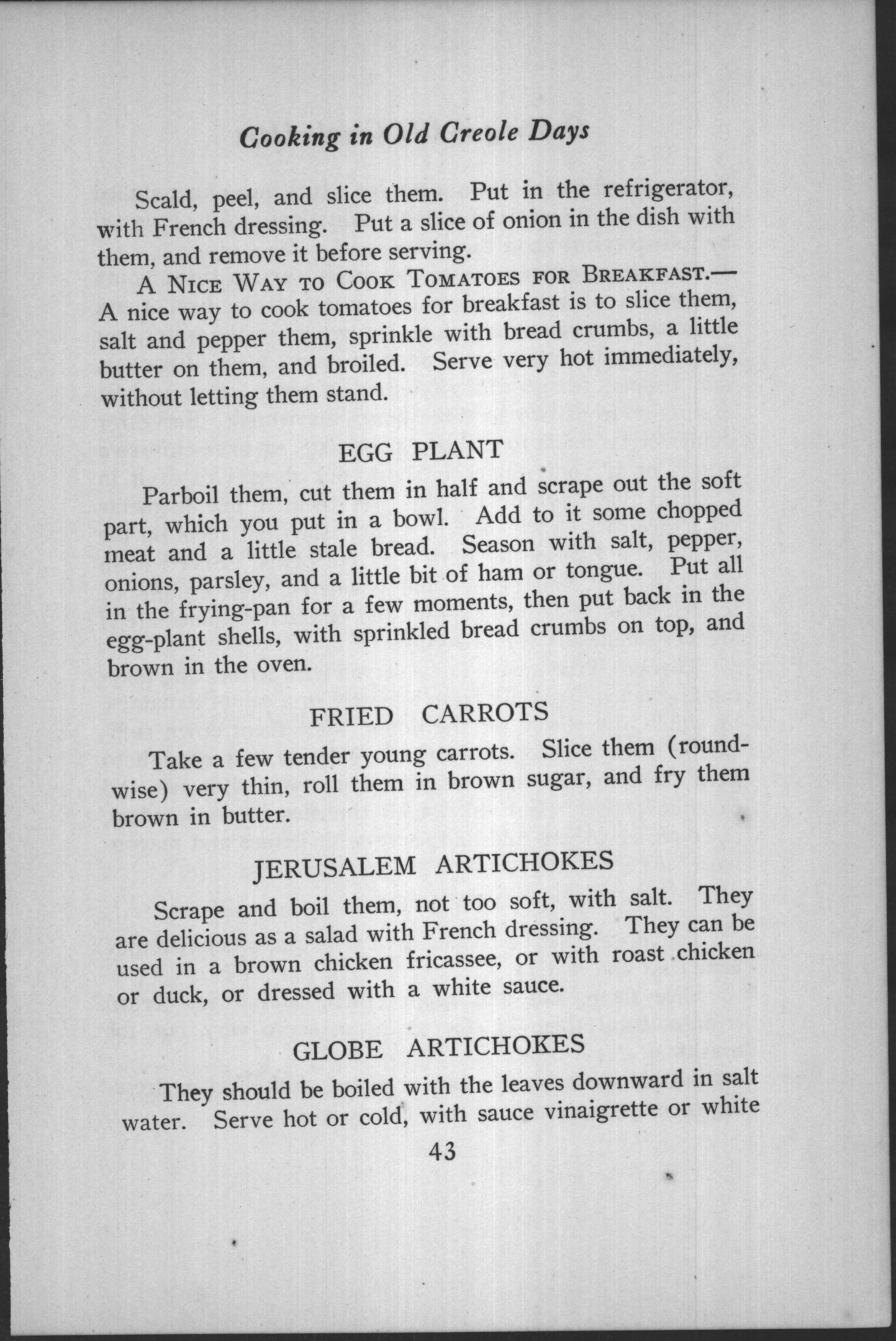
Parboil them, cut them in half and scrape out the soft part, which you put in a bowl. Add to it some chopped meat and a little stale bread. Season with salt, pepper, onions, parsley, and a little bit of ham or tongue. Put all in the frying-pan for a few moments, then put back in the egg-plant shells, with sprinkled bread crumbs on top, and brown in the oven.
Creole stuffed eggplant — the classic New Orleans treatment, in which scooped-out shells are filled with a savory meat-and-bread stuffing and browned.
- Parboil to softenSimmer the whole eggplants briefly first so the flesh scoops out easily and finishes tender in the oven.
- Save the shellsHalve and hollow them, leaving a sturdy shell to refill — the eggplant becomes its own baking dish.
- Stale bread is the binderA little stale bread or crumbs, moistened, holds the chopped-meat filling together; ham or salt tongue adds a savory backbone.
- Salt if bitterOlder varieties were more bitter; if yours tastes sharp, salt the cut flesh for 20 minutes and blot — most modern eggplants need only a light seasoning.
- Brown in a moderate-hot ovenTop with crumbs and bake around 375°F (190°C) until the filling is set and the crust is golden.
The eggplant is an Old World fruit, native to Asia and carried westward by Arab traders into the Mediterranean, then on to the Americas. Its odd English name records the first kinds Europeans grew: small, white and egg-shaped, nothing like the glossy purple globes we picture now. In Louisiana the vegetable found an especially warm welcome, and stuffed eggplant — enriched with ham, herbs and bread — became one of the most characteristic dishes of the Creole kitchen, a thrifty way to turn a mild vegetable into a substantial, savory course.
From page 43 of the 1904 edition.
Original page from the book