Floating Island
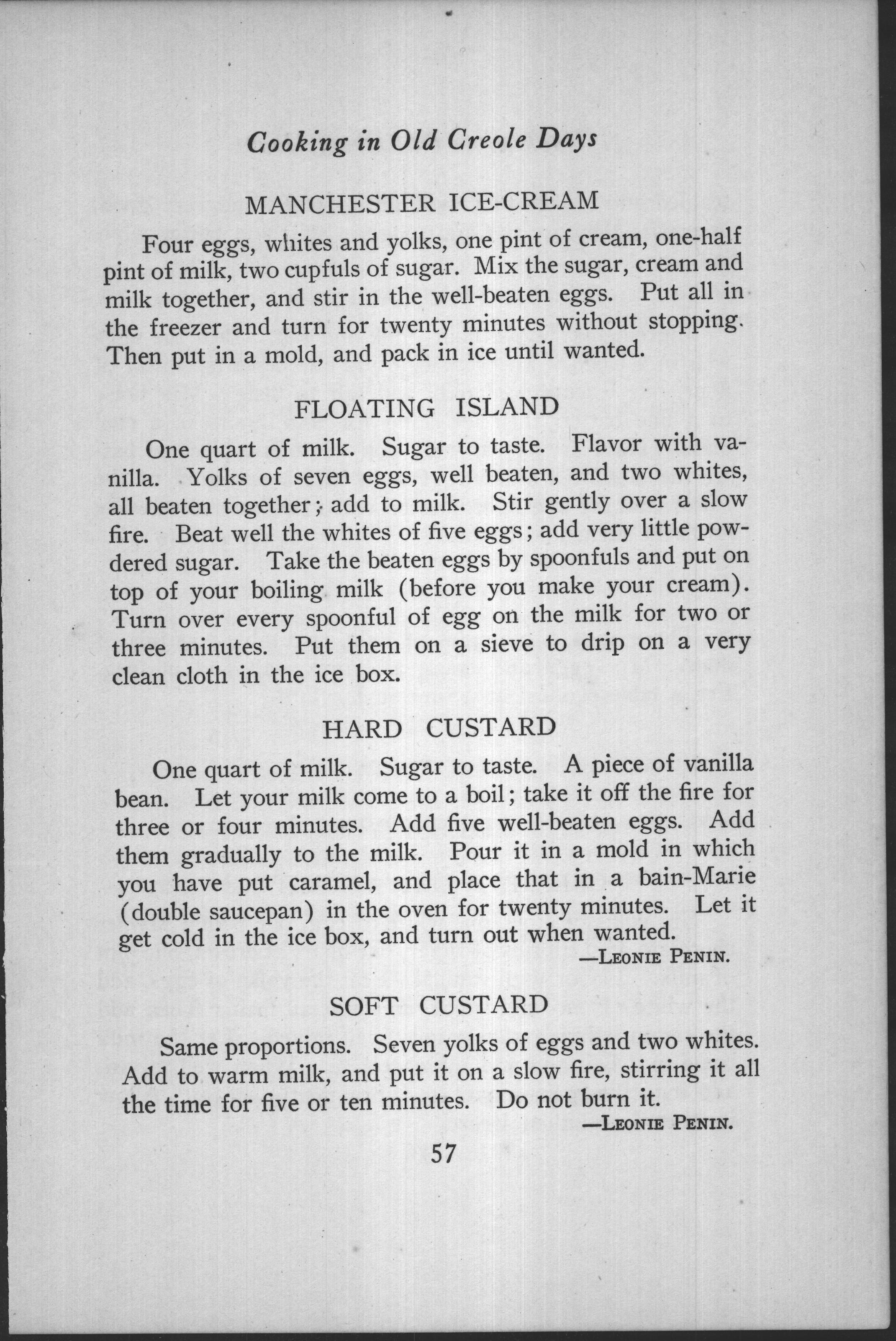
One quart of milk. Sugar to taste. Flavor with vanilla. Yolks of seven eggs, well beaten, and two whites, all beaten together; add to milk. Stir gently over a slow fire. Beat well the whites of five eggs; add very little powdered sugar. Take the beaten eggs by spoonfuls and put on top of your boiling milk (before you make your cream). Turn over every spoonful of egg on the milk for two or three minutes. Put them on a sieve to drip on a very clean cloth in the ice box.
The classic île flottante: islands of poached meringue floating on a sea of soft custard.
- Two desserts in oneYou make a stirred custard (crème anglaise) from milk and yolks, and separately poach spoonfuls of sweetened beaten whites as the “islands.”
- Islands first hereThe meringues are poached first in simmering milk (2–3 min, turning once) and lifted to drain, then the custard is made — you can even poach them in that same milk.
- “Slow fire” = low heatCook the yolk-and-milk custard gently, below a simmer, stirring until it coats a spoon (170–180°F); boiling curdles it.
- Don’t skip drainingDraining the poached whites on a cloth or sieve keeps them from weeping and going soggy on the custard.
- Egg economySeven yolks plus two whites go to the custard; five whites become the islands — nothing wasted.
Floating island is an old dessert with a foot in two cuisines. English cooks were serving elaborate “floating islands” by the mid-1700s — Hannah Glasse and others piled whipped cream and jelly into showy centerpieces — while the French île flottante settled into the tidy custard-and-meringue form we know now. It crossed to America early and became a fixture of nineteenth-century tables; Thomas Jefferson’s household is often said to have served a version. The two whites folded into the custard, by the way, are simple thrift — using up what the meringue islands left behind.
From page 57 of the 1904 edition.
Original page from the book