Hard Custard
Leonie Penin
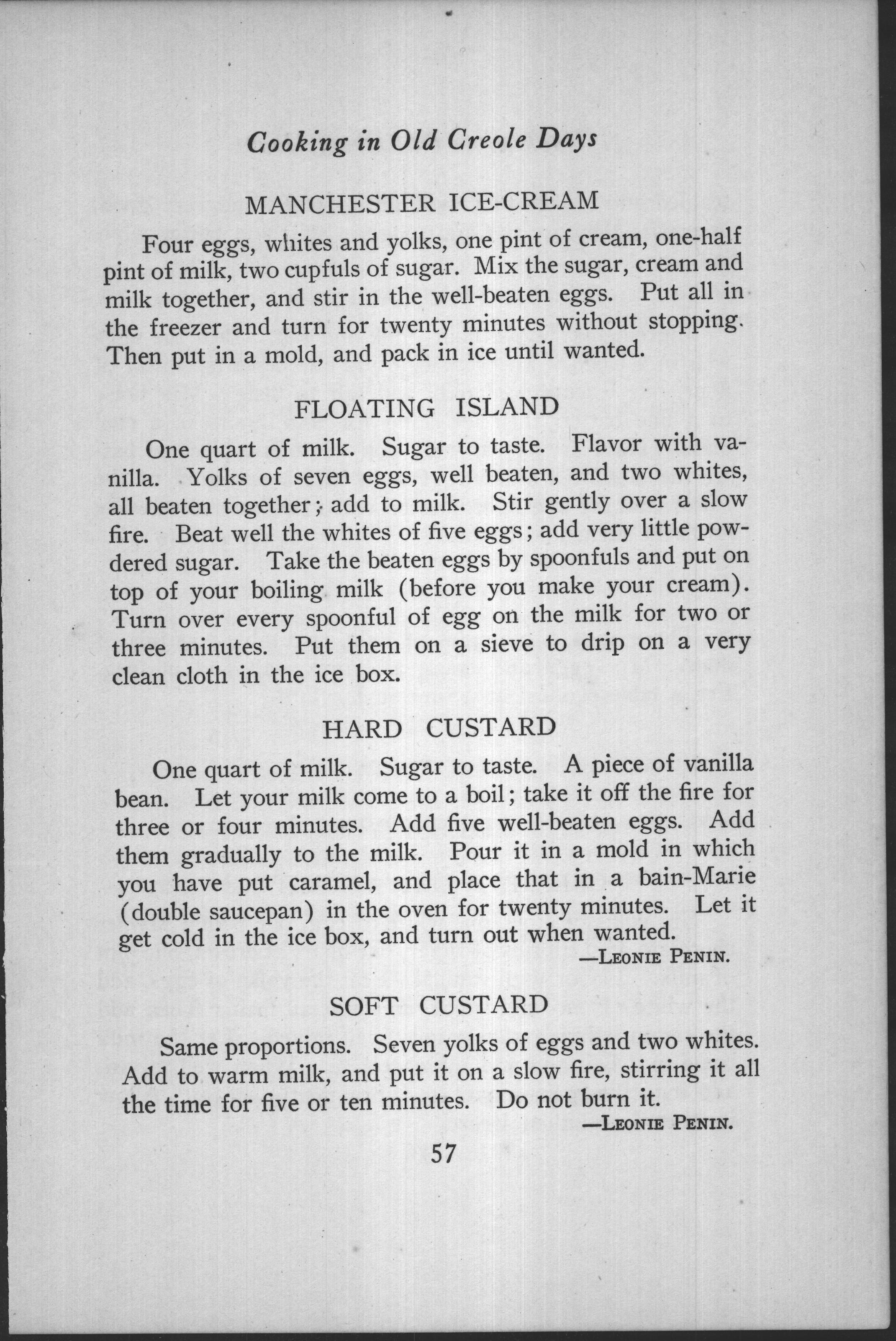
One quart of milk. Sugar to taste. A piece of vanilla bean. Let your milk come to a boil; take it off the fire for three or four minutes. Add five well-beaten eggs. Add them gradually to the milk. Pour it in a mold in which you have put caramel, and place that in a bain-Marie (double saucepan) in the oven for twenty minutes. Let it get cold in the ice box, and turn out when wanted.
A baked, caramel-lined custard turned out of its mold — what we’d call a flan or crème caramel.
- “Hard” means baked and setUnlike a soft stirred custard, this one bakes firm enough to unmold; the caramel in the bottom becomes the sauce when you turn it out.
- Bain-Marie = water bathSet the mold in a larger pan of hot water; the gentle, even heat keeps the custard from curdling or weeping.
- Oven temperatureA moderate 325–350°F (165–175°C) is right; “twenty minutes” suits a shallow mold — bake until just set with a slight jiggle at the center.
- Line the mold with caramelPour cooked caramel in first and let it set; see the book’s own caramel method.
- Chill before turning outCold custard releases cleanly; run a knife around the edge and invert onto a plate so the caramel runs down.
The bain-marie — a vessel set in hot water for gentle cooking — carries a curious name: Marie’s bath. It is traditionally credited to Maria the Jewess, an alchemist of Roman-era Alexandria said to have devised such a water-jacketed apparatus for slow, controlled heating. Alchemists borrowed it, cooks adopted it, and the French name stuck. Custards have needed exactly this coddling since antiquity — the Romans baked egg-and-milk mixtures too — because direct heat scrambles eggs, while a warm-water embrace sets them silky and whole.
From page 57 of the 1904 edition.
Original page from the book