For Broiling Chicken
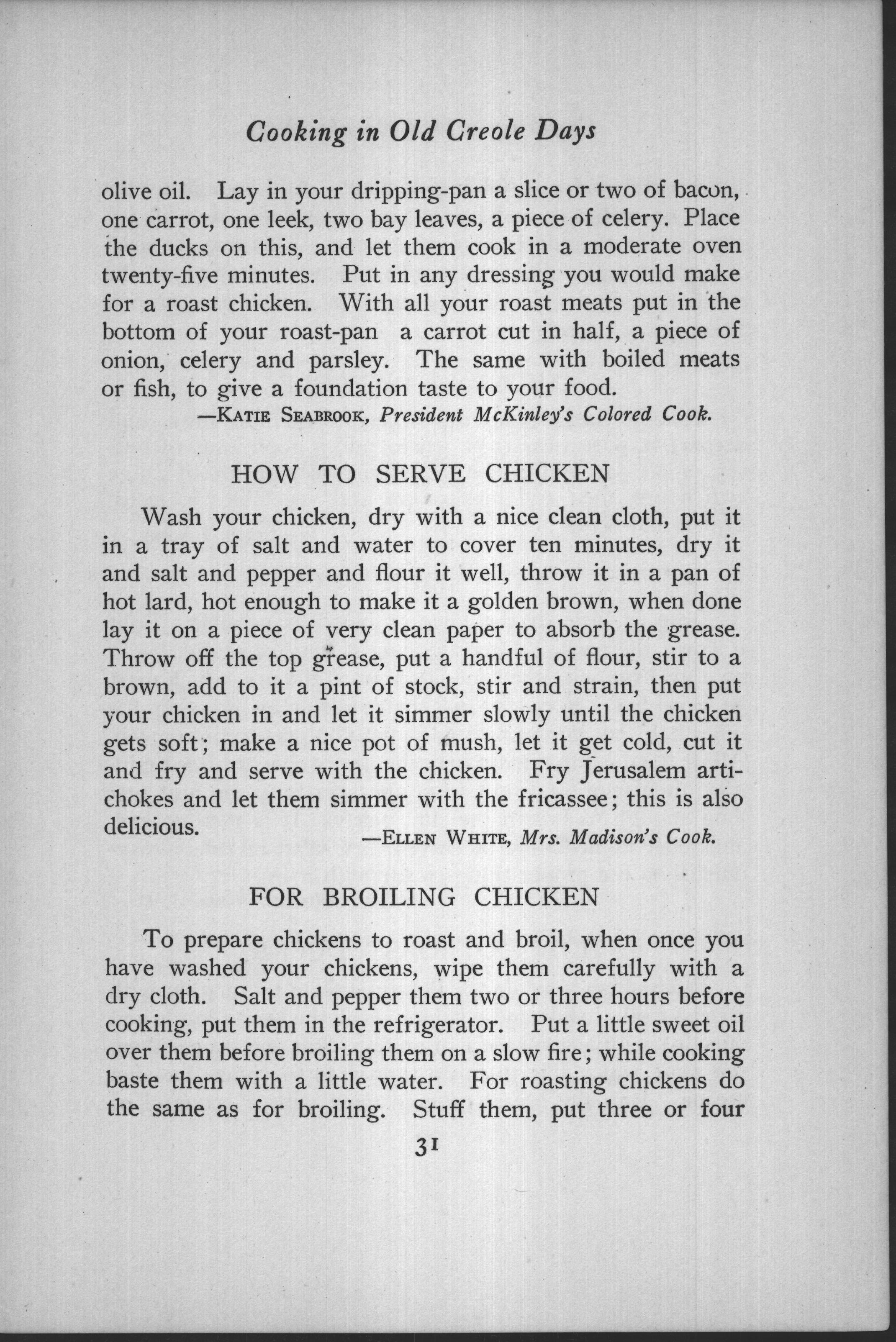
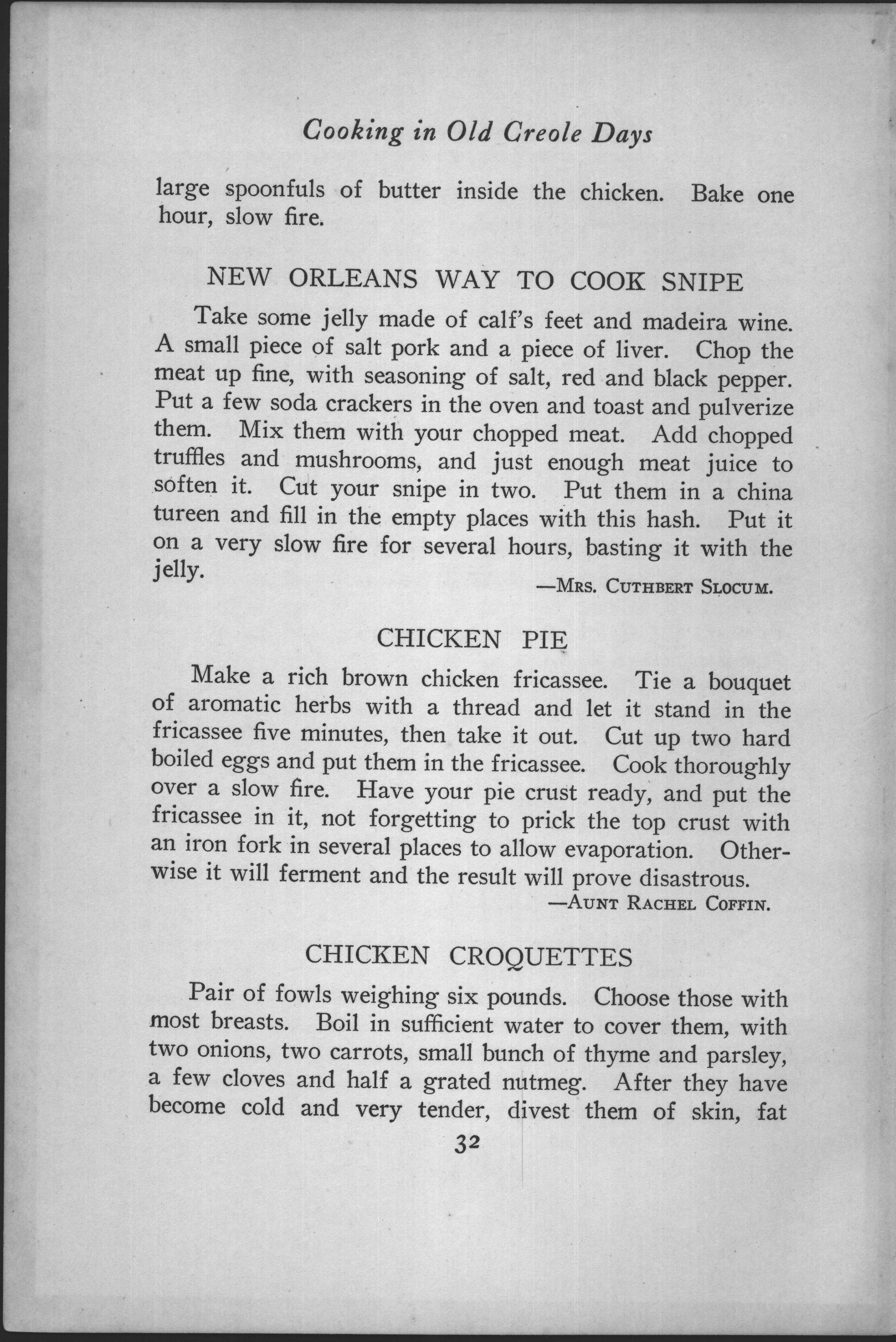
To prepare chickens to roast and broil, when once you have washed your chickens, wipe them carefully with a dry cloth. Salt and pepper them two or three hours before cooking, put them in the refrigerator. Put a little sweet oil over them before broiling them on a slow fire; while cooking baste them with a little water. For roasting chickens do the same as for broiling. Stuff them, put three or four large spoonfuls of butter inside the chicken. Bake one hour, slow fire.
The quiet secret here is time: season the birds hours ahead, let them rest cold, and they broil up juicier and better flavored.
- That’s a dry brineSalting two or three hours ahead and chilling is exactly what modern cooks call dry-brining — it seasons deep and keeps the meat moist.
- Sweet oil = olive oil“Sweet oil” is simply olive oil; a light coat before broiling helps the skin color and crisp.
- Broil on a “slow fire”Keep the heat gentle and the rack a little lower so the chicken cooks through before the skin scorches; baste with a little water to keep it from drying.
- Roasting temperatureFor the roast version, “slow fire” means a 300–325°F (150–165°C) oven, and a whole chicken usually needs a bit longer than the stated hour.
- Butter inside“Three or four large spoonfuls of butter” ≈ 3–4 Tbsp tucked in the cavity, basting the bird from within as it melts.
- Always to 165°FHowever you cook it, take the chicken to an internal 165°F (74°C) — the surest test of doneness.
Long before “broil” meant a flame overhead, it meant cooking over live coals on a gridiron — the word comes through Old French from a root meaning to burn. A young chicken split flat and set over embers was one of the fastest hot suppers a cook could make. What’s striking in this old receipt is the timing: salting the bird hours ahead and letting it rest cold is precisely the dry-brining that food scientists would champion a century later — proof that good cooks often know by hand what the laboratory only later explains.
From page 31 of the 1904 edition.
Original pages from the book