How to Serve Chicken
Ellen White, Mrs. Madison's Cook
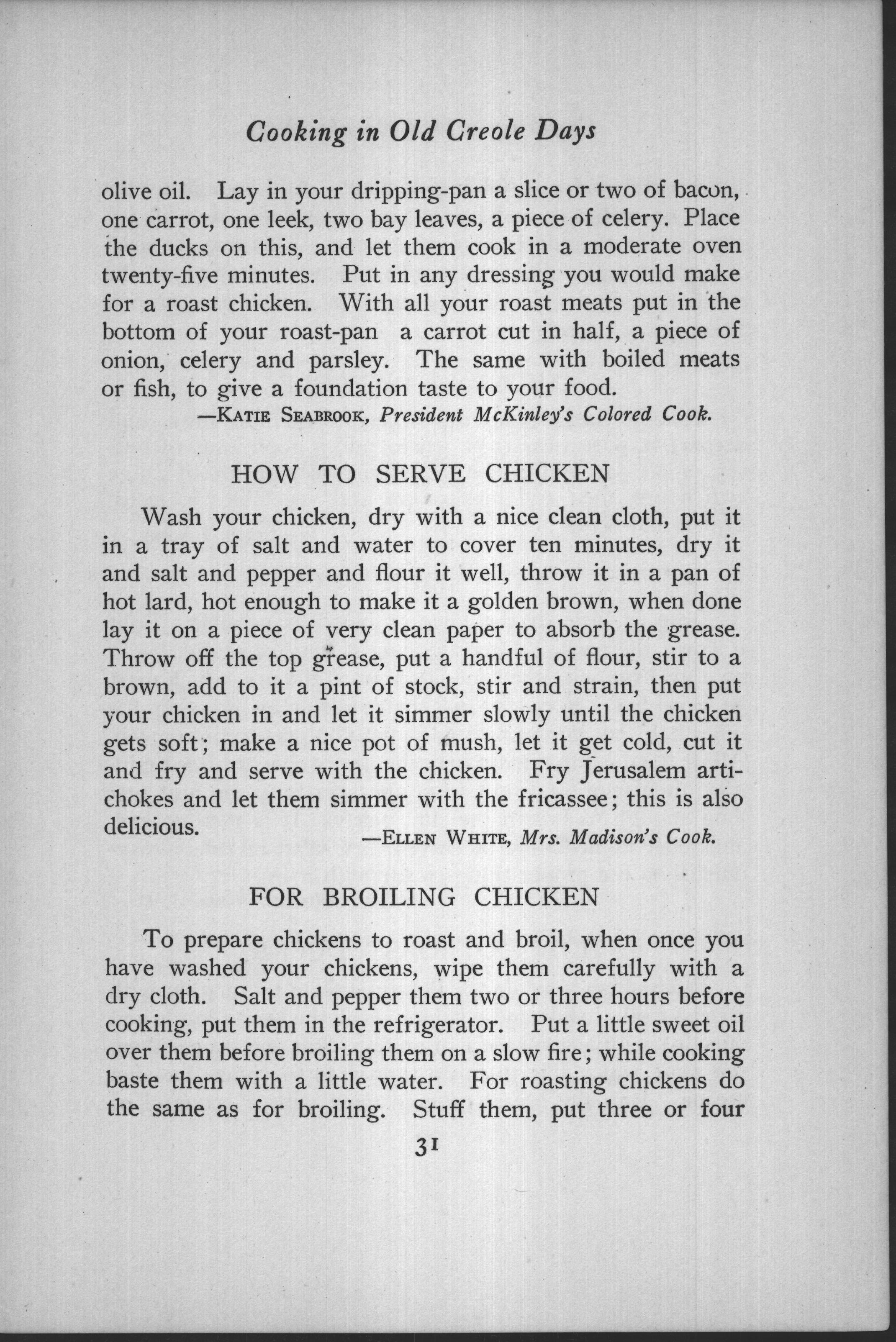
Wash your chicken, dry with a nice clean cloth, put it in a tray of salt and water to cover ten minutes, dry it and salt and pepper and flour it well, throw it in a pan of hot lard, hot enough to make it a golden brown, when done lay it on a piece of very clean paper to absorb the grease. Throw off the top grease, put a handful of flour, stir to a brown, add to it a pint of stock, stir and strain, then put your chicken in and let it simmer slowly until the chicken gets soft; make a nice pot of mush, let it get cold, cut it and fry and serve with the chicken. Fry Jerusalem artichokes and let them simmer with the fricassee; this is also delicious.
A two-part Southern classic — chicken fried golden, then simmered soft in its own gravy — served with fried mush and sunchokes.
- The salt-water soakThe 10-minute salt-water bath is an early brine; a short soak is fine, but don’t rinse the raw chicken afterward — pat it dry to avoid spreading bacteria.
- Fried, then fricasseedThis browns the chicken in lard, then finishes it in a flour gravy — a true fricassee. A pint of stock ≈ 2 cups.
- “A pot of mush”Mush is cornmeal porridge; poured out, chilled firm, sliced, and fried, it becomes crisp fried mush — the same idea as fried polenta or scrapple.
- Jerusalem artichokesThese knobbly tubers (sunchokes) aren’t artichokes at all; scrub and slice them, then simmer in the gravy until just tender.
- Lard for fryingAny high-smoke-point fat works; heat it to about 350–365°F (175–185°C) for a proper golden crust.
The “Jerusalem” artichoke has nothing to do with Jerusalem and isn’t an artichoke. It is the tuber of a North American sunflower, Helianthus tuberosus, which Indigenous peoples had long cultivated. The name is usually traced to the Italian girasole, “turning to the sun,” which English ears rounded off into “Jerusalem”; the “artichoke” came from a faint likeness in taste. Set beside fried chicken and fried cornmeal mush, it completes a plate built from the American ground up — native corn, a native tuber, and a fried-chicken tradition shaped above all by Black Southern cooks like Ellen White.
From page 31 of the 1904 edition.
Original page from the book