Ginger Cake
Alison
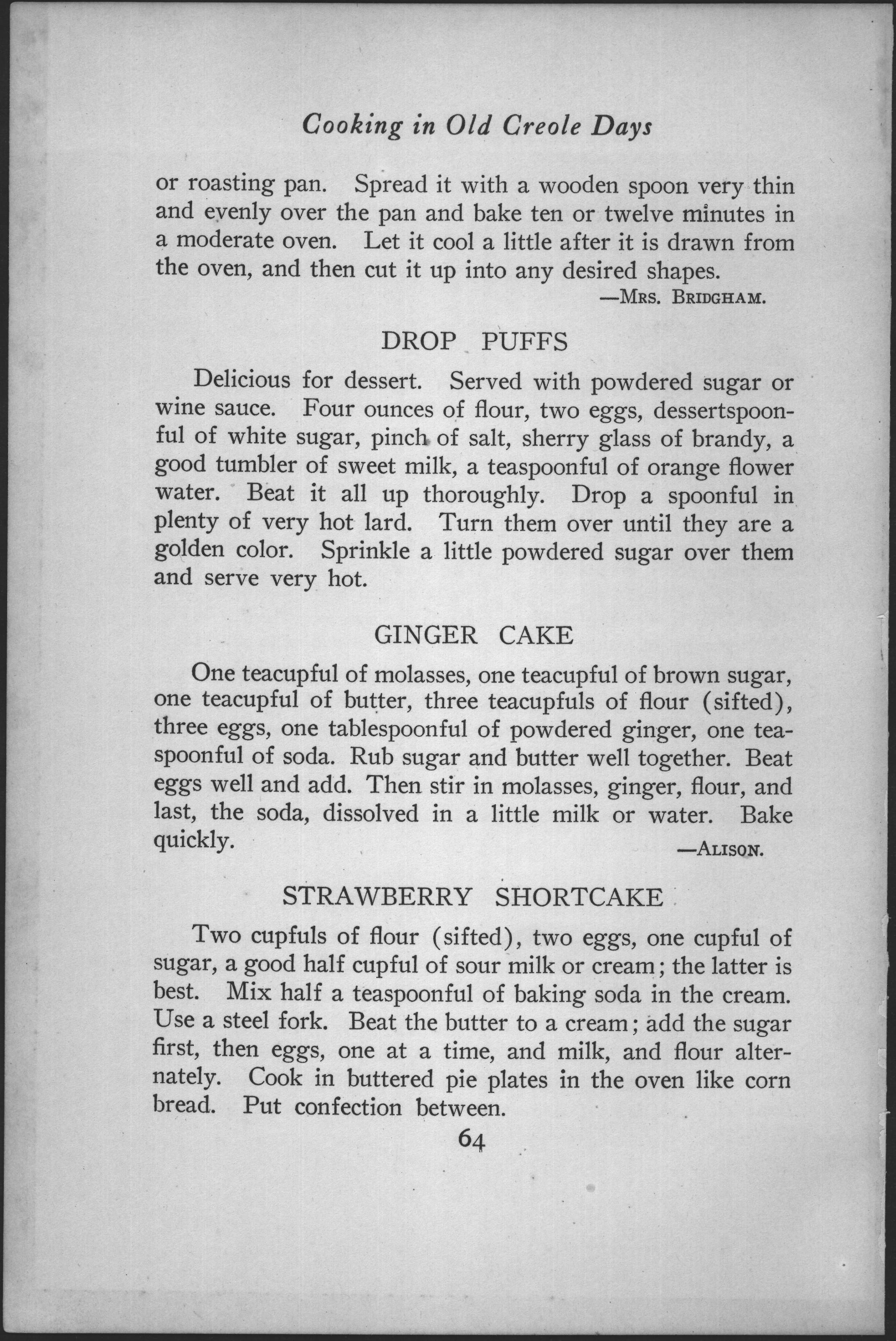
One teacupful of molasses, one teacupful of brown sugar, one teacupful of butter, three teacupfuls of flour (sifted), three eggs, one tablespoonful of powdered ginger, one teaspoonful of soda. Rub sugar and butter well together. Beat eggs well and add. Then stir in molasses, ginger, flour, and last, the soda, dissolved in a little milk or water. Bake quickly.
A soft, cake-style gingerbread — equal teacups of molasses, brown sugar, and butter — tender enough to eat with a fork.
- Teacup measuresA teacupful is about ¾ cup, so this is ¾ cup each of molasses, brown sugar, and butter, with 2¼ cups flour (three teacups).
- Dissolve the sodaStir the teaspoon of soda into a little milk or water before adding it, so it disperses evenly through the batter.
- “Bake quickly” — but watch itA period “quick” oven meant 425–450°F, but molasses scorches; you’ll get a better cake at 350°F, tested with a pick.
- Cream firstRubbing the sugar and butter together well, then beating in the eggs, builds structure before the flour goes in.
- Pan itBake in a greased square or loaf pan, roughly 30–40 minutes depending on depth.
So beloved was gingerbread that its name slipped free of the kitchen. Bakers once gilded fair-day gingerbread with gold leaf — said to be the origin of the phrase “to take the gilt off the gingerbread,” meaning to spoil something’s charm. Molds pressed the cakes into elaborate figures, kings, and animals, and by the nineteenth century gingerbread had become a word for anything fancifully ornamented, most famously the lacy scroll-sawn trim on Victorian houses. A plain soft cake like this one is the humble ancestor of all that flourish — proof of how much affection a single spiced cake could carry.
From page 64 of the 1904 edition.
Original page from the book