Strawberry Shortcake
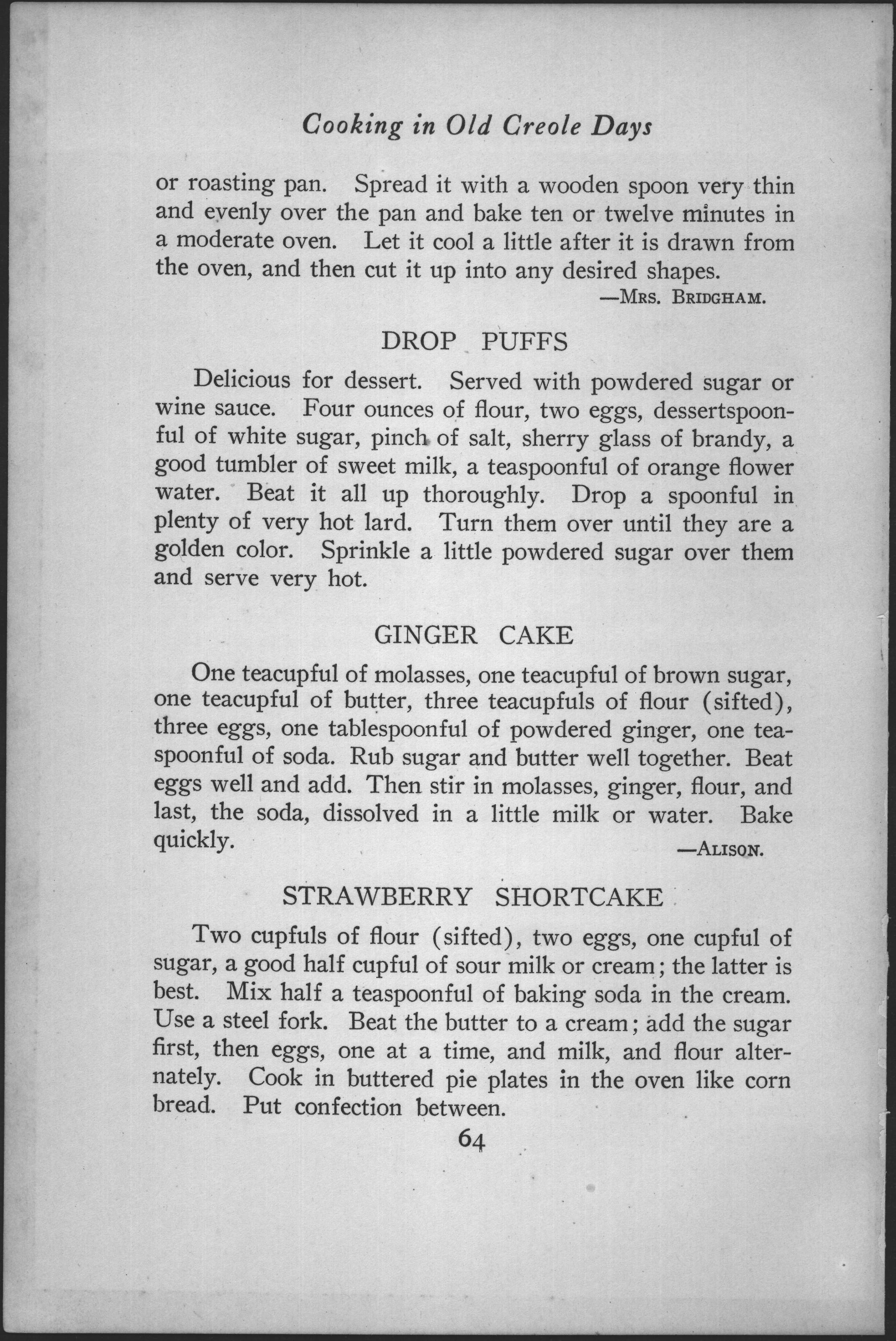
Two cupfuls of flour (sifted), two eggs, one cupful of sugar, a good half cupful of sour milk or cream; the latter is best. Mix half a teaspoonful of baking soda in the cream. Use a steel fork. Beat the butter to a cream; add the sugar first, then eggs, one at a time, and milk, and flour alternately. Cook in buttered pie plates in the oven like corn bread. Put confection between.
An older, cake-style shortcake — baked in pie plates like cornbread and split to hold sweetened fruit — rather than the biscuit kind common today.
- Sour milk = buttermilkThe “sour milk or cream” is best replaced with buttermilk; the ½ teaspoon of soda stirred into it provides the lift.
- Butter unspecifiedThe original forgets to list a quantity; about ½ cup (1 stick), creamed with the sugar, suits these proportions.
- “Like corn bread”Bake the batter in greased pie plates in a moderate-to-hot oven, 375–400°F, until set and golden, about 20–25 minutes.
- “Put confection between”That means the filling: split the cooled cakes and layer with sweetened, lightly crushed strawberries (and whipped cream, if you like).
- Steel forkThe call for a steel fork simply means to mix lightly by hand, not to beat the batter tough.
Strawberry shortcake is a thoroughly American summer institution, and it comes in two schools that still divide cooks. The older “short” cake was a rich biscuit dough — short meaning made tender with fat — while a parallel tradition, like this one, used a sweet butter cake baked in plates. Both rose to popularity in the nineteenth century as cultivated strawberries became widely available and social “strawberry parties” celebrated the brief June harvest. Whether built on biscuit or cake, the idea is the same: something plain and buttery to catch the juice of ripe fruit.
From page 64 of the 1904 edition.
Original page from the book