Drop Puffs
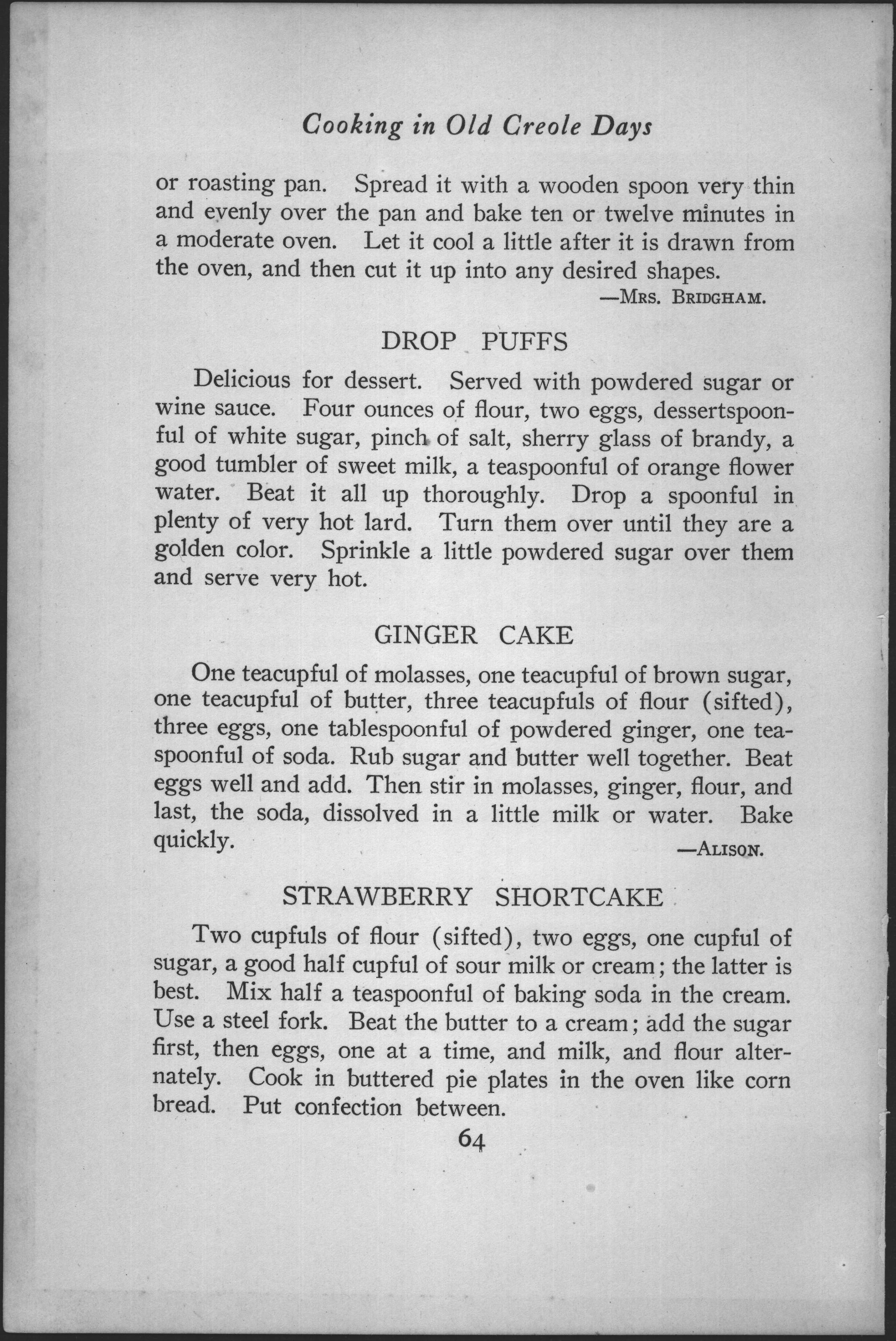
Delicious for dessert. Served with powdered sugar or wine sauce. Four ounces of flour, two eggs, dessertspoonful of white sugar, pinch of salt, sherry glass of brandy, a good tumbler of sweet milk, a teaspoonful of orange flower water. Beat it all up thoroughly. Drop a spoonful in plenty of very hot lard. Turn them over until they are a golden color. Sprinkle a little powdered sugar over them and serve very hot.
Not a baked puff at all but a light fried fritter, perfumed with brandy and orange-flower water — closer kin to the beignet than to anything from the oven.
- Odd old measures4 oz flour is a scant cup (best weighed); a dessertspoonful of sugar is about 2 teaspoons; a sherry glass of brandy is roughly 2–3 tablespoons.
- “A good tumbler of sweet milk”A tumbler is a drinking glass, so use about 1 to 1¼ cups whole milk; the batter should be pourable, like a thin pancake batter.
- Orange-flower waterThis floral distillate of bitter-orange blossom is sold in baking and Middle Eastern shops; a teaspoon is plenty — it’s potent and turns soapy if overdone.
- Fry safely“Very hot lard” means about 360–375°F; a neutral oil works just as well. Use a thermometer and don’t crowd the pot.
- Serve hotDrain, dust with powdered sugar or spoon over a wine sauce, and eat at once — fritters deflate as they cool.
Orange-flower water — the fragrant water distilled from bitter-orange blossoms — was a favorite flavoring in French and Creole kitchens long before vanilla became commonplace. Distilled around the Mediterranean and prized in North Africa, France, and the Levant, it scented custards, cakes, and confections throughout the eighteenth and nineteenth centuries. New Orleans, with its French roots and busy port, kept the taste alive well after it faded elsewhere in America. A splash in these brandy-spiked fritters is a small, aromatic echo of the old Franco-Mediterranean pantry that shaped Creole sweets.
From page 64 of the 1904 edition.
Original page from the book