Soft Custard
Leonie Penin
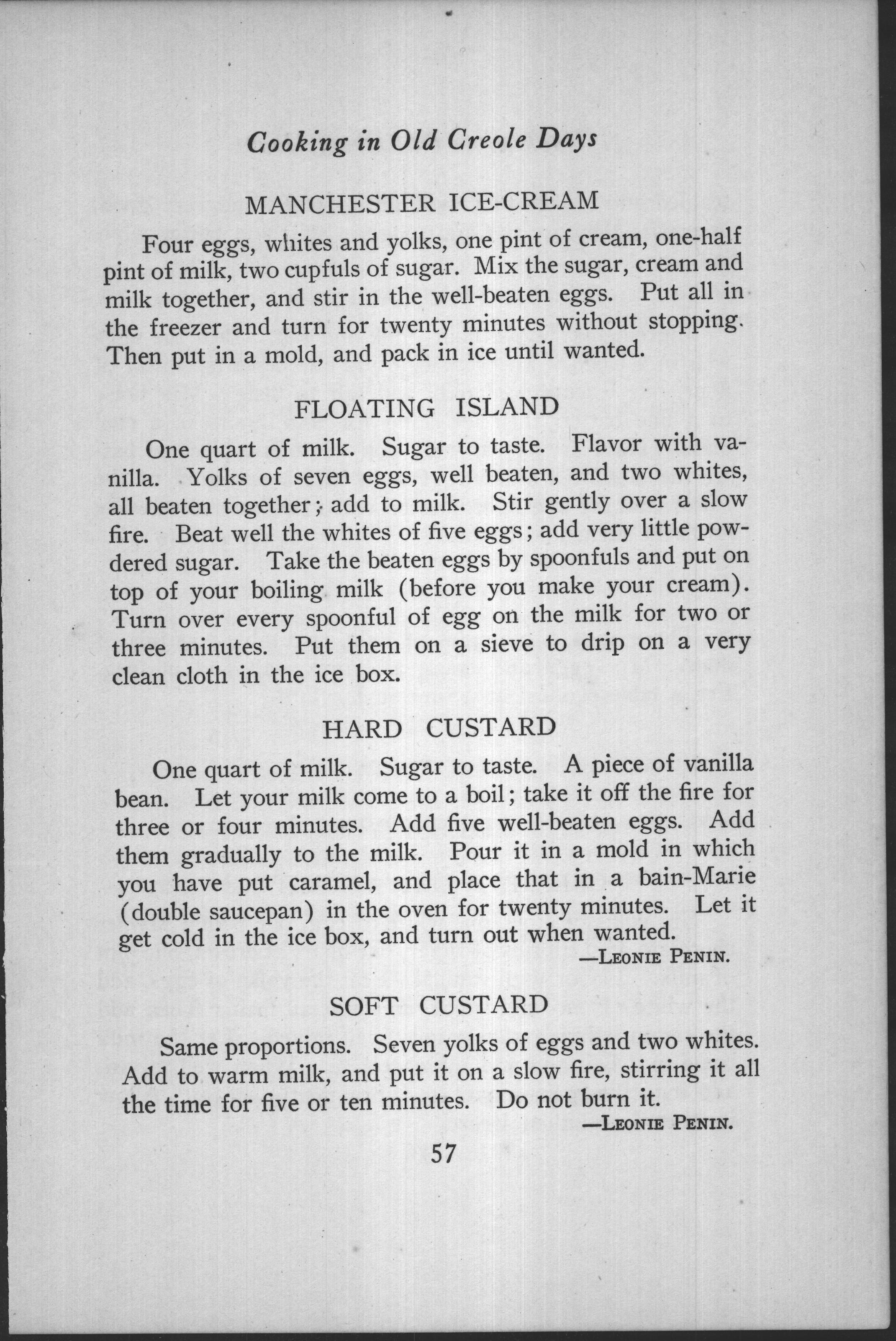
Same proportions. Seven yolks of eggs and two whites. Add to warm milk, and put it on a slow fire, stirring it all the time for five or ten minutes. Do not burn it.
The pourable partner to hard custard — a stirred crème anglaise cooked on the stovetop, never baked.
- Same proportions, different methodWhere the hard custard bakes firm, this one is stirred over low heat until it just thickens — it stays a sauce, not a set.
- “Do not burn it”The real danger is curdling: keep the heat low, stir constantly, and pull it off at 170–180°F when it coats the back of a spoon.
- Yolk-richSeven yolks to two whites make it luxuriously smooth; the extra yolks thicken it without any flour.
- Warm, not boiling, milkAdding yolks to warm milk keeps them from seizing; if it looks grainy, strain at once and whisk hard.
- ServingPour warm or cold over fruit, cake, or floating-island meringues; it thickens a little more as it cools.
In the South this stirred custard has long gone by the name boiled custard — a bit of a misnomer, since boiling is the one thing that ruins it. Rich with yolks and vanilla, it became a beloved holiday drink and dessert base across the region, ladled from pitchers at Christmas and poured over everything from berries to pound cake. It is first cousin to the French crème anglaise, and to eggnog without the spirits. The difference between this “soft” custard and the “hard” one on the same page comes down to just one thing: the stovetop versus the oven.
From page 57 of the 1904 edition.
Original page from the book