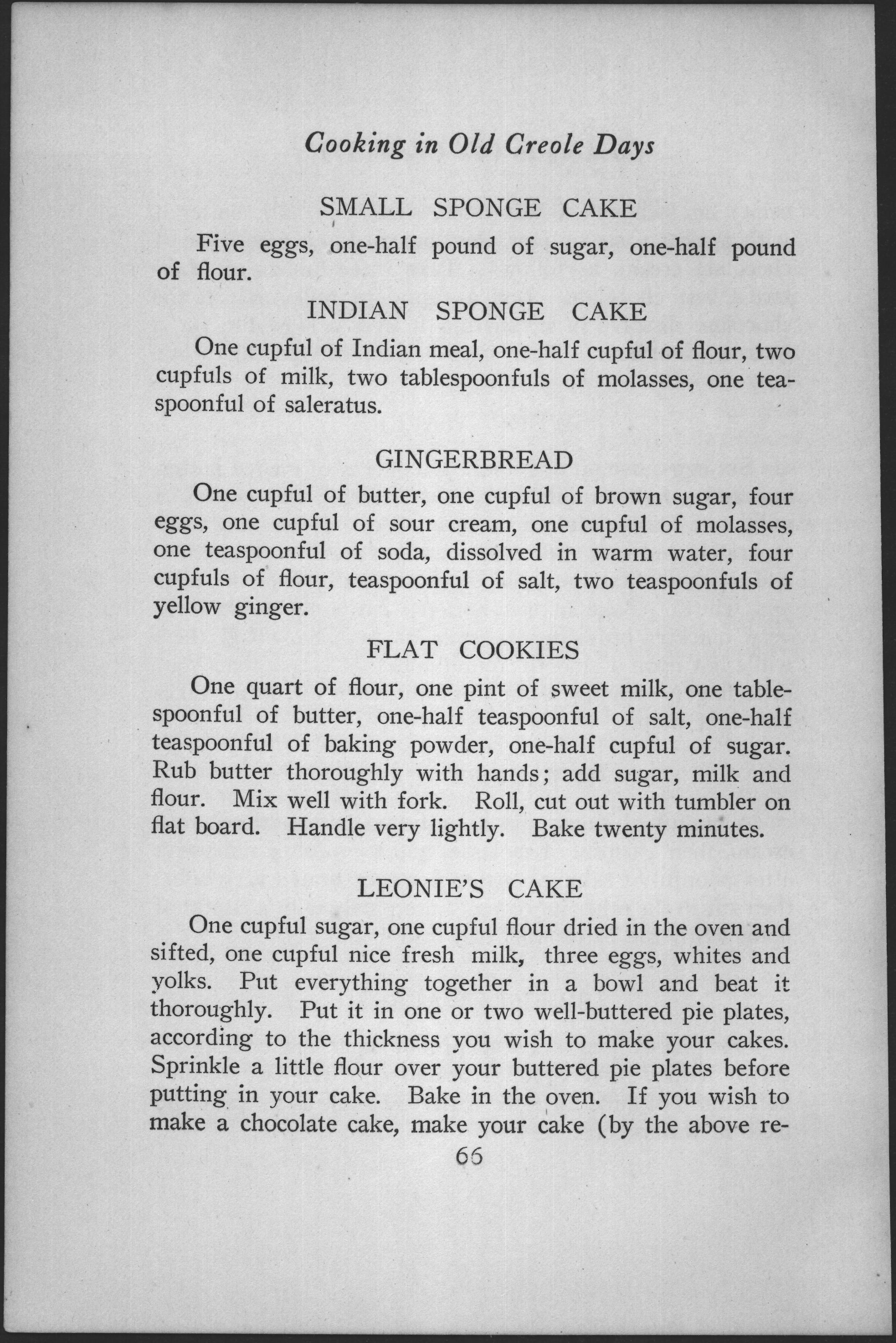
Indian Sponge Cake
One cupful of Indian meal, one-half cupful of flour, two cupfuls of milk, two tablespoonfuls of molasses, one teaspoonful of saleratus.
Despite the name, this is a cornmeal batter — loose with milk and darkened with molasses — closer to a spoonbread or johnnycake than to an airy sponge.
- “Indian meal” = cornmealThe old American term for cornmeal, ground from “Indian corn”; a fine or medium yellow meal works best here.
- Saleratus = baking sodaThis early leavening is simply baking soda; use about ½ to 1 teaspoon, activated by the acidity of the molasses.
- A wet batterTwo cups of milk to a cup of meal makes a very loose batter — expect something moist and custardy, not a cake you would slice into layers.
- Bake it throughUse a moderate 350–375°F oven and a greased pan; give the wet batter time to set in the center.
- Serve warmLike cornbread, it’s best warm, with butter or a drizzle of molasses.
“Indian meal” and “Indian corn” are colonial names for maize, the grain Native peoples had cultivated for thousands of years and taught European settlers to grow and grind. Cheap, hardy, and homegrown, cornmeal became the daily bread of much of early America, especially where wheat was scarce or dear. “Saleratus,” meanwhile — from the Latin for “aerated salt” — was an early manufactured leavening, a forerunner of today’s baking soda that let nineteenth-century cooks raise breads and cakes quickly. Together they make a humble, thrifty batter with deep roots in the American pantry.
From page 66 of the 1904 edition.
Original page from the book