Small Sponge Cake
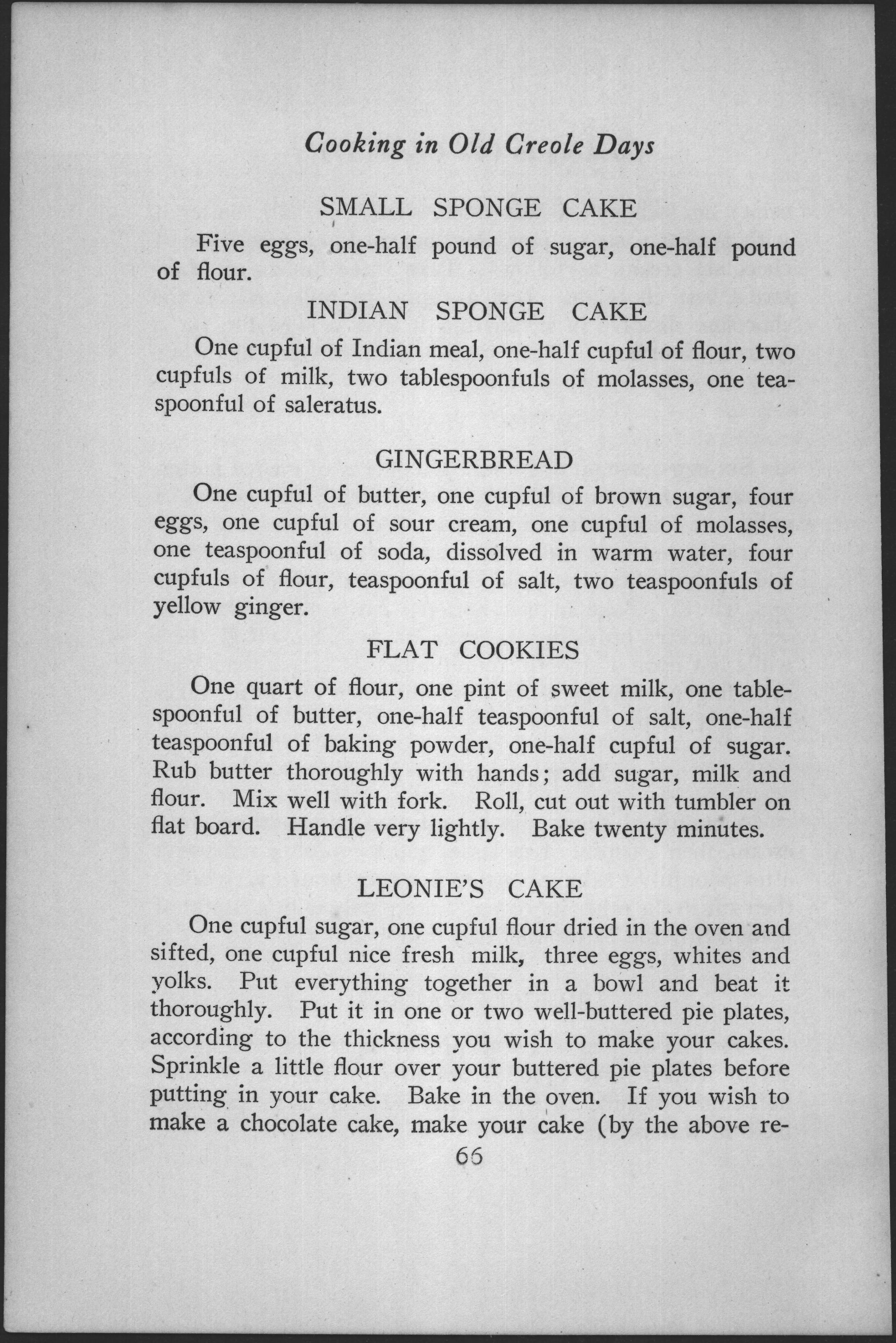
Five eggs, one-half pound of sugar, one-half pound of flour.
A pure sponge — just eggs, sugar, and flour, no butter and no leavening — that rises entirely on the air you beat into it.
- Weigh for accuracy½ pound sugar is about 1¼ cups and ½ pound flour about 1¾ cups, but a sponge rewards weighing — use a scale if you can.
- No baking powderThere is none in the list on purpose; all the lift comes from thoroughly beaten eggs, so whip them until pale, thick, and tripled in volume.
- Fold, don’t stirSift the flour over the egg foam and fold gently to keep the air in; overmixing deflates the batter.
- Moderate ovenBake at 350°F in an ungreased tube pan so the batter can climb the sides; it’s done when springy to the touch.
- Serve simplyA plain sponge is a blank canvas — berries, cream, or a dusting of sugar are all it needs.
The sponge is among the oldest of “light” cakes, dating to a time before baking powder and soda, when the only way to lift a batter was muscle and eggs. Recipes for beaten-egg cakes appear across Renaissance Europe — the Italians called their airy version pan di Spagna, “Spanish bread” — and the technique spread wherever cooks had eggs, sugar, and patience. What looks almost impossibly plain on the page is really a small feat of physics: air whipped into egg proteins, set by the oven’s heat into a tender, springy crumb.
From page 66 of the 1904 edition.
Original page from the book