Muffins
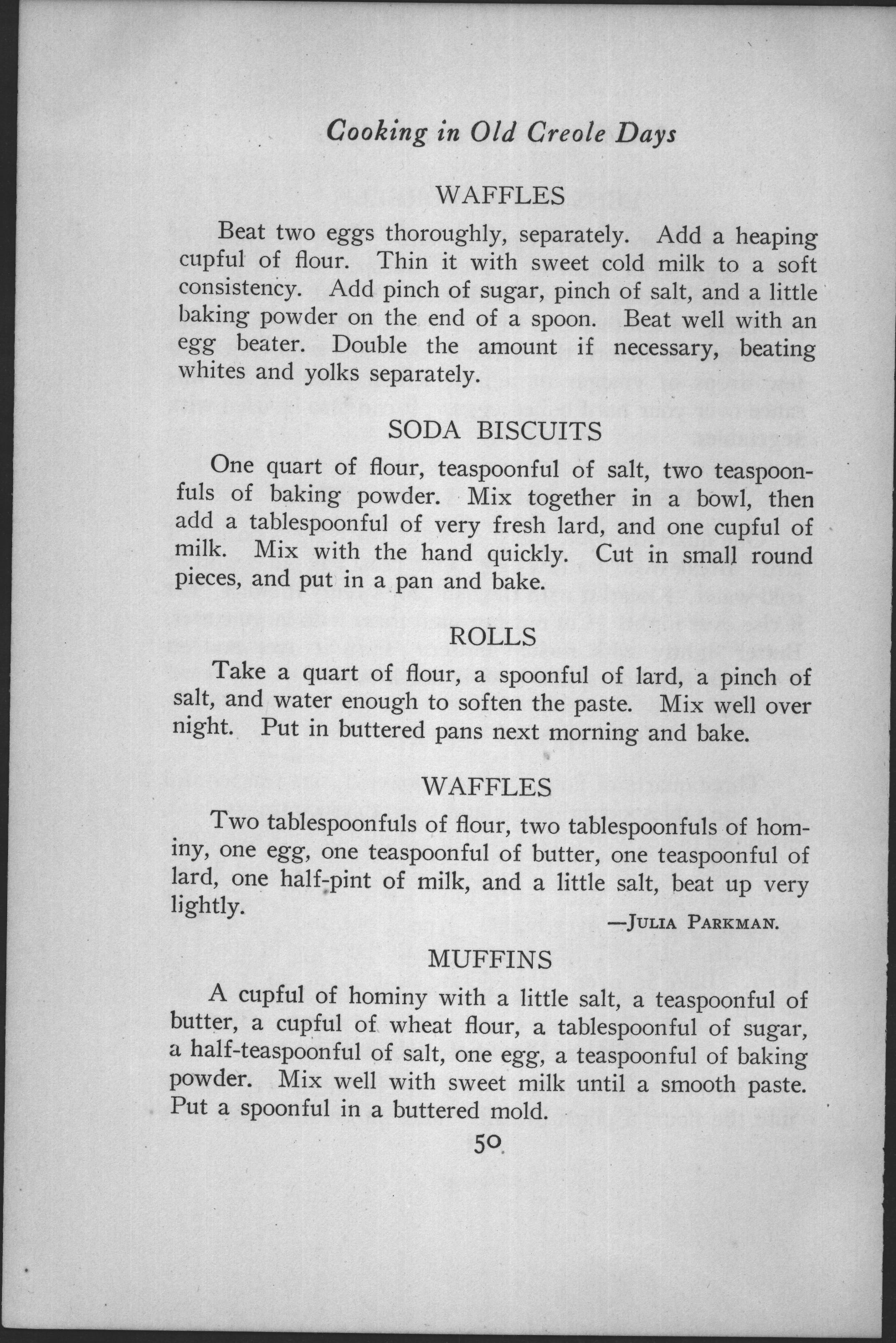
A cupful of hominy with a little salt, a teaspoonful of butter, a cupful of wheat flour, a tablespoonful of sugar, a half-teaspoonful of salt, one egg, a teaspoonful of baking powder. Mix well with sweet milk until a smooth paste. Put a spoonful in a buttered mold.
Not the sweet, domed muffins of today but small, tender breads — soft cooked hominy and wheat flour bound with egg and baked in buttered molds.
- “A cupful of hominy”Again, this is cooked hominy or grits, soft and cooled, not dry — it’s what keeps these muffins moist and tender.
- “Sweet milk”Fresh whole milk; add it gradually until you have a “smooth paste” — a thick but spoonable batter.
- Enough leavening1 teaspoon of baking powder for a cup of flour plus the hominy is about right, and the single egg lends extra lift.
- “A buttered mold”Any muffin tin or cast-iron gem pan, well greased. Fill each cup about two-thirds full.
- Oven and timeBake in a moderately hot oven, about 400°F, for 18–22 minutes, until set and lightly golden.
The word muffin once split two ways: the soft, yeast-raised English muffin cooked on a griddle, and the small, quick, oven-baked American muffin like this one. The American kind rose with the spread of chemical leaveners and cast-iron gem pans in the nineteenth century, which let a cook turn out a dozen tender little breads in minutes. Building them on hominy and cornmeal was a distinctly Southern habit — thrifty, using up the standing pot of hominy, and delicious, giving the humble muffin a soft crumb and a quiet taste of corn.
From page 50 of the 1904 edition.
Original page from the book